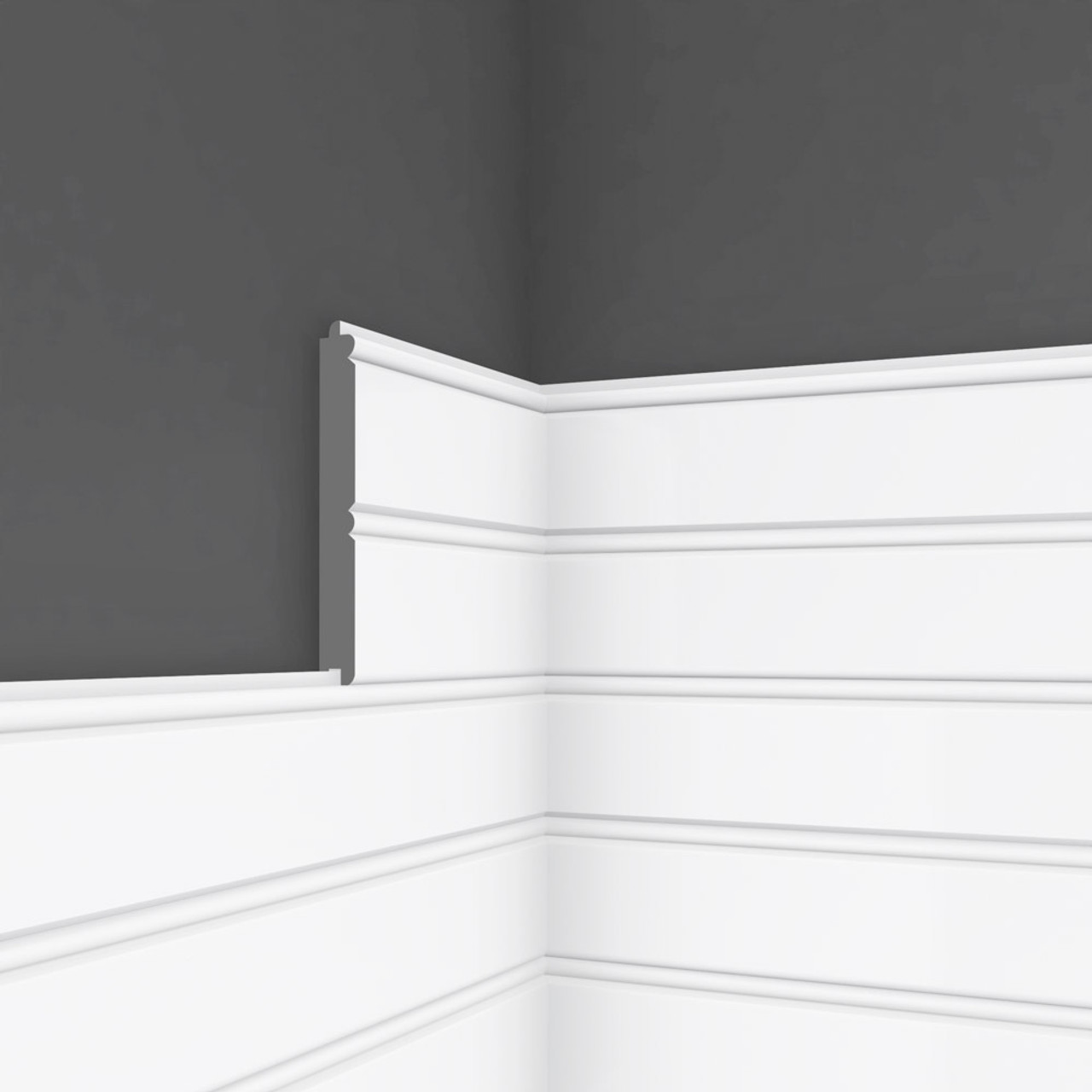


Tongue and groove moulding provides an excellent option for ceilings, walls, wainscoting, and other applications. Interlocking edges let each piece form a finished surface. Mouldings One offers a full range of profiles with varying widths and details to provide the perfect match for your project.
Choosing the right tongue and groove wood profile requires carefully evaluating face width, groove and reveal detail, and how different options align with your application. You can browse available options or request a custom quote to match renovations, restorations, and other specialty projects.
Comparing tongue and groove profiles
Two seemingly similar profiles can achieve greatly different visual results. That’s why it’s important to carefully compare the exposed face, profile, and other details before making your choice. The right match will ensure the walls and ceilings fit your project properly.
Starting with the exposed face width
Mouldings One lists tongue and groove widths by the exposed face: the visible width of each board after adjoining pieces are joined. The tongue isn’t included in that measurement. Compare the listed width with the profile drawing to understand the joint geometry and finished face.
Many Mouldings One tongue and groove profiles can be modified to achieve a requested exposed face width. Available modifications depend on the profile design and requested dimensions.
A narrower exposed face creates more repetitions and joint lines, while a wider exposed face means fewer. Either can suit specific situations depending on the visual rhythm and surface scale. Take a close look at other elements in the room and try to align with that rhythm. For ceiling-specific planning, read our tongue and groove ceiling guide.
Comparing the groove and profile detail
Tongue and groove wood profiles are available with a variety of details. Beaded tongue and groove, commonly called beadboard, features rounded bead details. V-groove or V-joint profiles create a V-shaped line where adjoining boards meet, while nickel-gap profiles create a defined recessed gap between boards. Other profiles may use additional beads, bevels, steps, or grooves across the face, changing the spacing and pattern of the finished surface.
Reviewing cross-sectional drawings for profiles will help you better understand profile details. For digital planning, Mouldings One’s CAD downloads let you compare profile geometry with adjoining trim.
Thickness, room scale, and adjacent trim
Thickness is also important to review when comparing tongue-and-groove wood profiles. It affects how tongue and groove paneling meets door and window casing, baseboards, crown moulding, and other adjoining trim.
Compare the board rhythm with the room’s proportions and adjoining crown, casing, or chair rail. Review related moulding profiles to coordinate the wider trim package. Mouldings One’s design resources can help you assess proportion and profile relationships.
Coordinating wood species and finish
Consider species and finish during the profile selection process to find the right match. Tongue and groove wood can show its natural color and grain with stained or clear finishes, making wood choice paramount. It’s also a key decision for painted work, as you want a consistent surface that takes paint well.
Compare Mouldings One’s wood species options with your intended painted, stained, or clear finish. Many types of pine, oak, poplar, and maple are available, just to name a few. You can find the proper visual character for your project, whether looking to match other trim or create an appealing contrast.
Custom profile matching for projects
Standard tongue and groove wood profile options span many different sizes and styles. This makes it easy to find a good match for nearly any project. However, you should review drawings first to make sure you have what you’re looking for, especially for renovations, restorations, and matching existing trim.
If you can’t find a suitable match among standard options, Mouldings One offers custom moulding as well. Send us photos, drawings, measurements, and samples, and our team will work to create new molding that suits your project needs.
You can also request a quote for larger orders, required lengths, or project scheduling.
Finding the right tongue and groove profile for your project
Browse available tongue & groove wood profiles from Mouldings One to find the match for your project. You can review specifications and drawings across a wide range of unique options and styles. For profile matching, larger orders, or help selecting a suitable option, request a quote with your project details.
Frequently Asked Questions
How is tongue and groove width measured?
Mouldings One products are listed with the product width measuring the exposed face after boards are joined. Review the individual product specifications and profile drawing for the listed dimensions and joint shape.
How do I choose a tongue and groove board width for a wall or ceiling?
Board width determines how often joint lines repeat, so consider room scale and other trim. You want a coherent visual rhythm for your project, and wider or narrower face widths can help you achieve that.
What should I consider when choosing a wood species or finish?
The first choice is between painting, staining, or clear coating. From there, you can choose a wood species with the grain and natural color to suit the finish and adjoining trim.
Can Mouldings One match an existing tongue and groove profile?
Yes, Mouldings One can often match profile dimensions and detail for renovations and restorations. You can provide drawings, measurements, or samples to get your custom quote.