Prairie
Horizontal lines, flowing interiors, and geometric woodwork reflect the broad Midwestern landscape.
What Is Prairie?
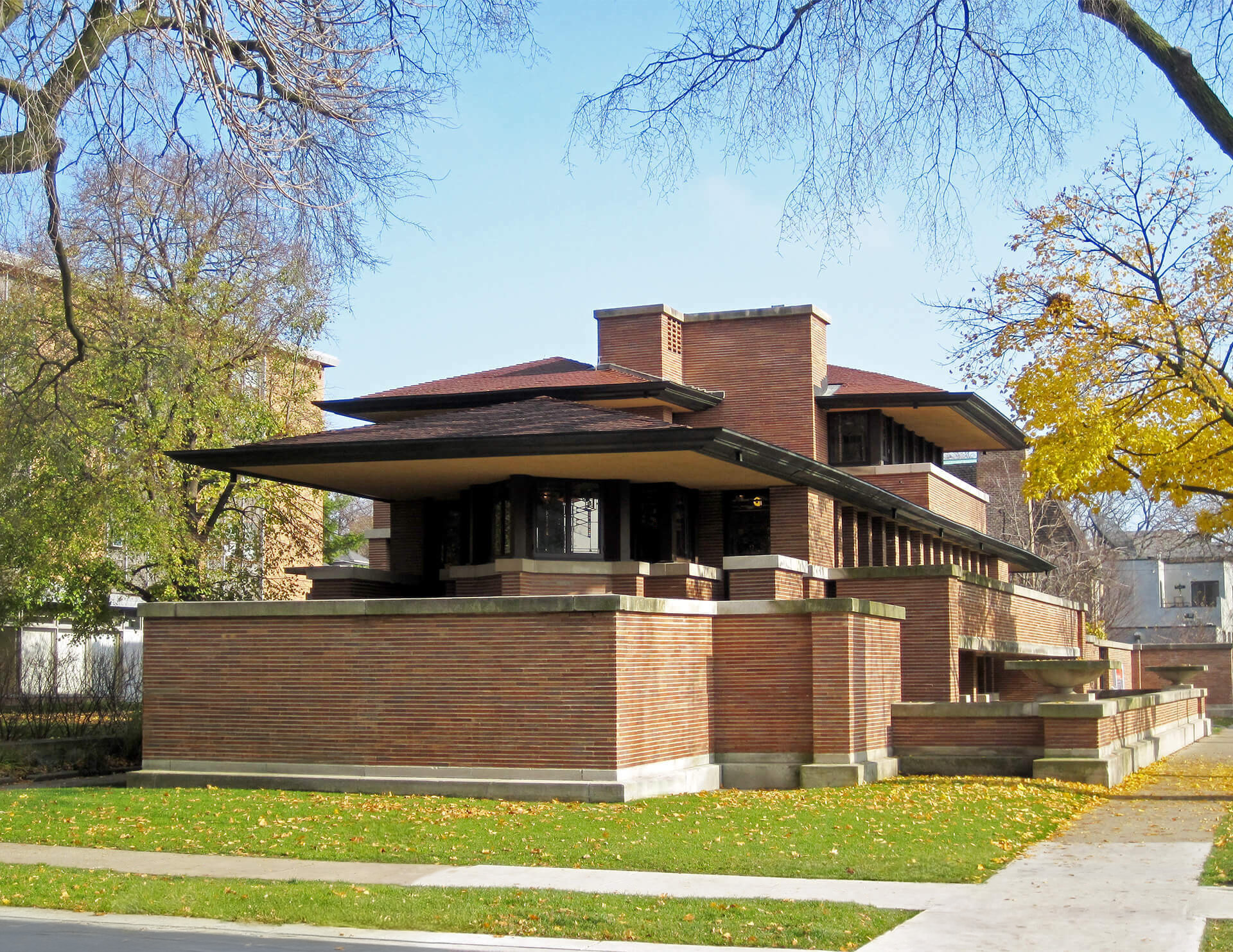
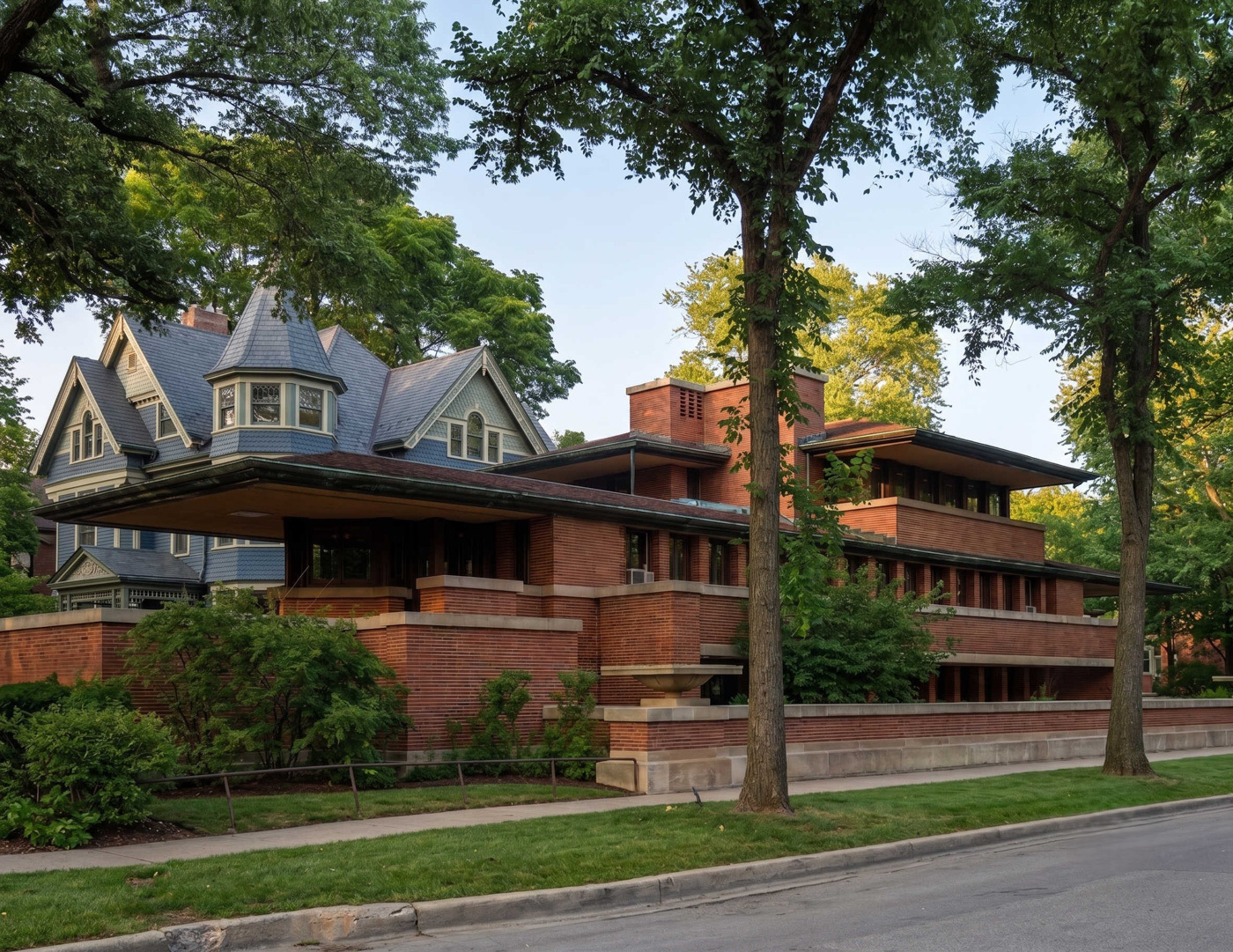
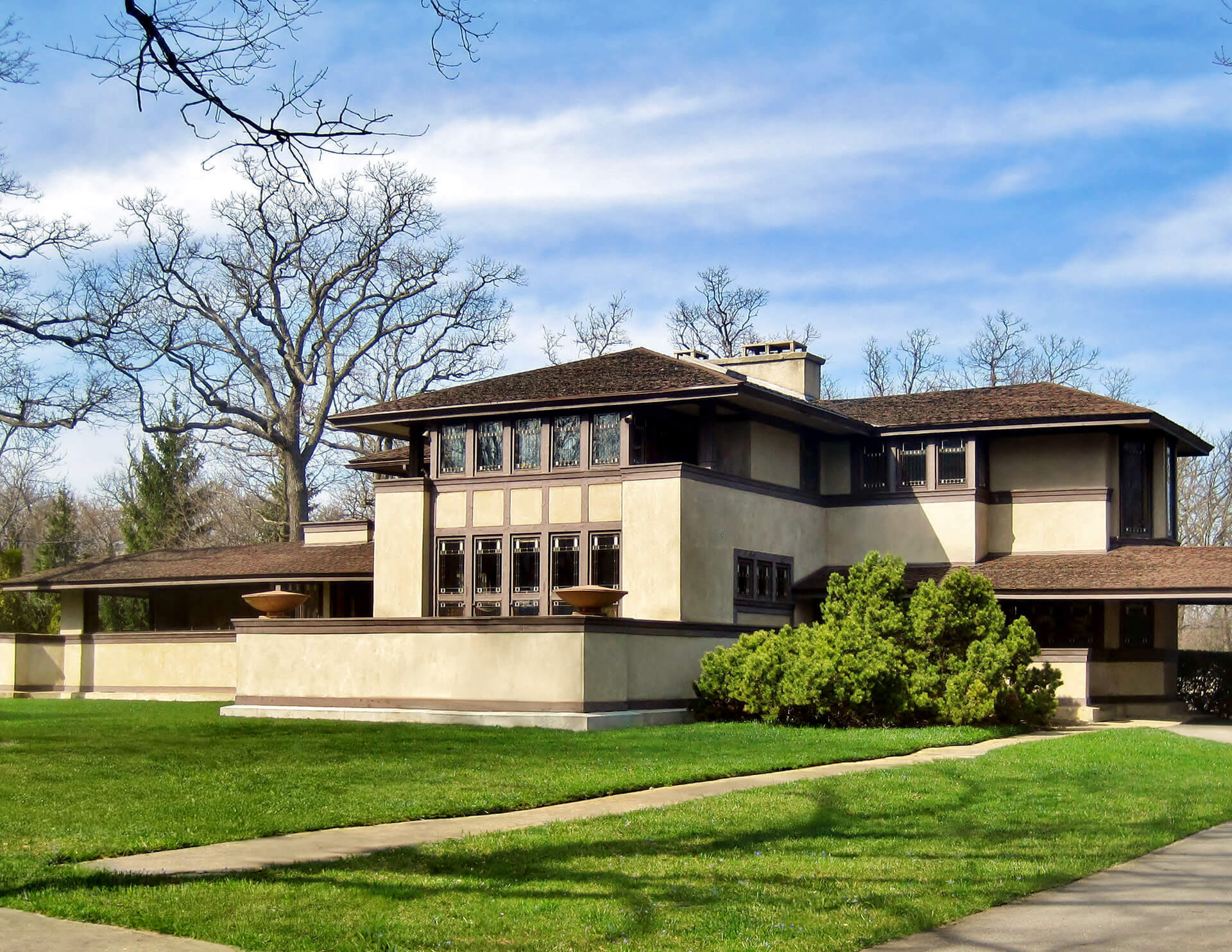
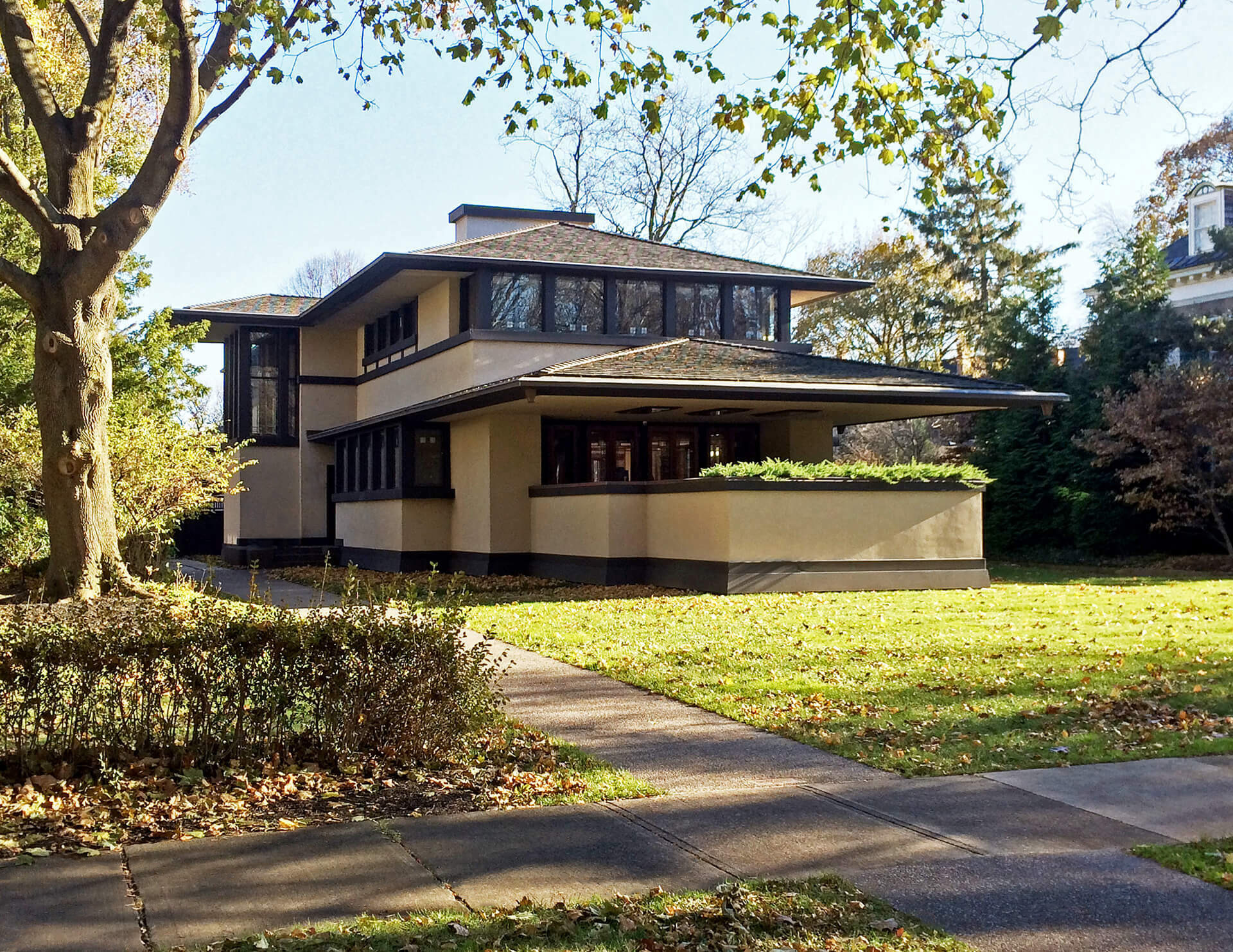
Prairie architecture developed in the Chicago area around 1900. Closely associated with Frank Lloyd Wright and the architects of the Prairie School, the style emphasized horizontal proportions, natural materials, and a close relationship between buildings and their surroundings.
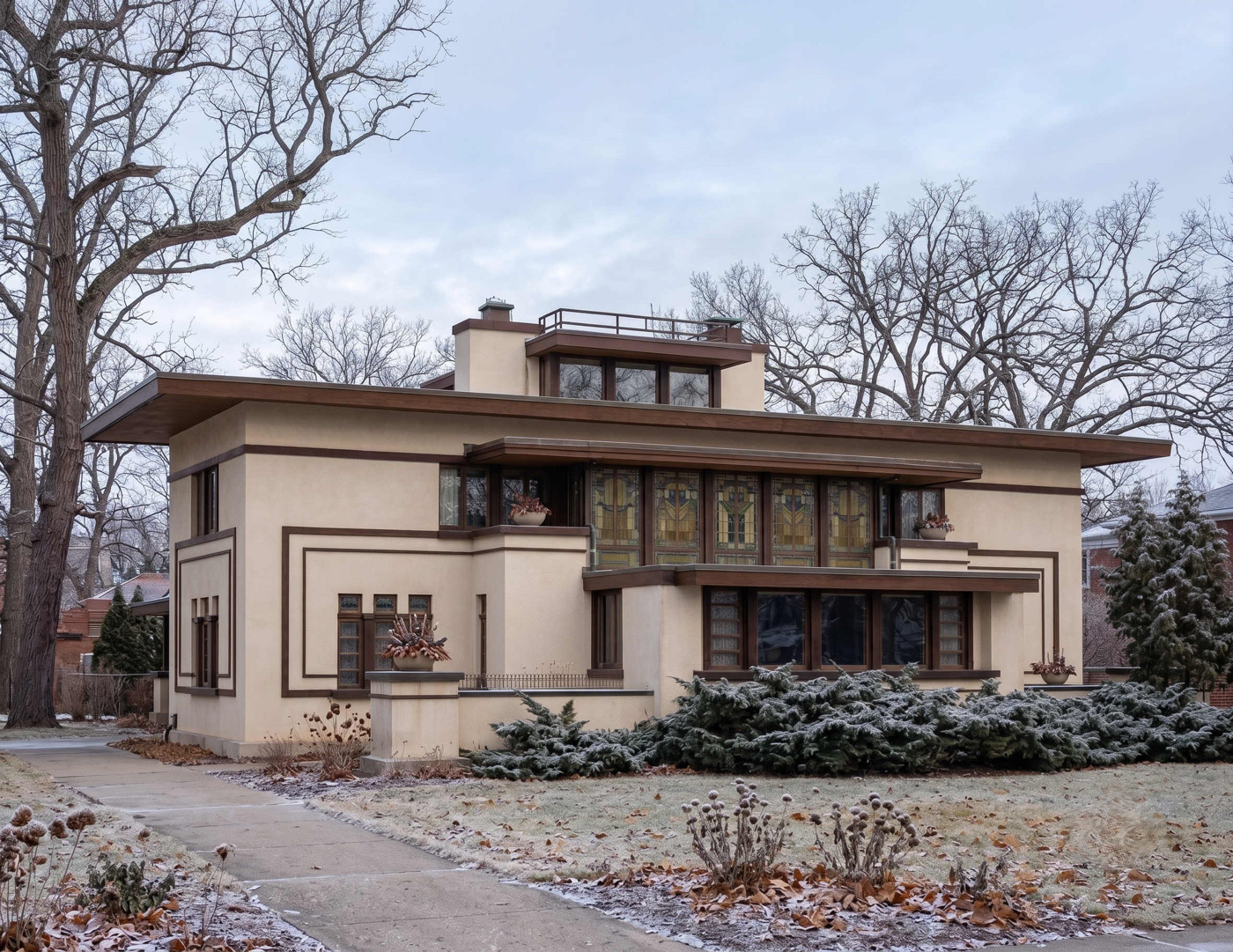
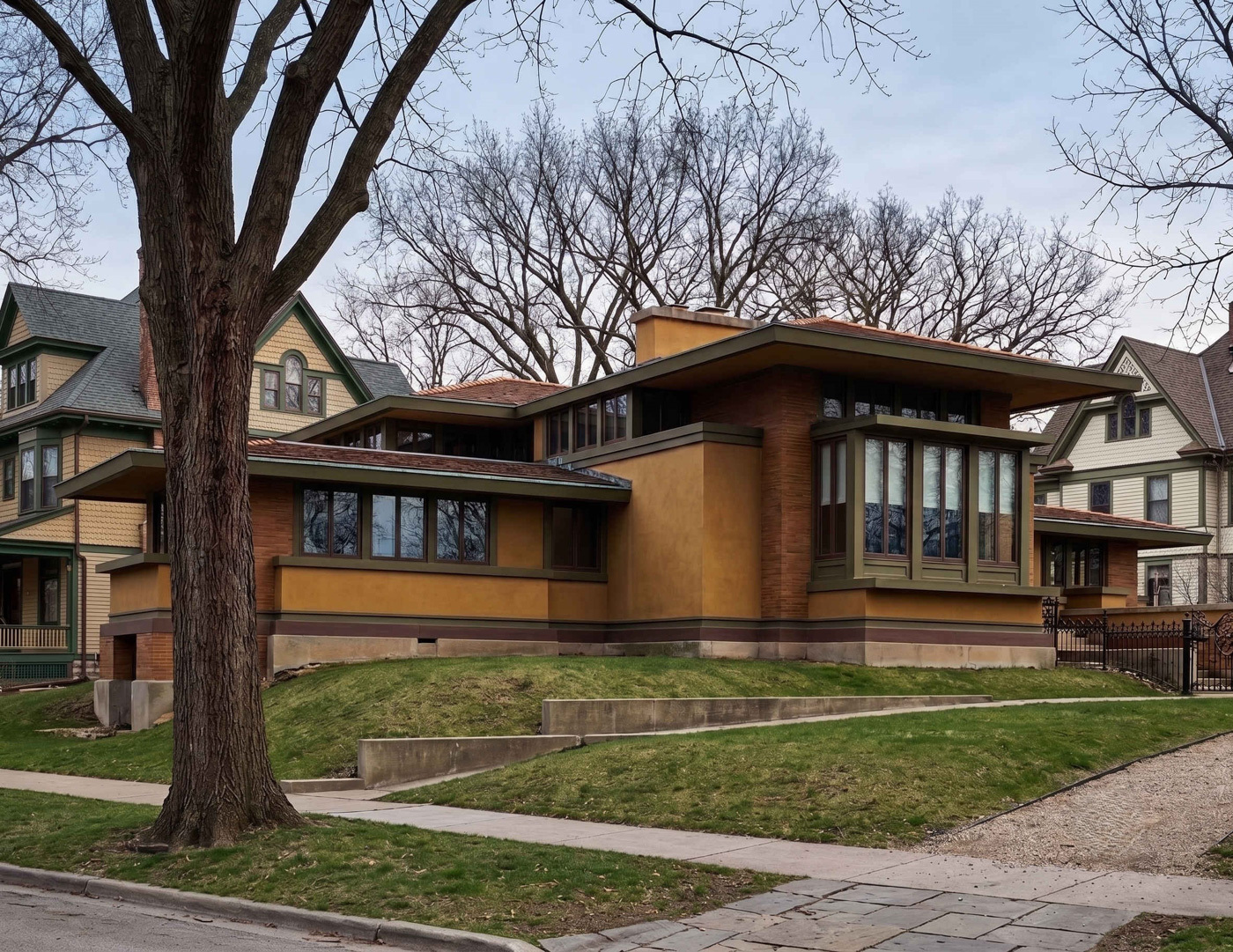
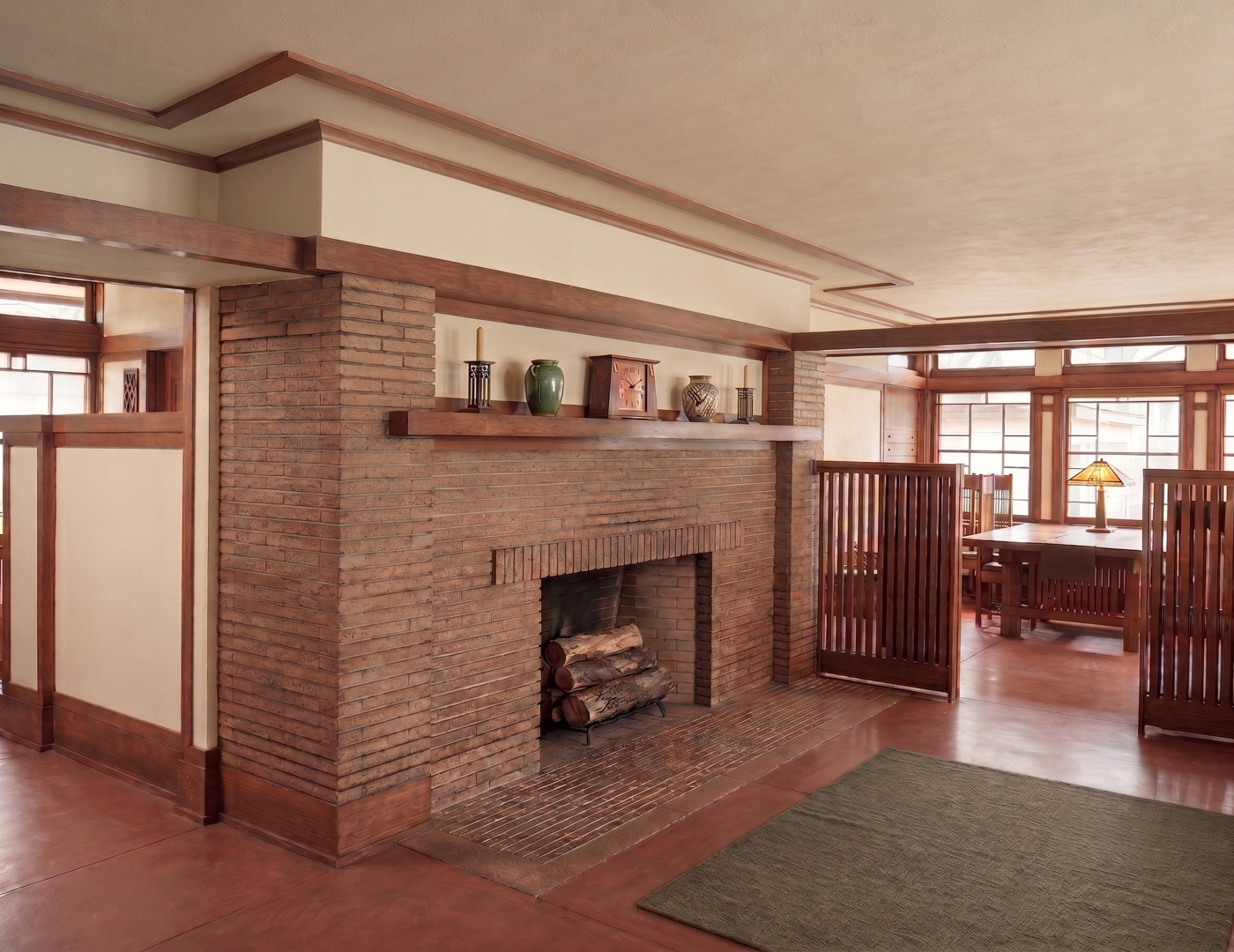
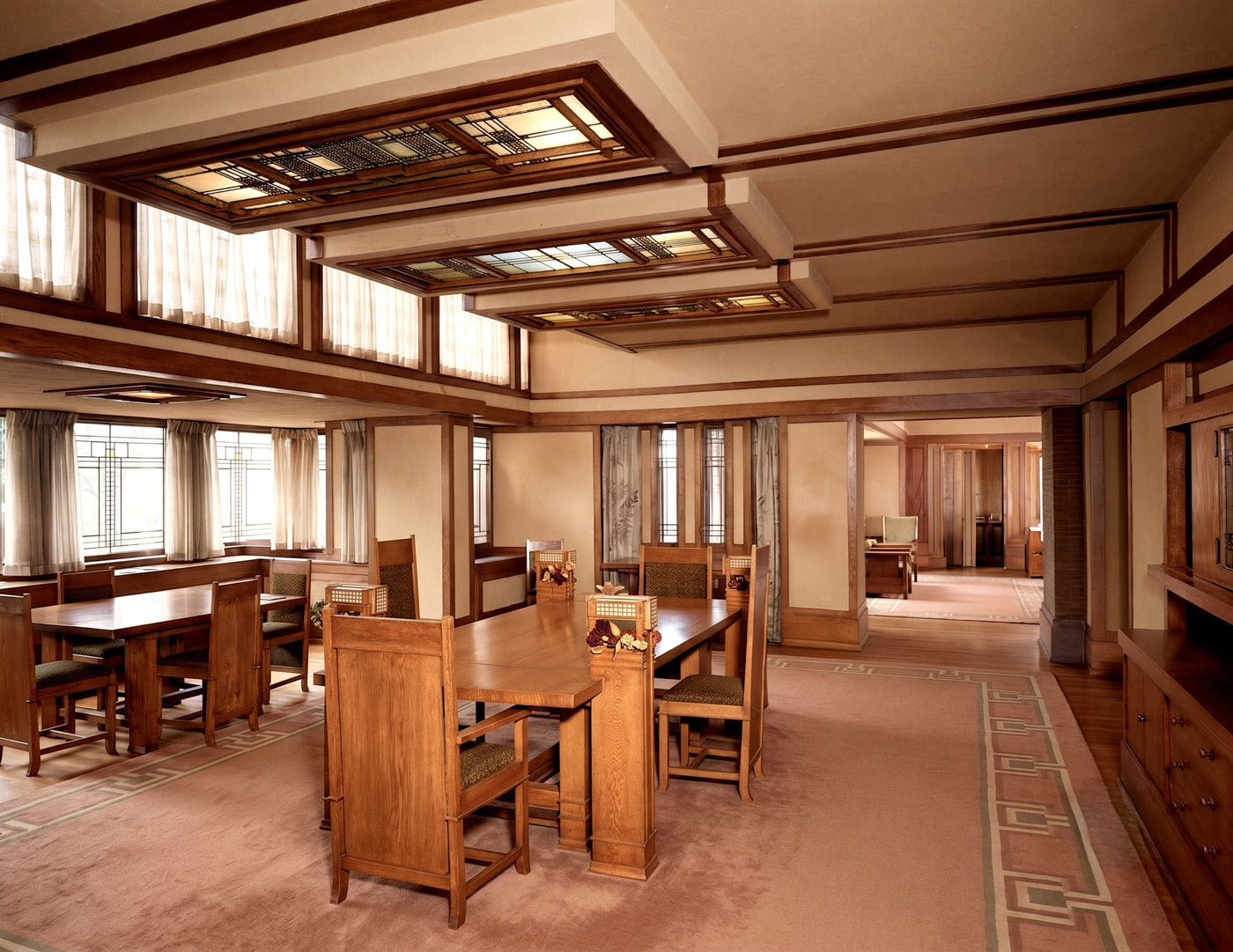
Prairie houses feature low-pitched roofs, broad overhanging eaves, and windows grouped in horizontal bands. Inside, connected living spaces, prominent fireplaces, built-in cabinetry, and coordinated woodwork create a unified interior. Geometric patterns in mouldings, furnishings, and art glass contribute to the style’s distinctive character.
The Collection
Prairie Characteristics
Prairie design combines strong horizontal proportions with an integrated approach to interiors. Woodwork, furnishings, lighting, and decorative glass are coordinated as parts of a unified composition. Repeated geometric patterns and natural materials provide detail, while bands of windows and projecting porches strengthen the connection between the house and its surroundings.
- Low-pitched roofs with broad eaves
- Horizontal lines and projecting wings
- Grouped casement windows with art glass
- Open living spaces and central fireplaces
- Brick and stucco exteriors
- Built-in cabinetry and seating
- Horizontal wood bands and geometric trim
PRAIRIE MOULDINGS
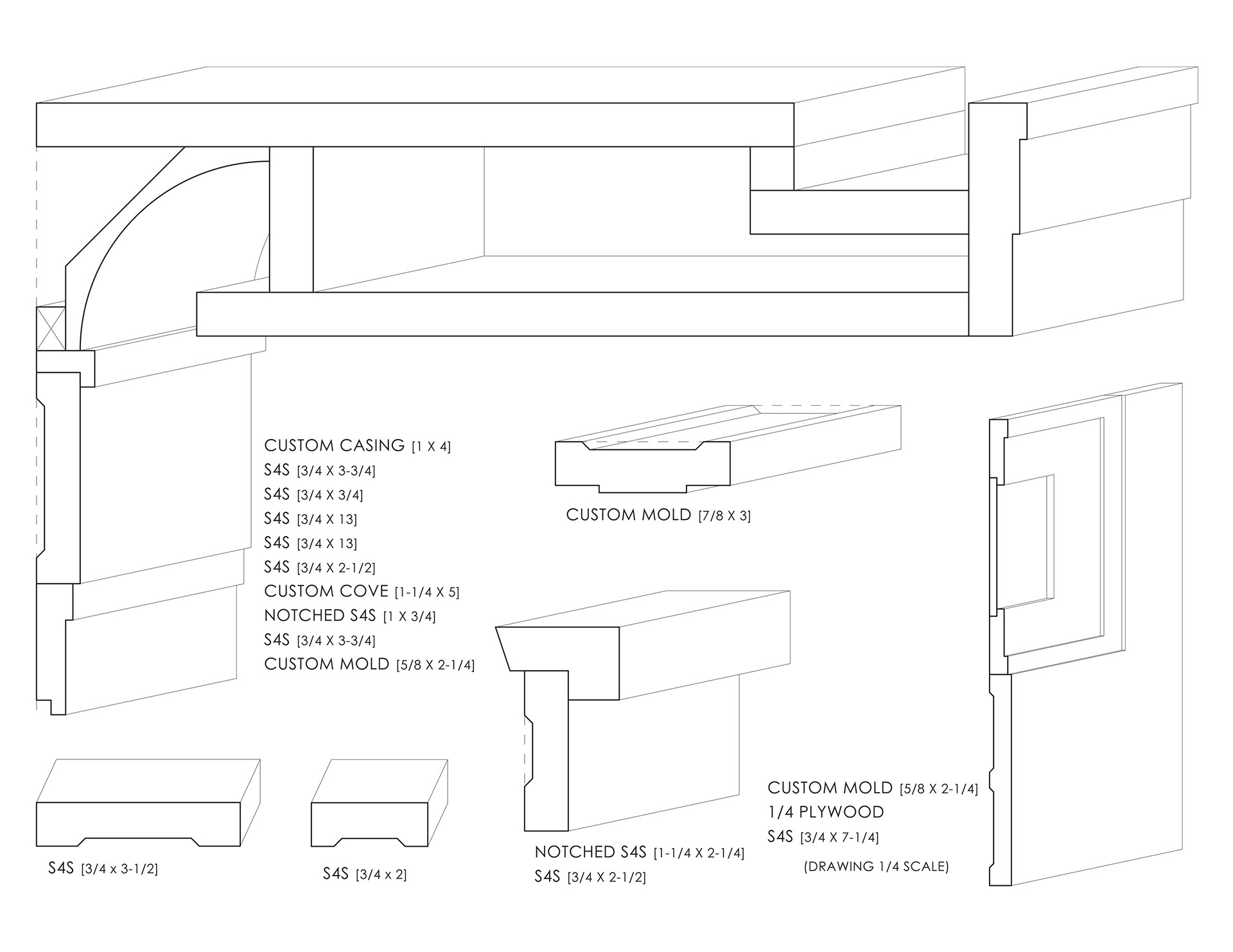
Prairie mouldings emphasize straight lines, square edges, and geometric arrangements. Flat boards surfaced on all four sides, known as S4S, combine with stepped profiles to form door and window casings, baseboards, and horizontal wall bands.
The woodwork reinforces the room’s proportions and connects openings, wall surfaces, and built-in cabinetry. Layered boards and changes in depth create detail, while the natural grain of the wood contributes warmth and texture.
Shop Now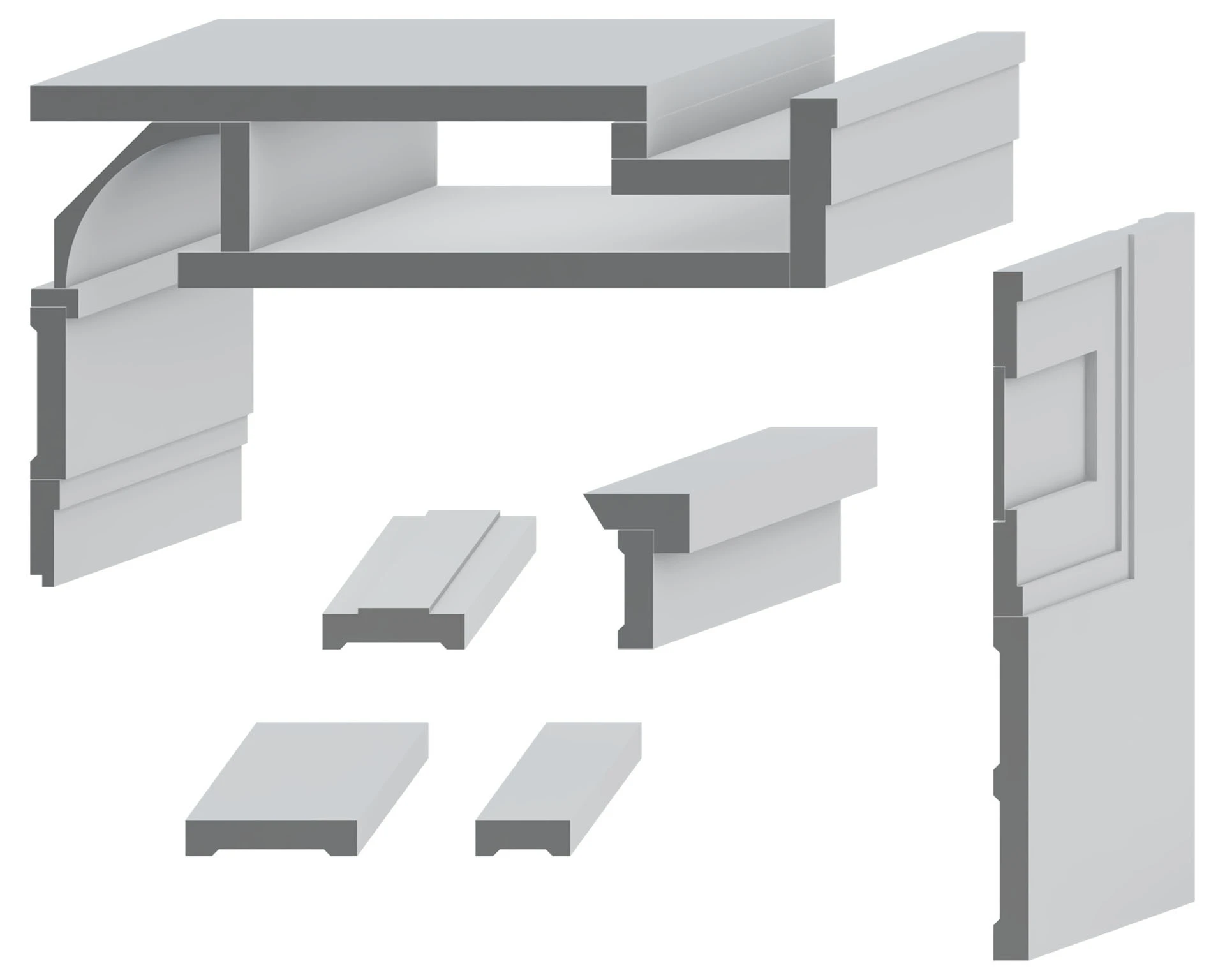
Period Details & Drawings

History of Prairie
Prairie architecture developed in Chicago during the 1890s and early 1900s as architects sought an approach suited to American life and the Midwestern landscape. The grand classical buildings of the 1893 World’s Columbian Exposition reflected the popularity of European revival styles, providing an important backdrop to the Prairie School’s pursuit of a distinctly American architecture.
Influenced by Louis Sullivan and the Arts and Crafts movement, Prairie architects emphasized craftsmanship, natural materials, and a close relationship between buildings and their surroundings. Frank Lloyd Wright became the movement’s best-known architect. Robert C. Spencer Jr., Myron Hunt, Dwight H. Perkins, Walter Burley Griffin, and Marion Mahony Griffin also contributed to its development.
Japanese art and architecture influenced Wright’s work, particularly his use of geometric composition and connections between interior and exterior spaces. His interest in Japanese prints and architectural screens contributed to an approach that treated the house, its furnishings, and its setting as parts of a unified design.
In 1901, Wright published “A Home in a Prairie Town” in Ladies’ Home Journal, presenting a residential design with broad rooflines and an emphasis on comfortable family living. Its low proportions and extended eaves expressed the horizontal character of the surrounding landscape.
Prairie interiors brought architecture, furnishings, and decoration together. Connected rooms, built-in seating, integrated lighting, and variations in ceiling height shaped the experience of moving through the house. Concealed or screened lighting softened illumination, while geometric woodwork and art glass repeated patterns across the interior. These details helped define individual spaces while maintaining visual continuity between them.
The style’s principal period of development fell within the first two decades of the twentieth century. Although its popularity declined after the mid-1910s, its horizontal forms, flowing interiors, and connection to the landscape continued to influence modern architecture and later ranch houses.