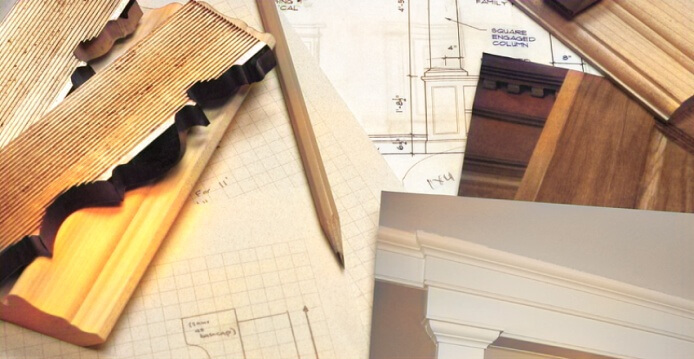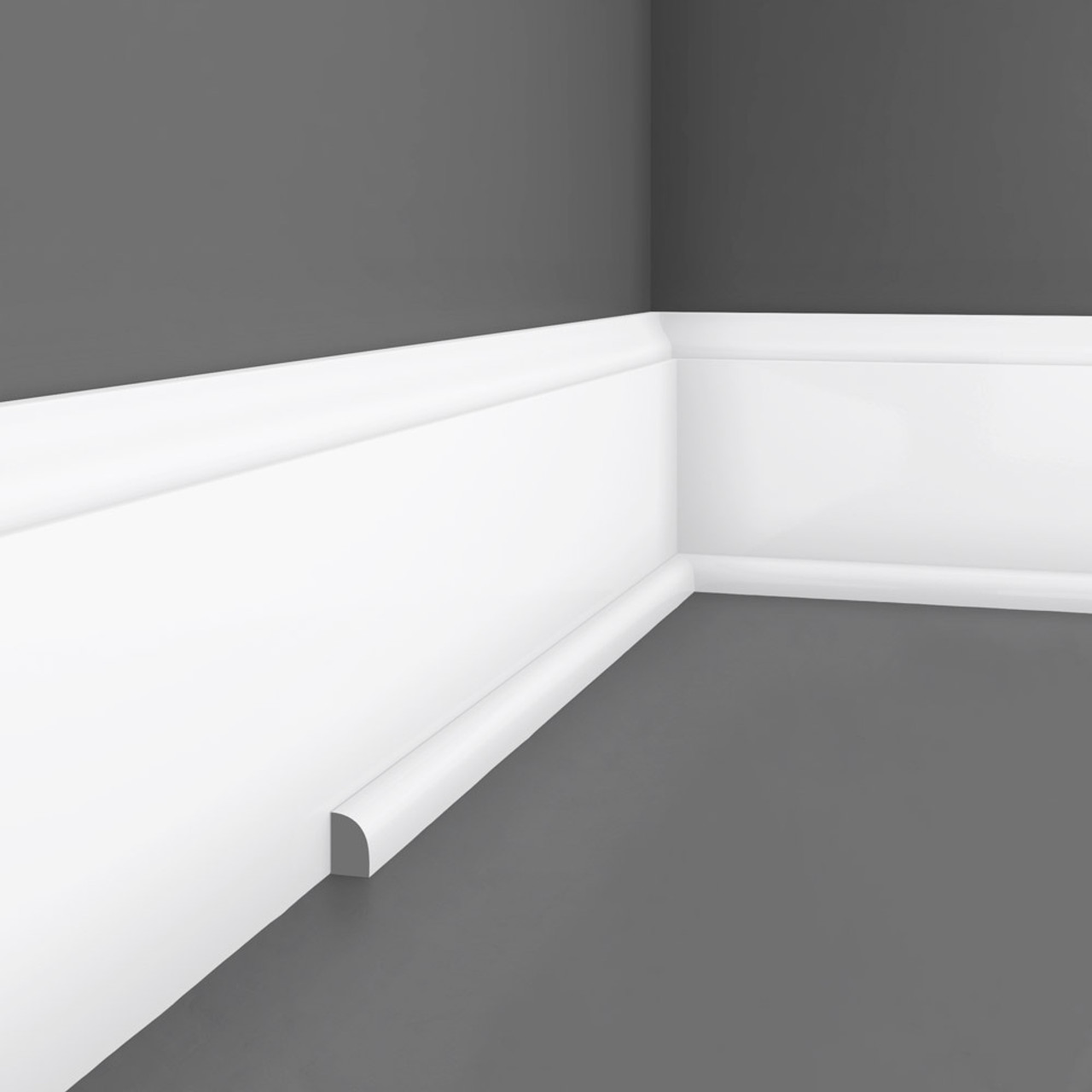


Shoe molding provides an effective way to finish the transition between baseboard trim and flooring. It’s a practical trim detail that can also enhance style. Base shoe moulding is typically a small profile that covers gaps and is selected to match the finish, scale, and style of the overall baseboard trim package.
With Mouldings One, you can find a full range of shoe molding options with the size, shape, and style to suit your project. Different profiles, curves, edge detail, and more allow you to tailor your shoe molding selection to match your baseboard, flooring, finish plan, and overall project requirements.
How shoe molding completes the baseboard-to-floor transition
The right shoe molding profile can combine with your baseboard molding to create an intentional-looking wall line. You can achieve a finished transition between vertical trim and flooring while maintaining the right proportions and visual weight for your overall trim package.
The point where floors and walls meet is often a challenging area to address due to the nature of flooring installation. Expansion gaps, height changes, and uneven edges can all be dealt with using narrow shoe base molding. This lets you finish the space without adding an overly heavy profile.
Coordinating with your baseboard moulding is essential when choosing shoe trim. Carefully compare the shoe profile against the thickness and shadow line of the baseboard so the lower wall detail feels controlled and cohesive.
Choosing between shoe molding and quarter round
When finishing the lower edge of the baseboard, shoe molding and quarter round are typically the top two options. While similar in their use, these two types of trim vary in important ways. The full, curved profile of quarter round has high projection and visual weight, which may not be what you’re looking for.
Base shoe molding provides slimmer and more vertical profile options. You can maintain a lighter visual weight that doesn’t compete with baseboard detail. However, you must also consider the size of the gap that you’re covering and ensure you choose trim with the necessary width.
How to compare different shoe molding styles
You’ll find many different shoe molding styles available to deliver the height, thickness, and projection for your project. Taller baseboards often call for shoe molding with stronger detail. However, if you have shorter baseboard, you should likely go with a more restrained profile that doesn’t crowd the wall line.
Different types of shoe molding vary in their flat areas, curves, edge definition, and shadow detail. You can find softer shapes that are reserved and understated. On the other hand, more elaborate profiles go well with formal interiors, historic work, and layered baseboard assemblies.
Flooring material, thickness, and transitions can also influence shoe molding. You want to find a profile that has a suitable visual weight to accent the space without overwhelming other features.
Choosing wood species and finish options
The wood species of your shoe molding affects its appearance and finishing. For paint-grade work, a smooth, consistent surface is the top priority. For stain-grade trim, there are many different wood species available to find the tone and grain that best suit your unique project. Stained shoe moulding should match nearby millwork or flooring.
Matching shoe molding to the full trim package
Matching shoe molding to surrounding trim is necessary to maintain a cohesive style. Look at the rest of your trim package to see how curve, reveal, and thickness align across casing, base caps, panel molding, and other millwork.
Restoration and preservation work can require significant coordination with existing profiles. There are many stock options available to match the existing trim. However, you can also rely on custom molding and millwork to provide unique trim options for any project.
Finding the right profile for your project
Mouldings One offers shoe molding profiles in a range of sizes, shapes, wood species, and finish options for coordinated trim packages. Compare profiles against your baseboard and flooring transition, or request a quote if you need help matching existing trim or planning a custom profile.
Frequently Asked Questions
What is shoe molding used for?
Shoe molding is used to cover the small gap where baseboards meet flooring. This provides a finished appearance for the floor line and helps adjust any slight irregularities without the trim becoming visually overwhelming.
Is shoe molding the same as quarter round?
Both of these types of trim can cover gaps at the baseboard and flooring. However, quarter round is a fuller and more curved type of trim. It is typically more visually heavy than shoe molding, which is available in many different profiles.
How do I choose a shoe molding profile?
First, compare the height, thickness, and projection you need to ensure it covers the gap and aligns with the baseboard molding. From there, you can evaluate curve and edge detail to choose a profile that matches the overall trim style.
Should shoe molding match the baseboard or floor?
Matching either the baseboard or the floor is an option. Matching the baseboard provides a continuous trim line. Stained trim is often selected to match the floor or other features of the room, helping present a coordinated look.
Can shoe molding be stained instead of painted?
Wood shoe molding can often be stained instead of painted. There are many different species available, each with its own unique characteristics. You’ll have to carefully consider the grain and tone when choosing stain-grade trim.