Deconstructivism
Fragmented forms, unexpected angles, and precisely detailed surfaces create a sense of movement and tension.
What Is Deconstructivism?
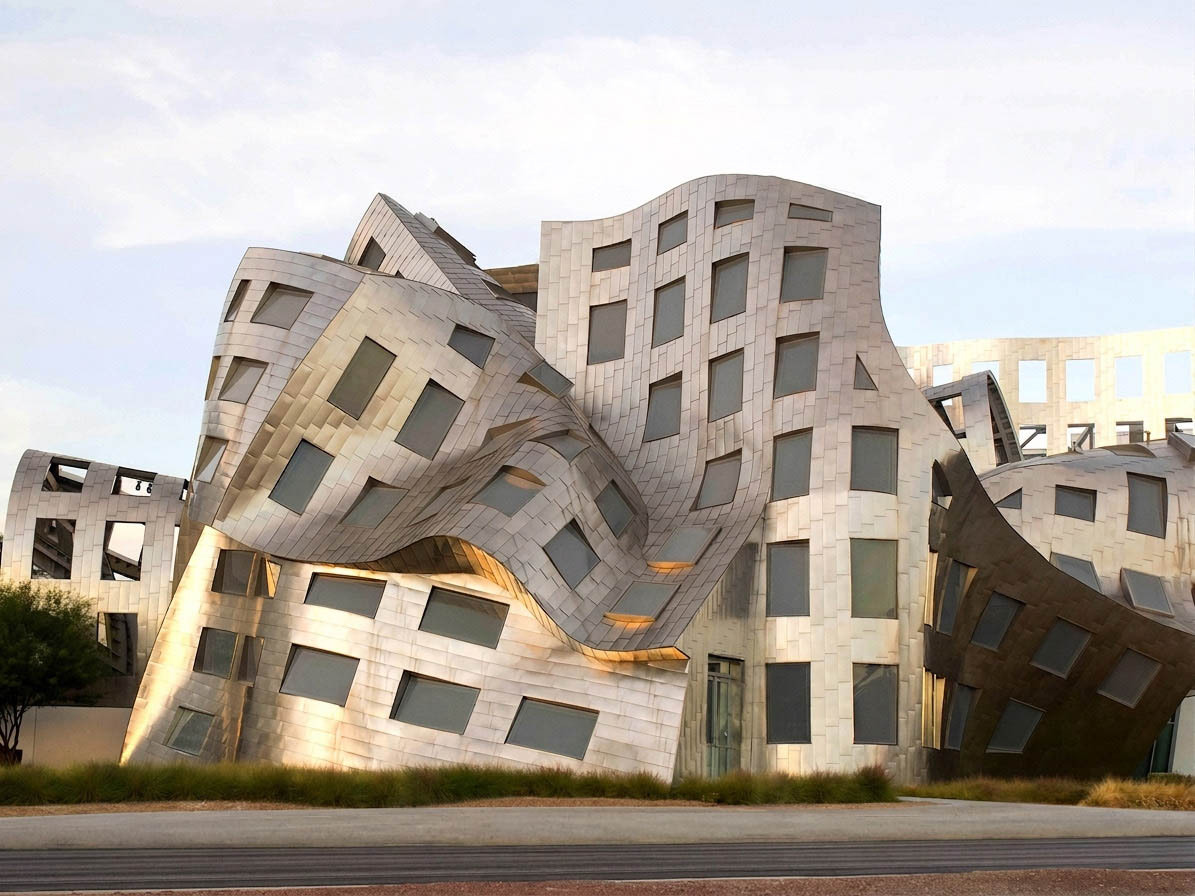
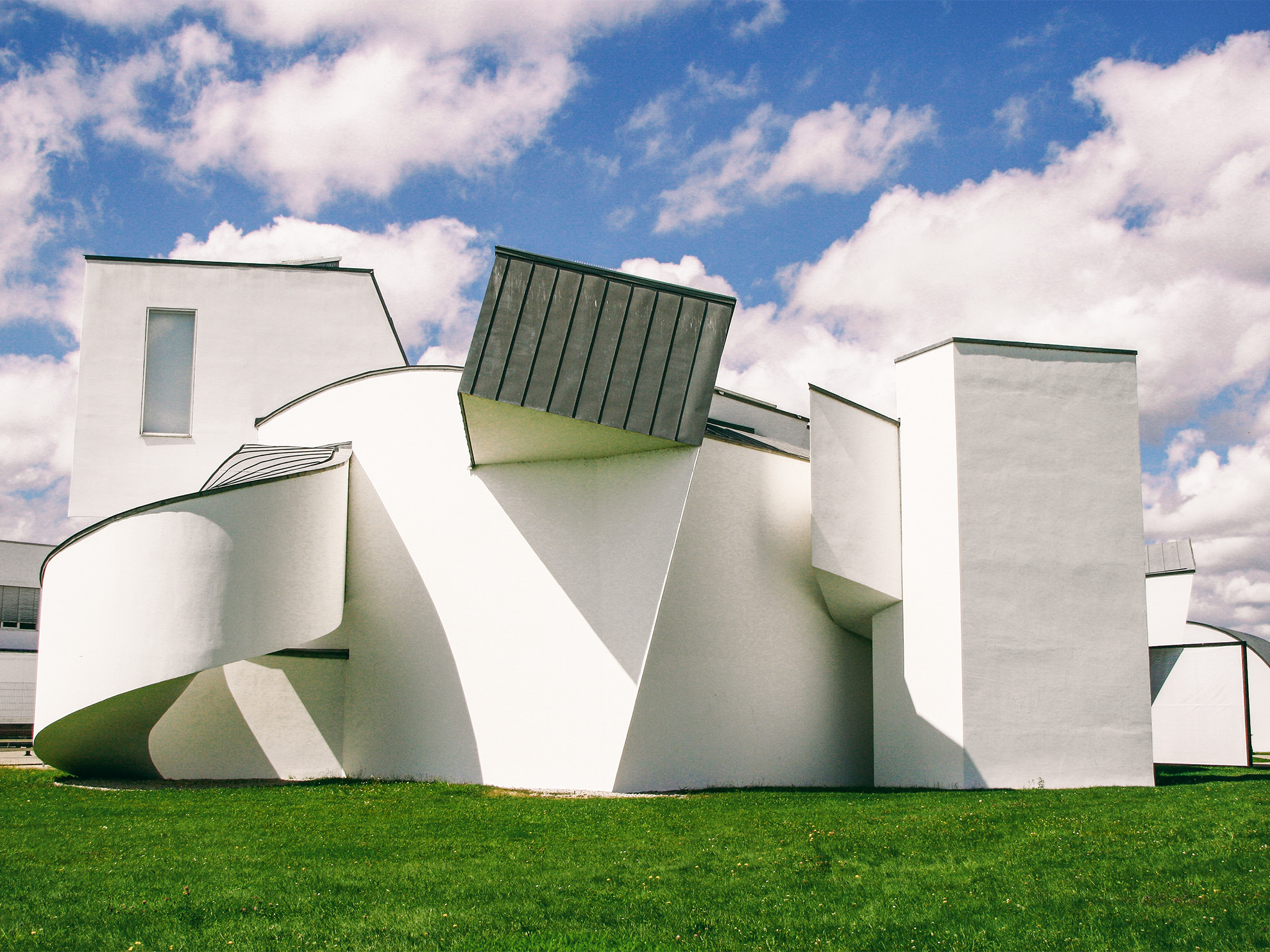
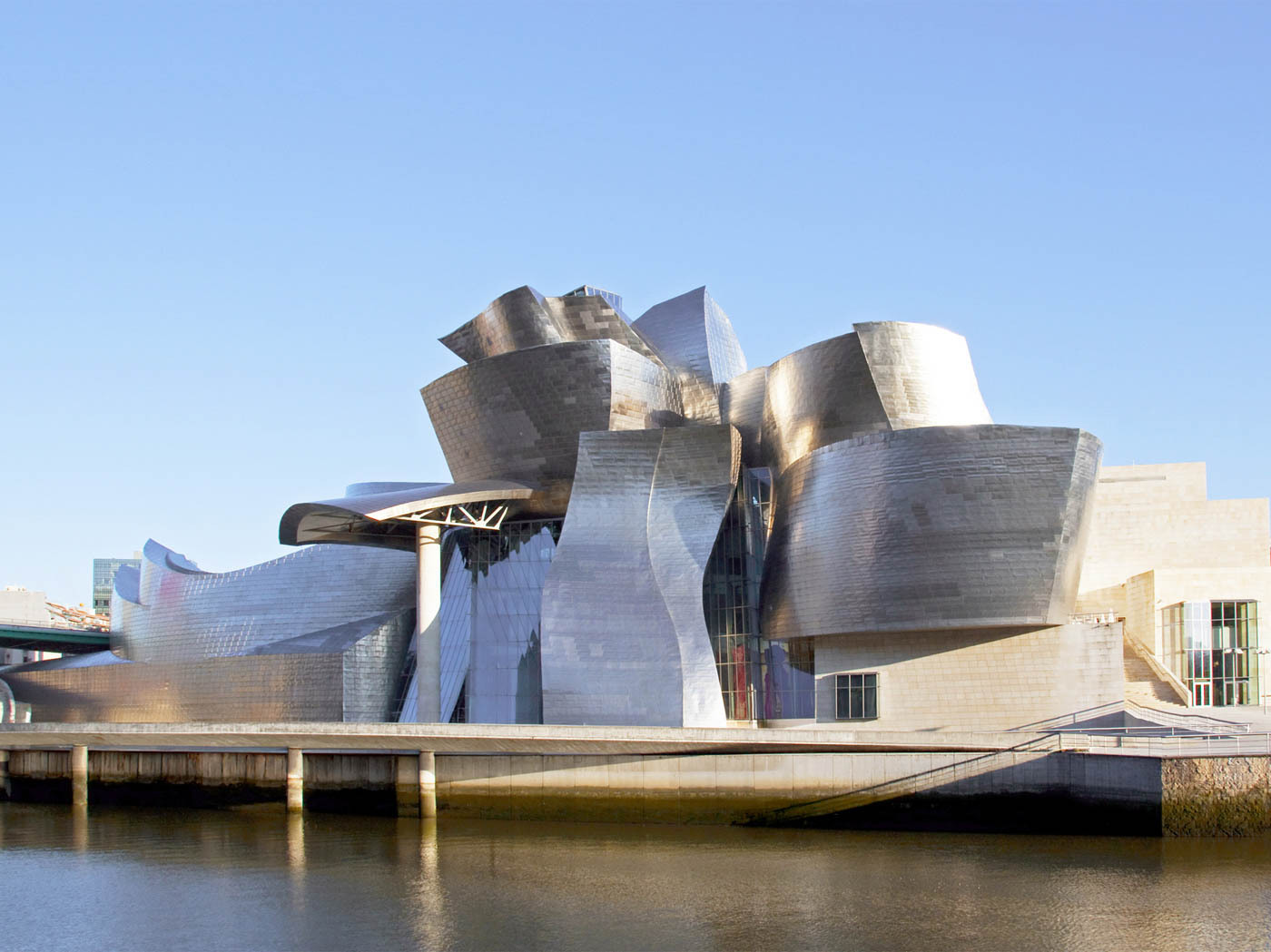
Deconstructivism is an architectural approach that gained international attention during the 1980s. Buildings often combine fragmented volumes, intersecting planes, and unexpected curves or angles. Their parts may appear to shift, overlap, or pull apart, creating visual tension within a carefully designed composition.
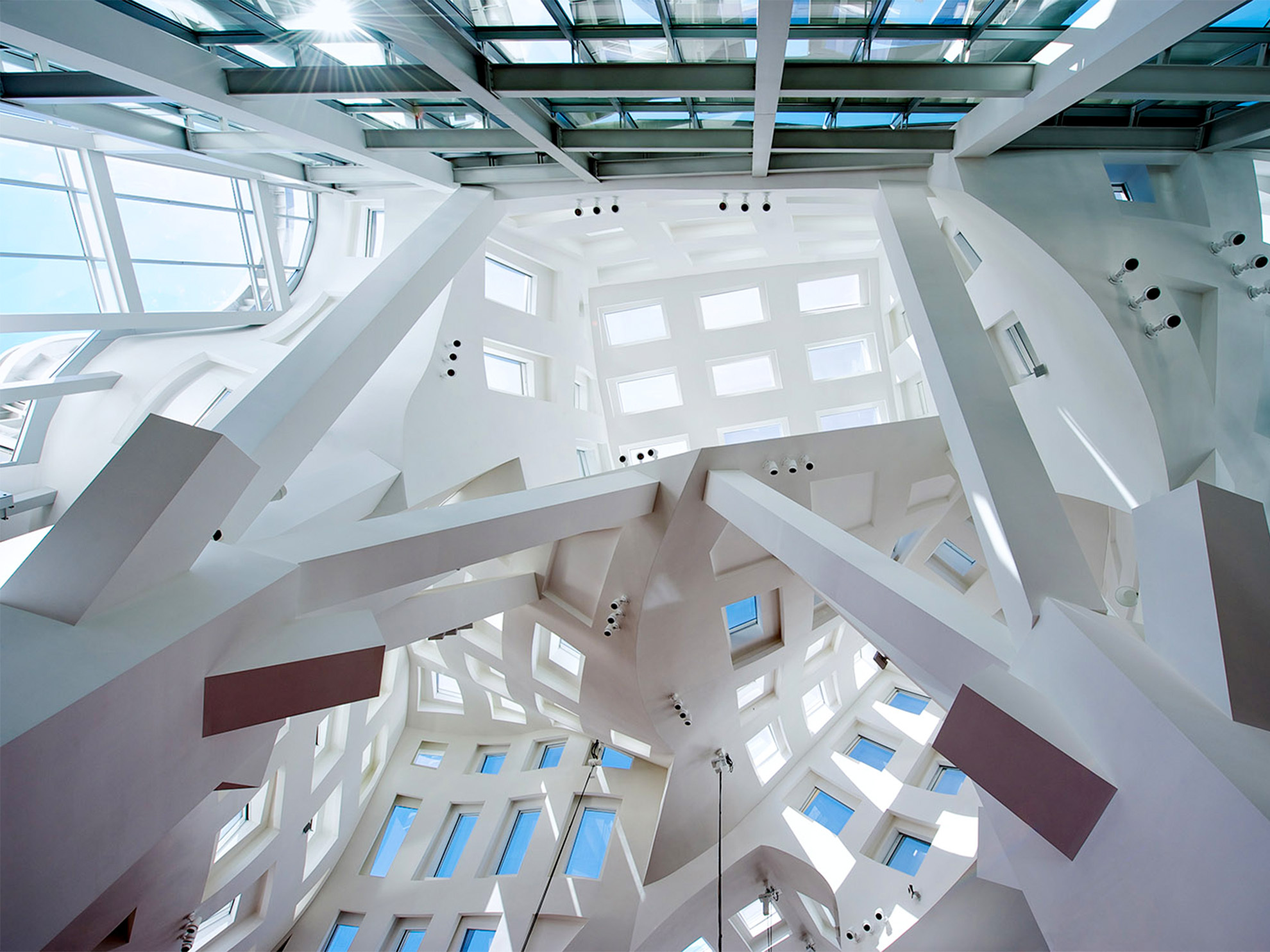
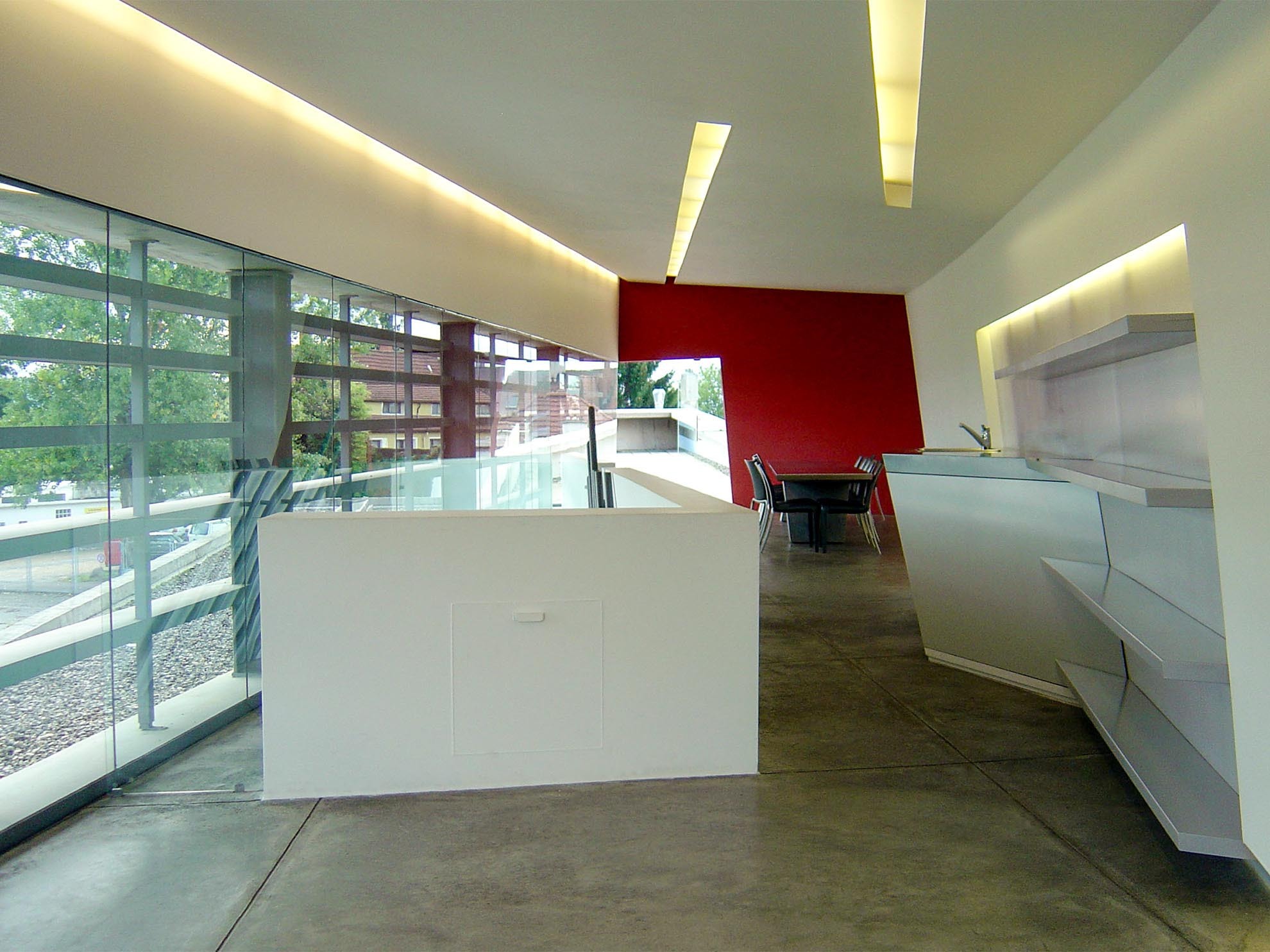
These experiments challenged the regular grids and unified forms associated with much modern architecture, including the International Style. Interiors can continue this exploration through angled walls, irregular openings, and changes in ceiling height. Woodwork contributes through precisely fitted frames, edges, and custom details coordinated with the surrounding architecture.

The Collection
Deconstructivism Characteristics
Deconstructivist architecture explores relationships between forms that appear displaced, interrupted, or in conflict. Walls, roofs, and openings may follow different alignments, while intersecting surfaces create changing views and unexpected spatial relationships. These compositions give buildings an expressive character that extends from their overall shape to individual architectural details.
- Fragmented and interlocking building forms
- Asymmetrical compositions and shifted alignments
- Tilted walls and sloping planes
- Angular or sweeping curved surfaces
- Distorted grids and irregular openings
- Contrasting materials and surface treatments
Deconstructivism Mouldings
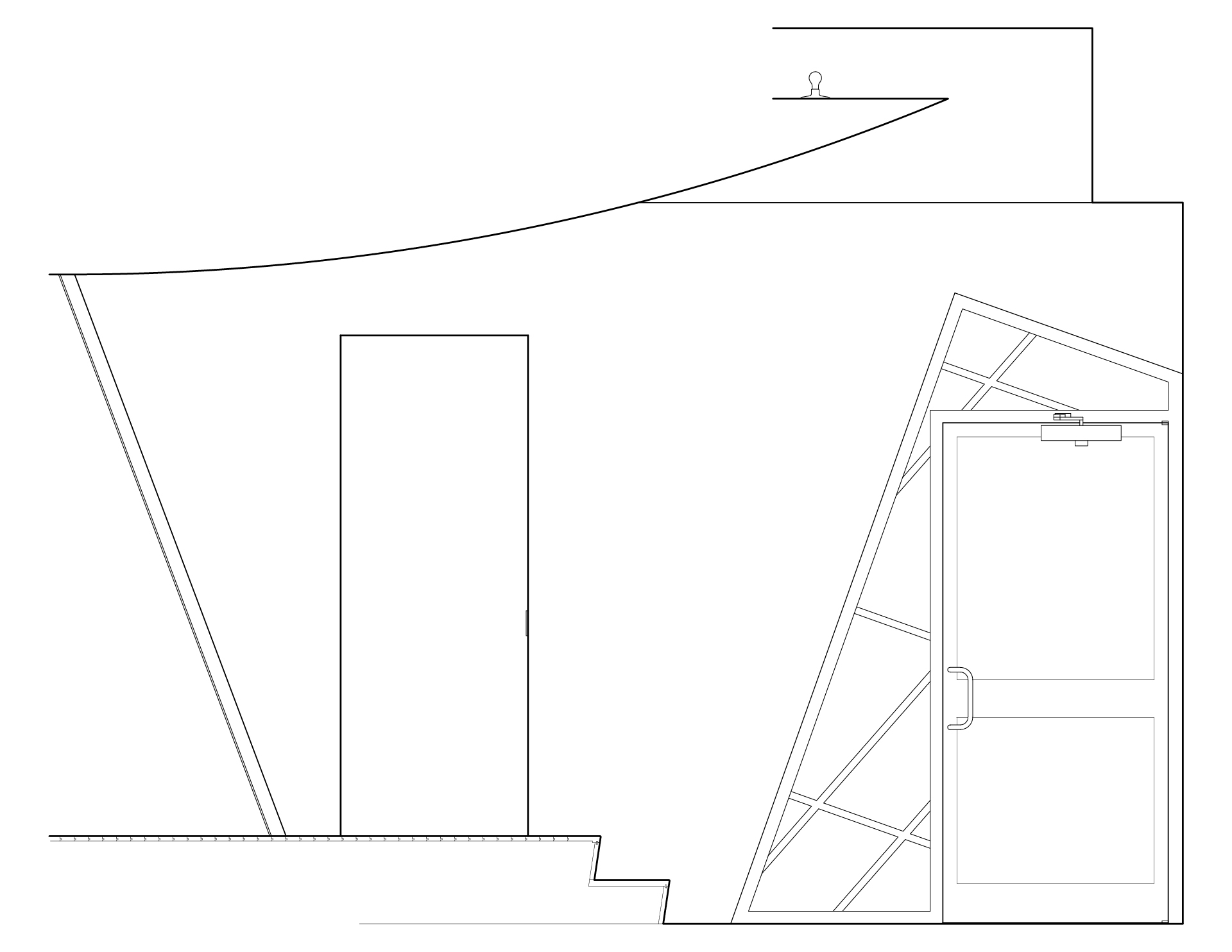
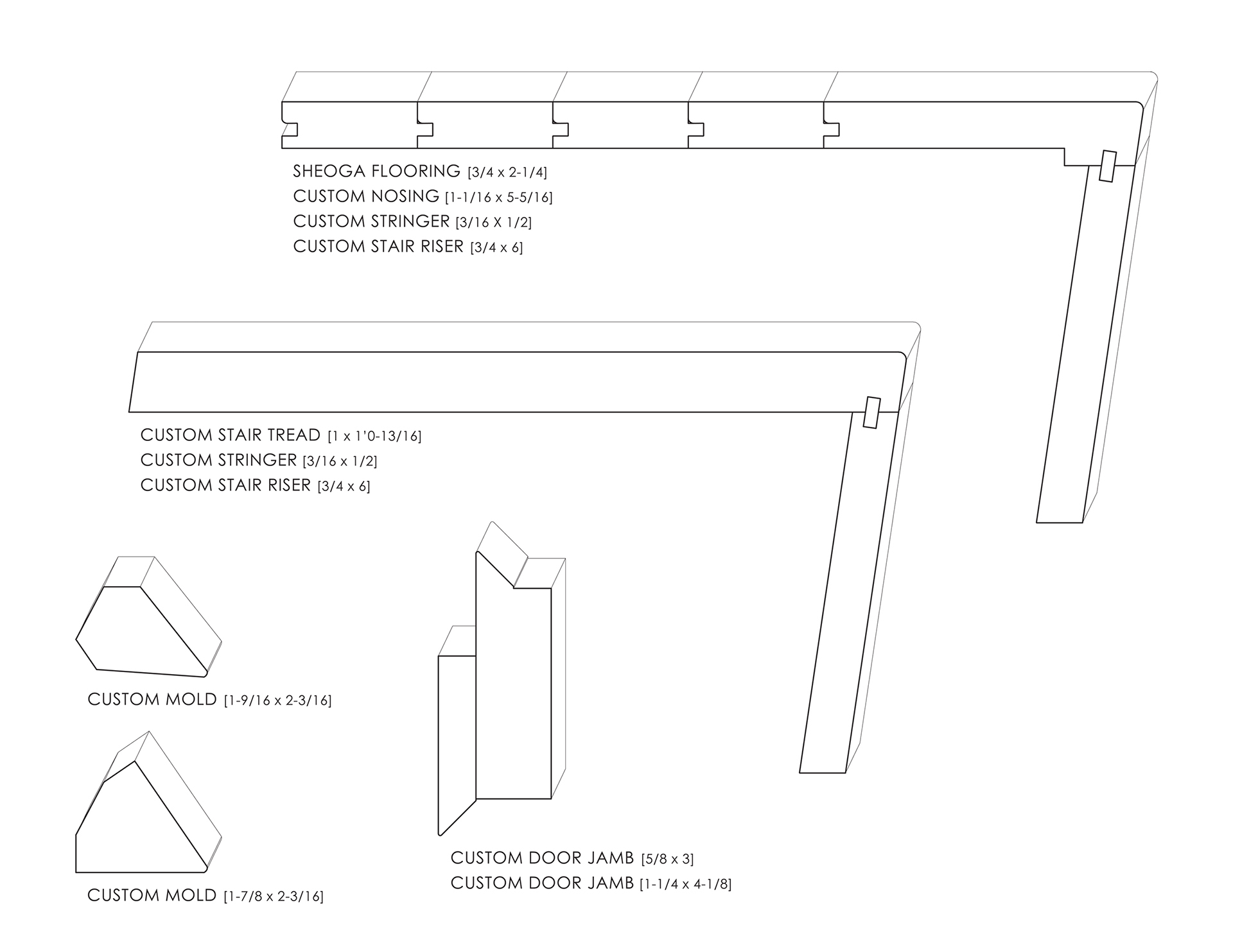
Woodwork in deconstructivist interiors often uses plain sections, angled cuts, and carefully positioned edges. Door jambs, window frames, and recessed trim can follow the building’s geometry or introduce another alignment within the composition. Flush doors and sharply defined surface junctions depend on precise fitting and coordination between materials.
Custom stair treads, nosings, risers, stringers, and flooring transitions can accommodate unusual angles and dimensions. The design comes from the relationship between these individual parts and the surrounding space, with accurate measurements and careful machining helping achieve the intended lines and junctions.
Shop Now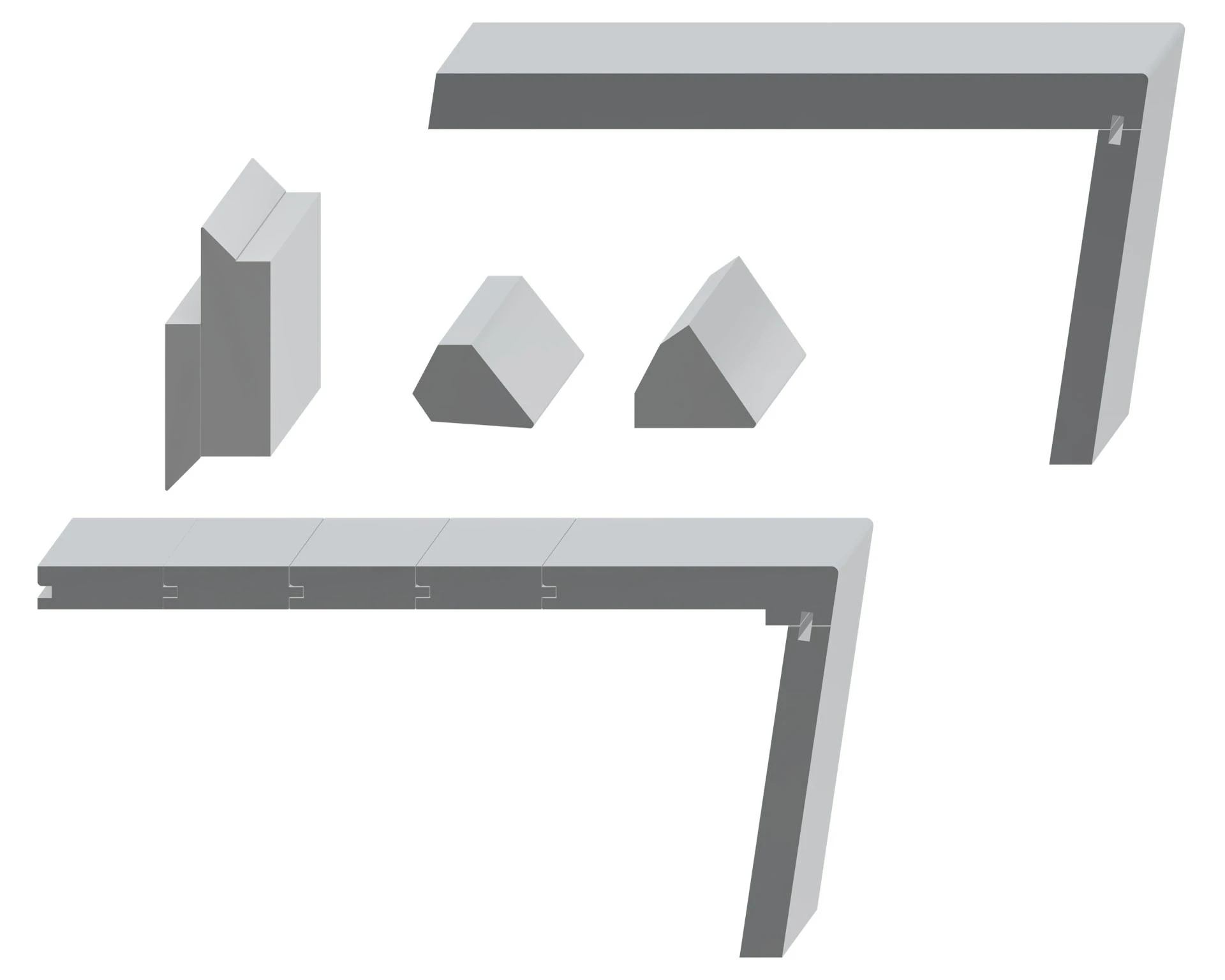
Period Details & Drawings
History of Deconstructivism
Deconstructivism developed through architectural experiments during the 1970s and 1980s. Architects reconsidered the regular grids and disciplined compositions associated with the International Style, while also exploring alternatives to the historical references used in Postmodern architecture. Their work developed along different paths, without a shared manifesto.
Jacques Derrida’s philosophical writings on deconstruction, developed during the 1960s, influenced architectural discussion and the thinking of some designers. This relationship varied between architects. Early twentieth-century Russian Constructivism provided another important reference through its experimental arrangements of geometric forms, intersecting planes, and apparent structural tension.
The approach received international recognition through the Museum of Modern Art’s Deconstructivist Architecture exhibition in New York in 1988. Organized by Philip Johnson and Mark Wigley, it brought together work by Frank Gehry, Peter Eisenman, Zaha Hadid, Rem Koolhaas, Daniel Libeskind, Bernard Tschumi, and the architectural practice Coop Himmelb(l)au. Drawings and models revealed related formal experiments among designers working independently.
During the 1990s and early twenty-first century, digital modeling and advances in engineering and fabrication helped architects realize increasingly complex designs. Gehry’s Guggenheim Museum Bilbao, opened in 1997, and Walt Disney Concert Hall in Los Angeles, opened in 2003, demonstrate the possibilities of expressive building forms supported by detailed technical coordination. Such projects extended interest in fragmented and sculptural architecture while emphasizing the precision required to construct it.