Egyptian Revival
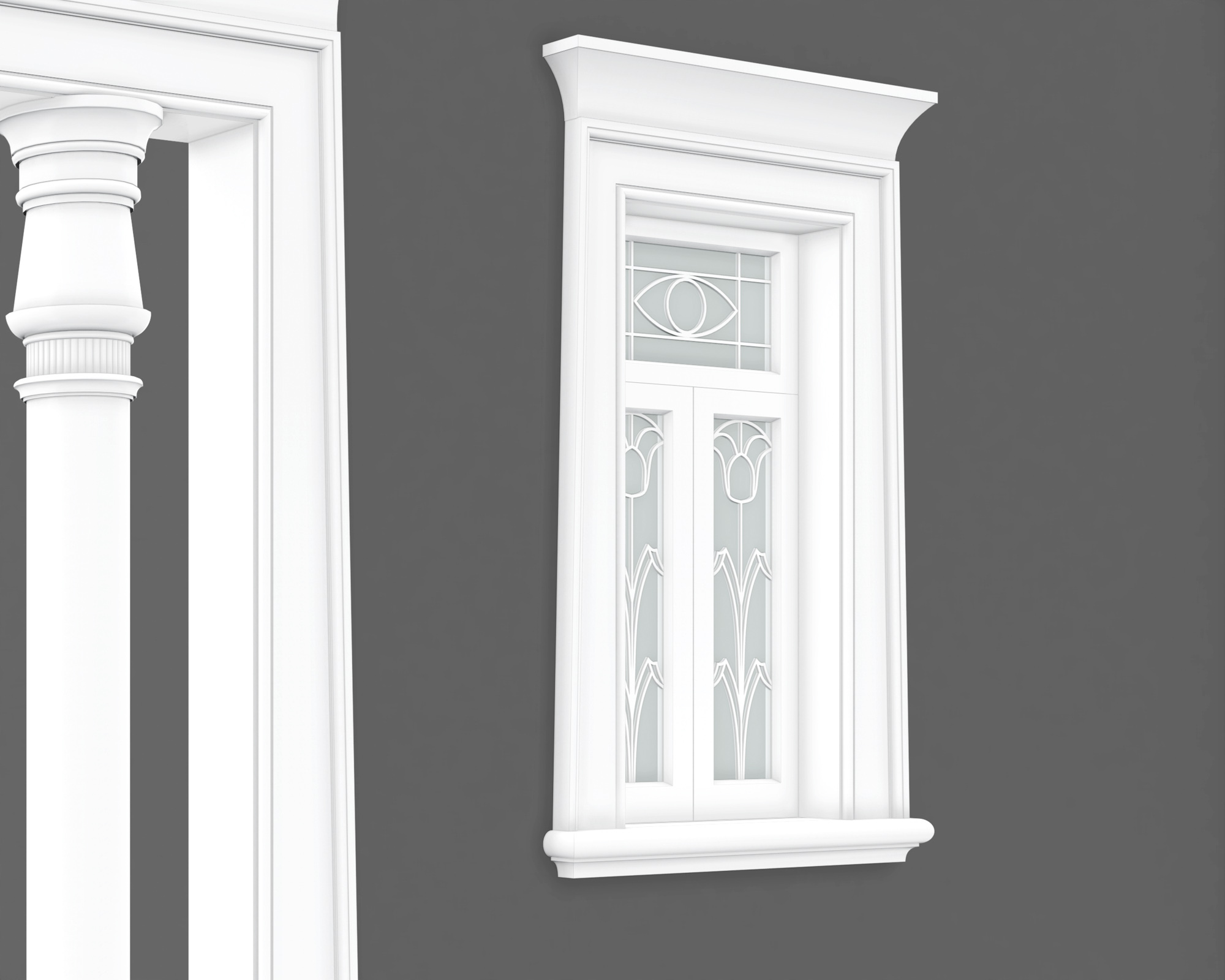
Tapered forms, sweeping cornices, and stylized plant details bring the monumental character of ancient Egypt to architecture and interior woodwork.
What Is Egyptian Revival?
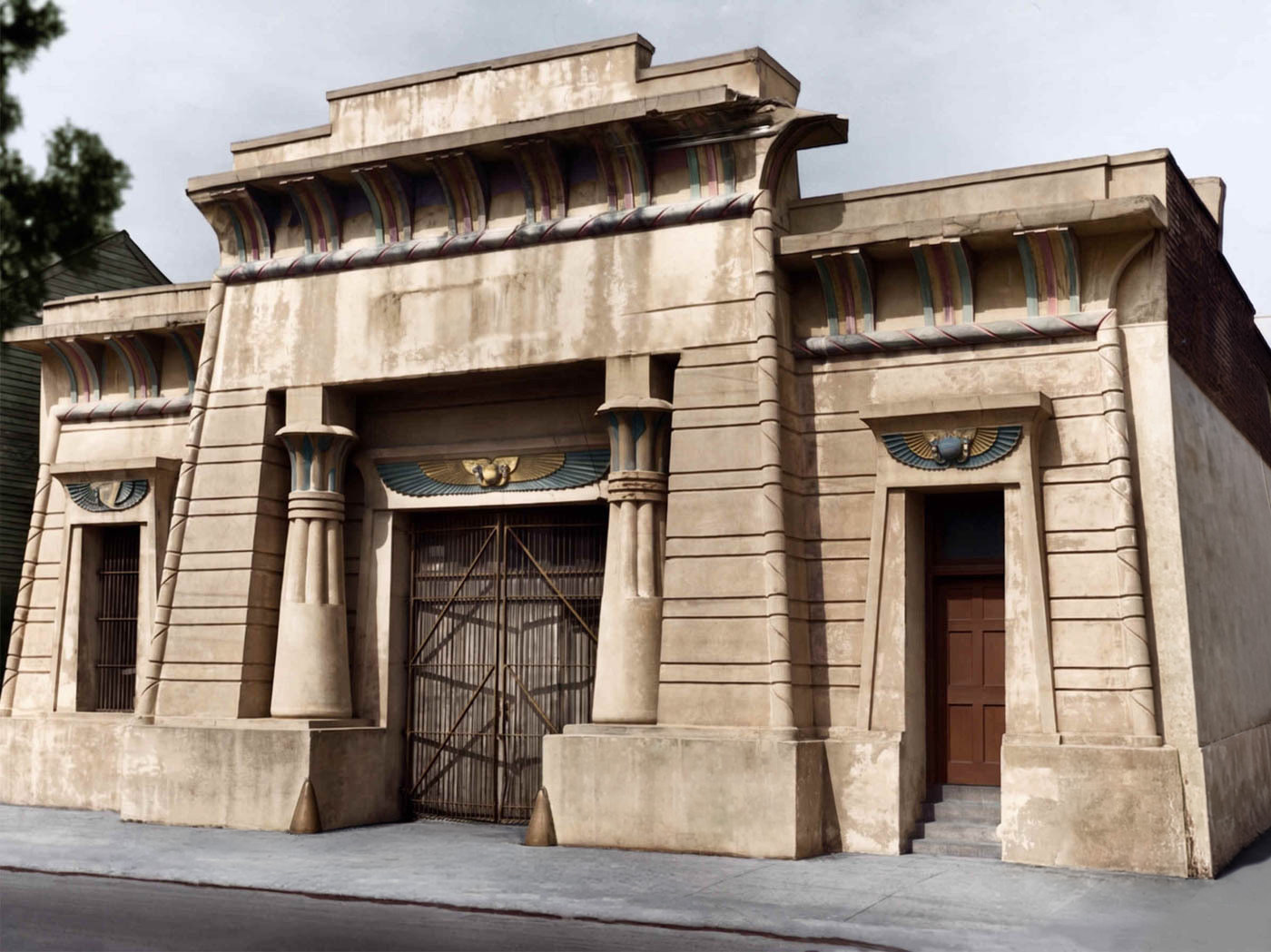
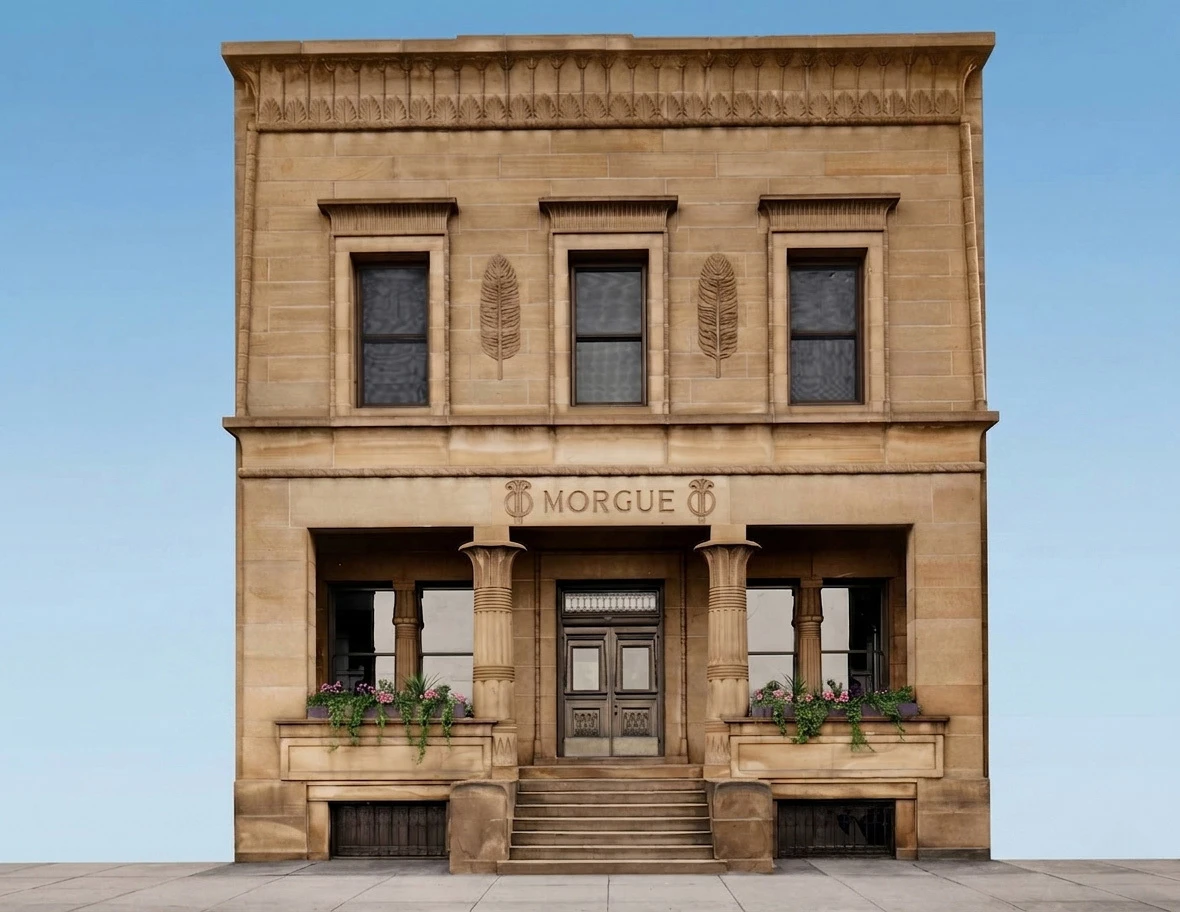
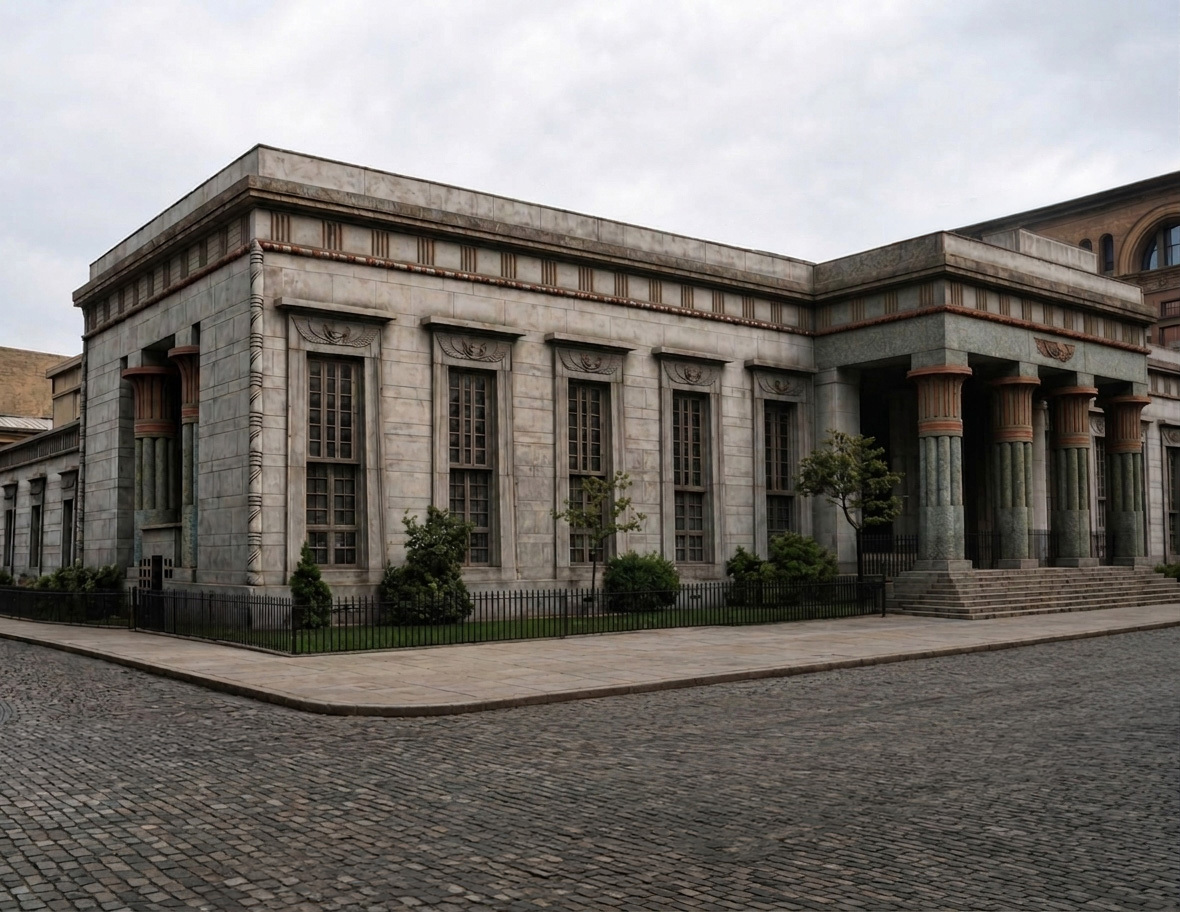
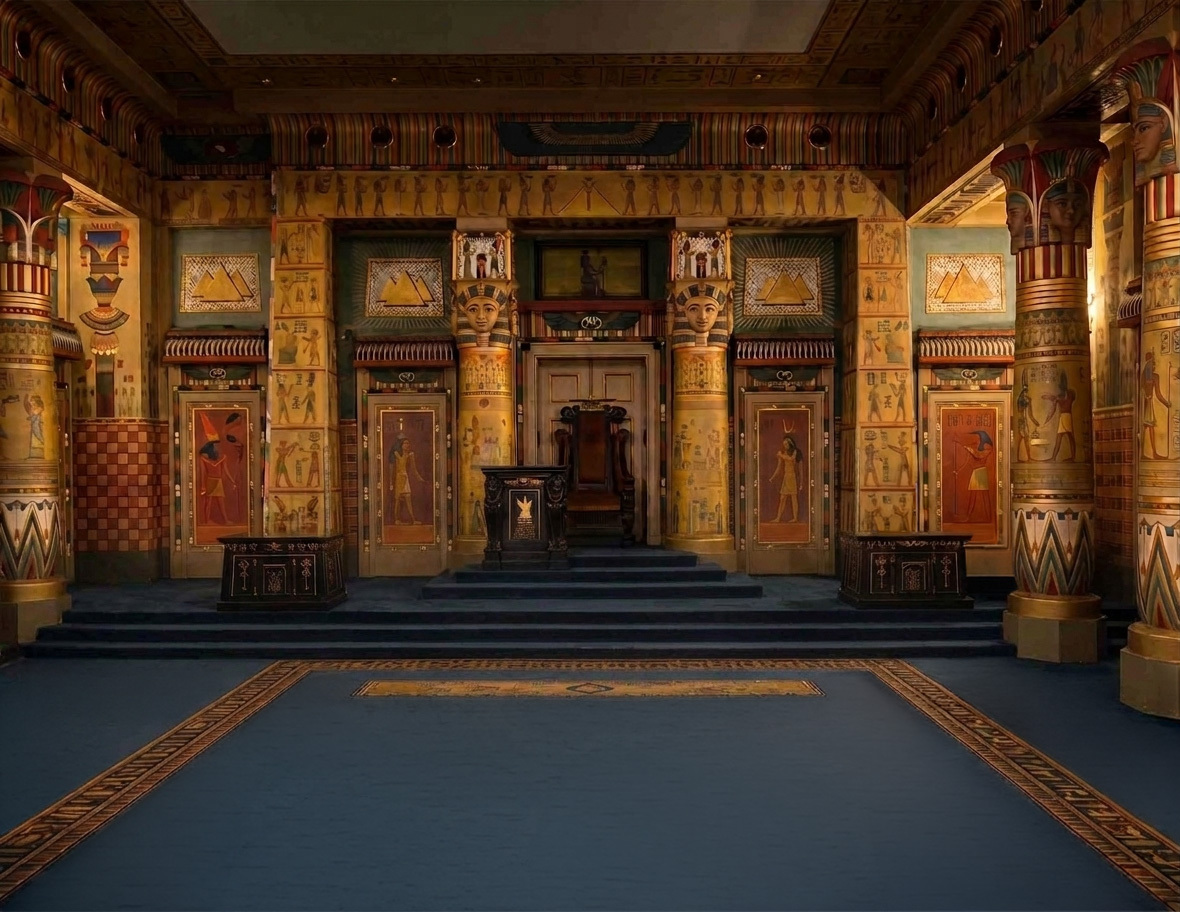
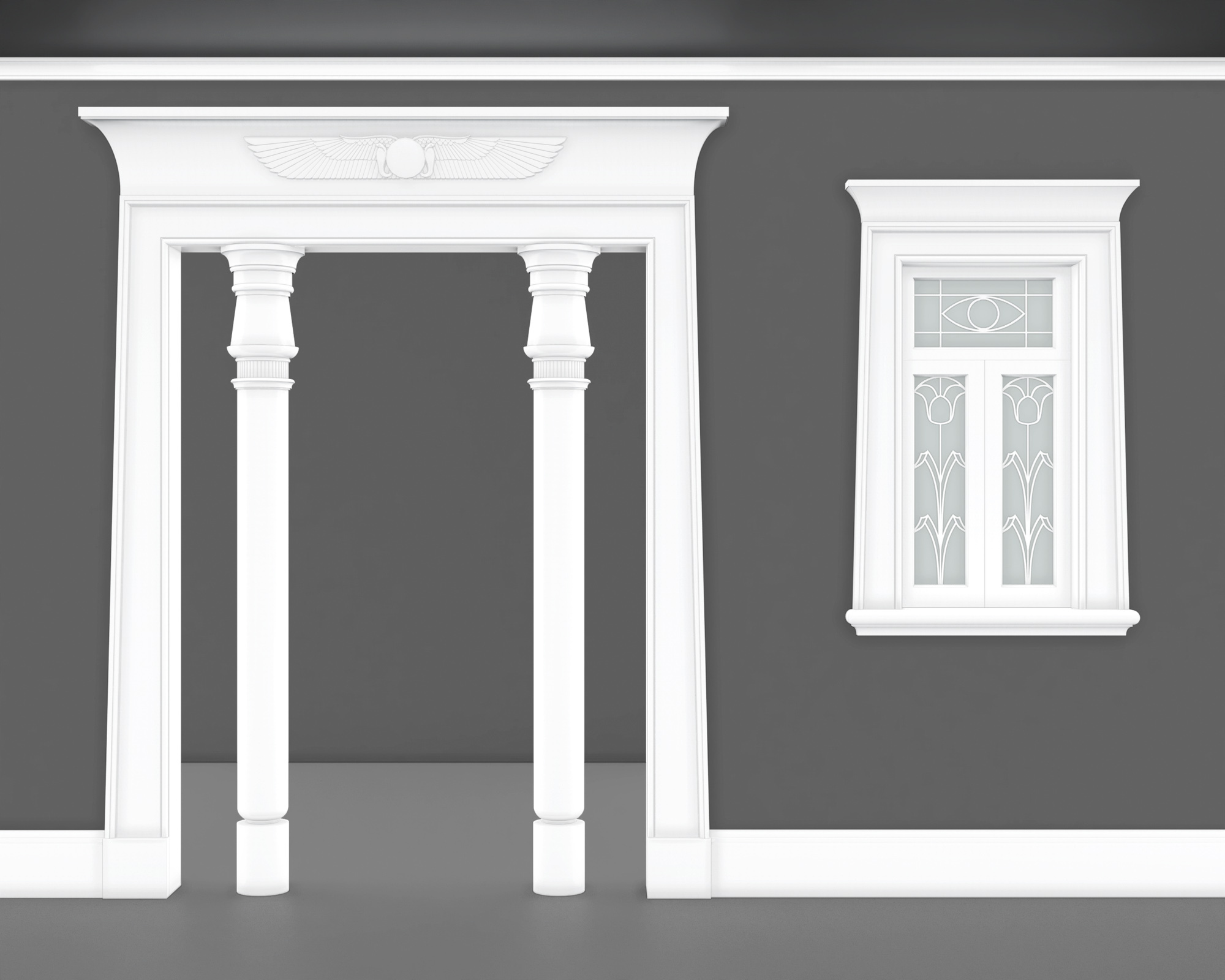
Egyptian Revival is an architectural and decorative style inspired by the temples, tombs, and monuments of ancient Egypt. It gained prominence in Europe and the United States during the nineteenth century, with renewed interest during the early twentieth century. Tapered walls, substantial columns, flaring cornices, and stylized lotus and papyrus motifs give the style its distinctive character.
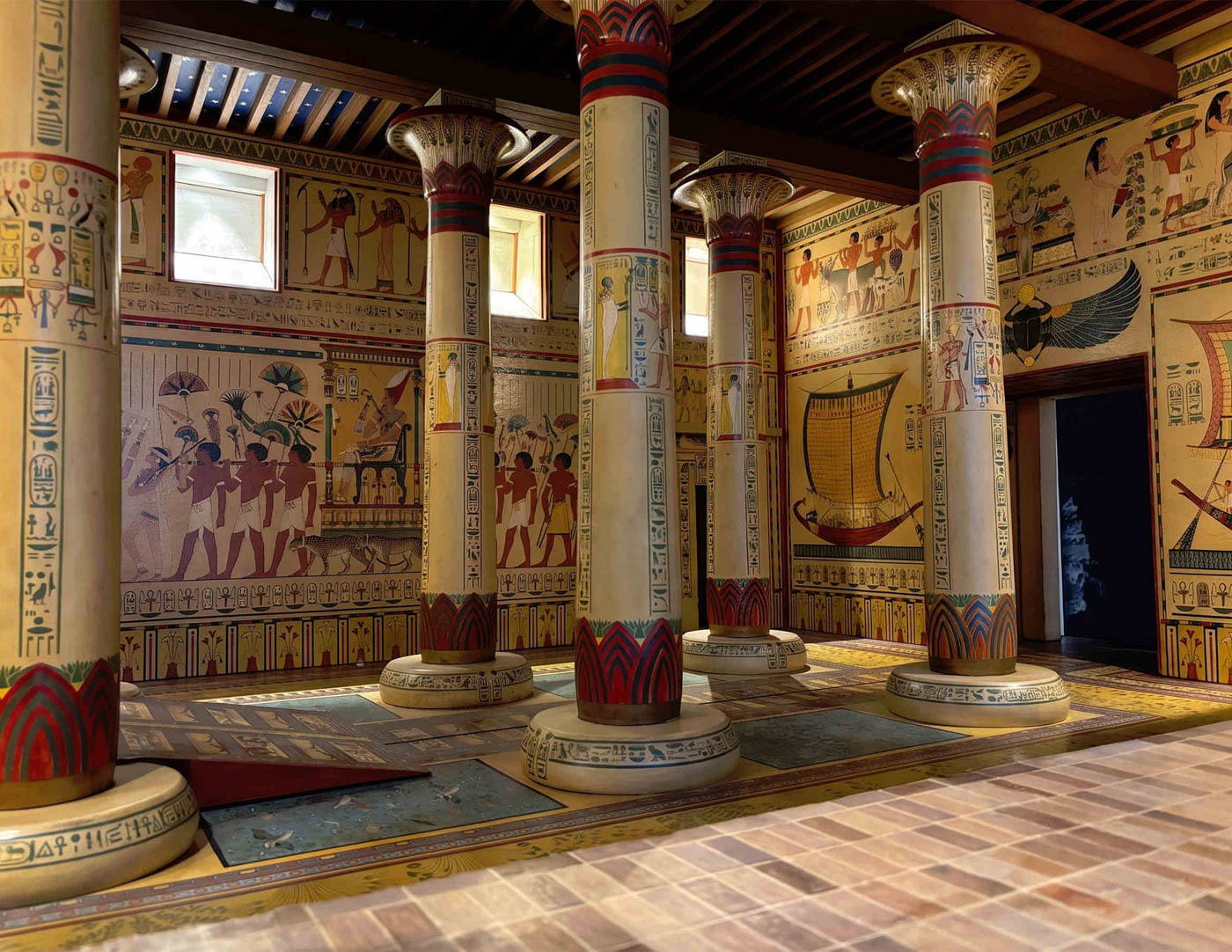
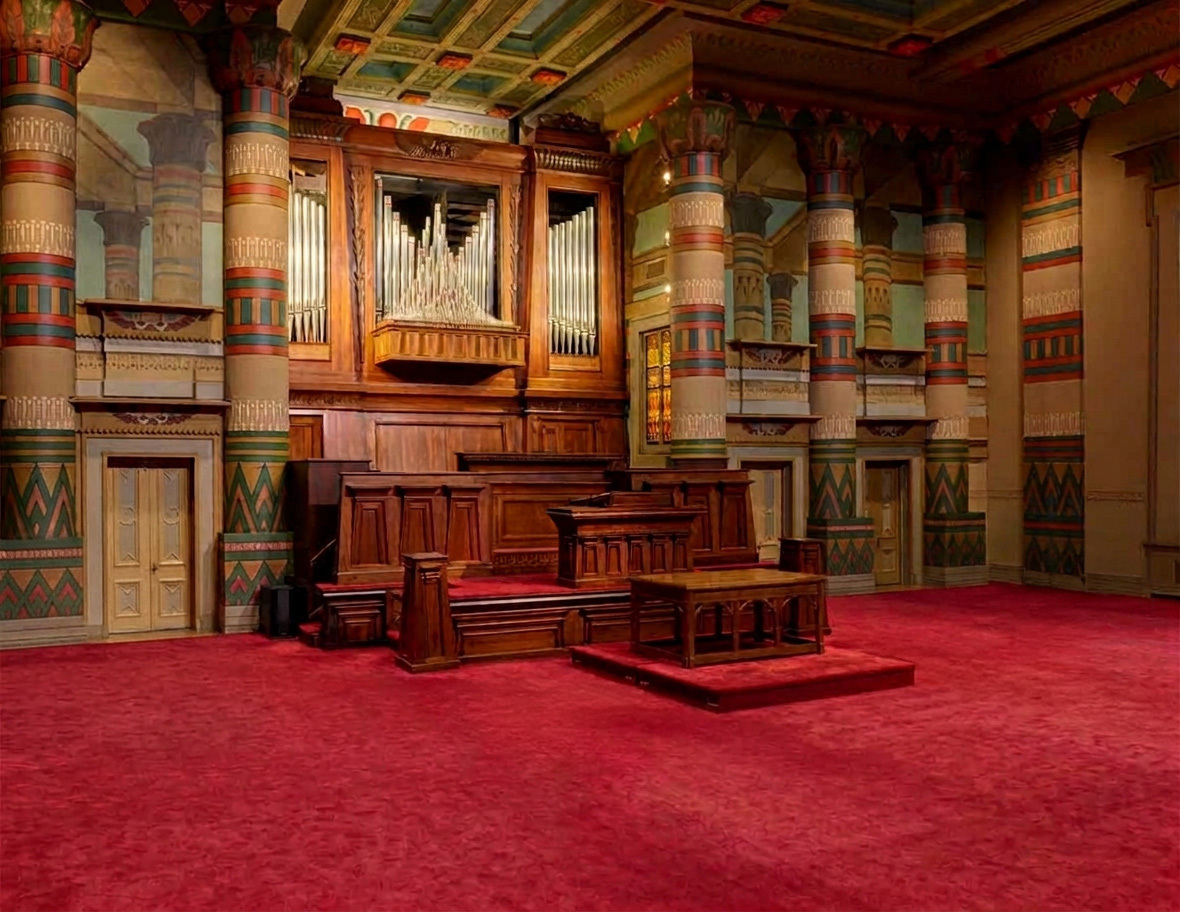
The style appeared in cemetery gateways, mausoleums, monuments, institutional buildings, theaters, and selected residences. Interiors adapt its architectural vocabulary through substantial door surrounds, curved cornices, decorative columns, and painted or carved ornament. Designs range from restrained compositions to elaborate settings filled with Egyptian imagery.
The Collection
Egyptian Revival Characteristics
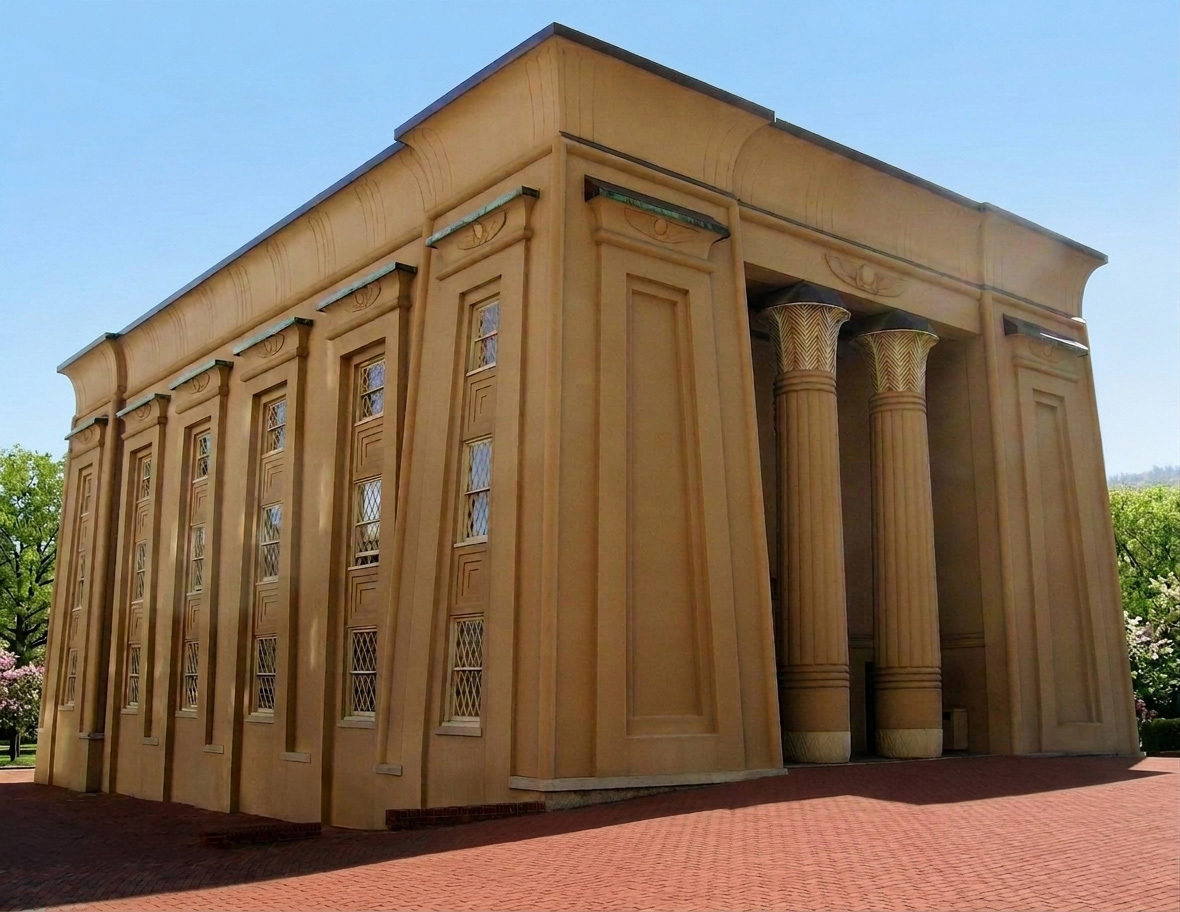
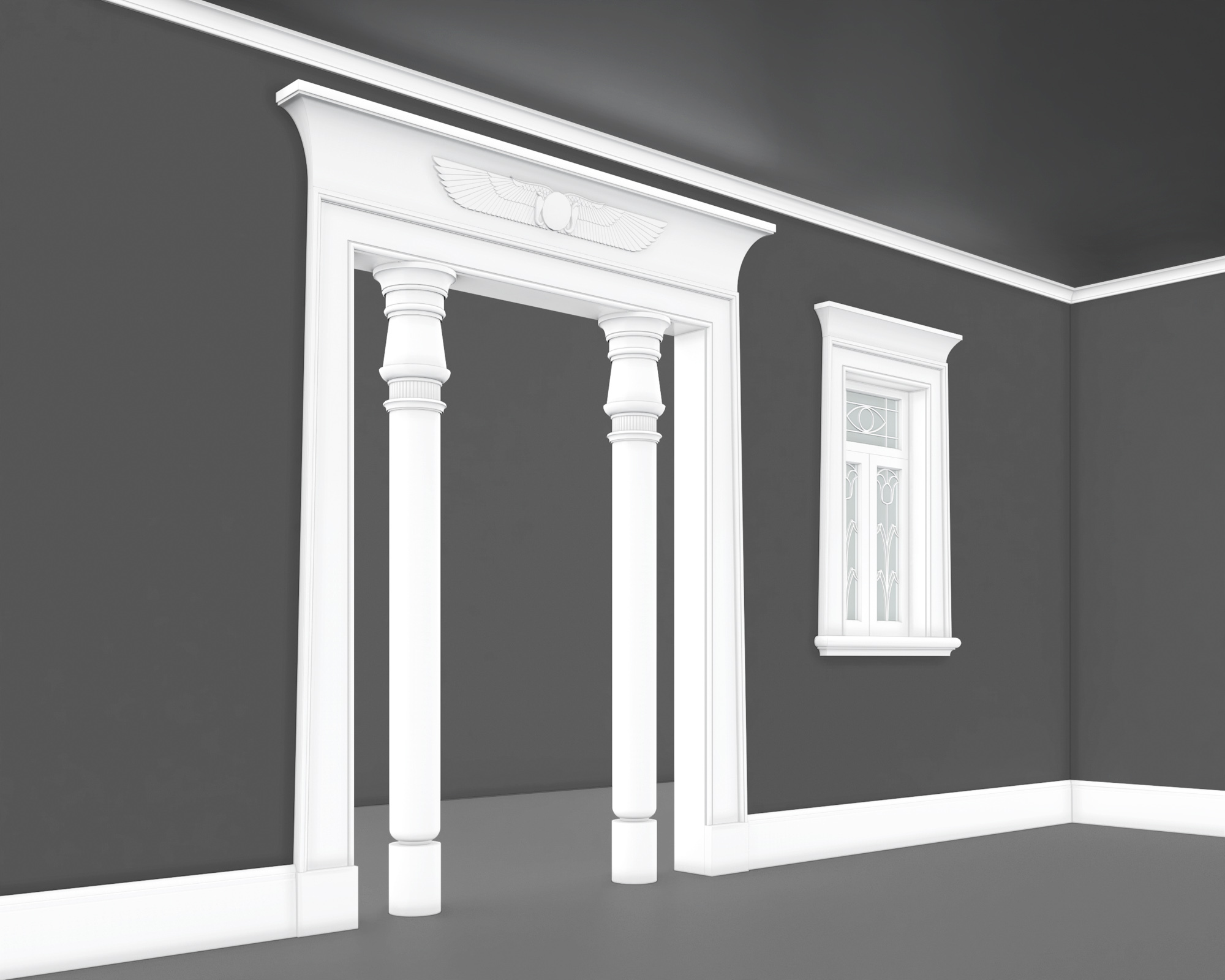
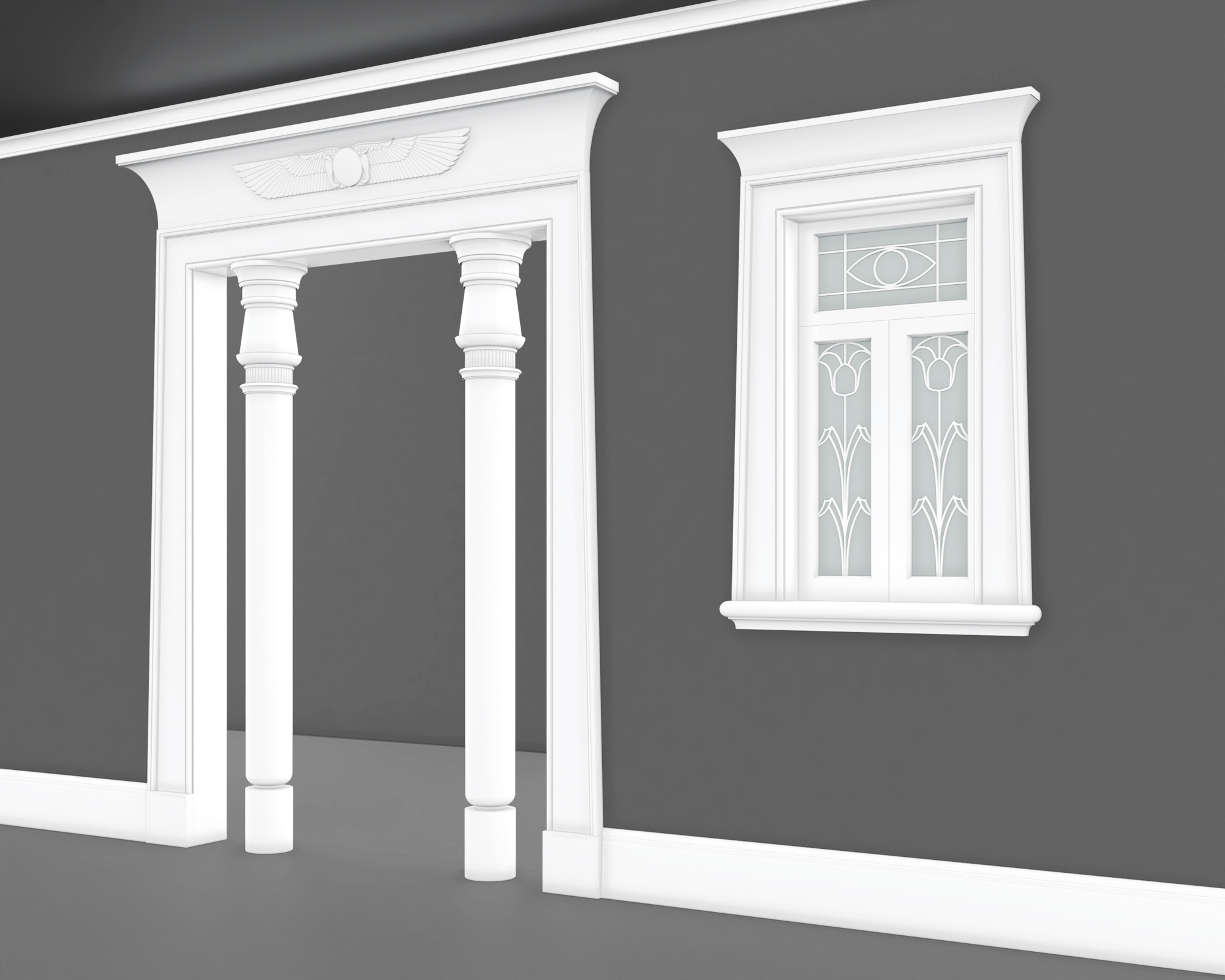
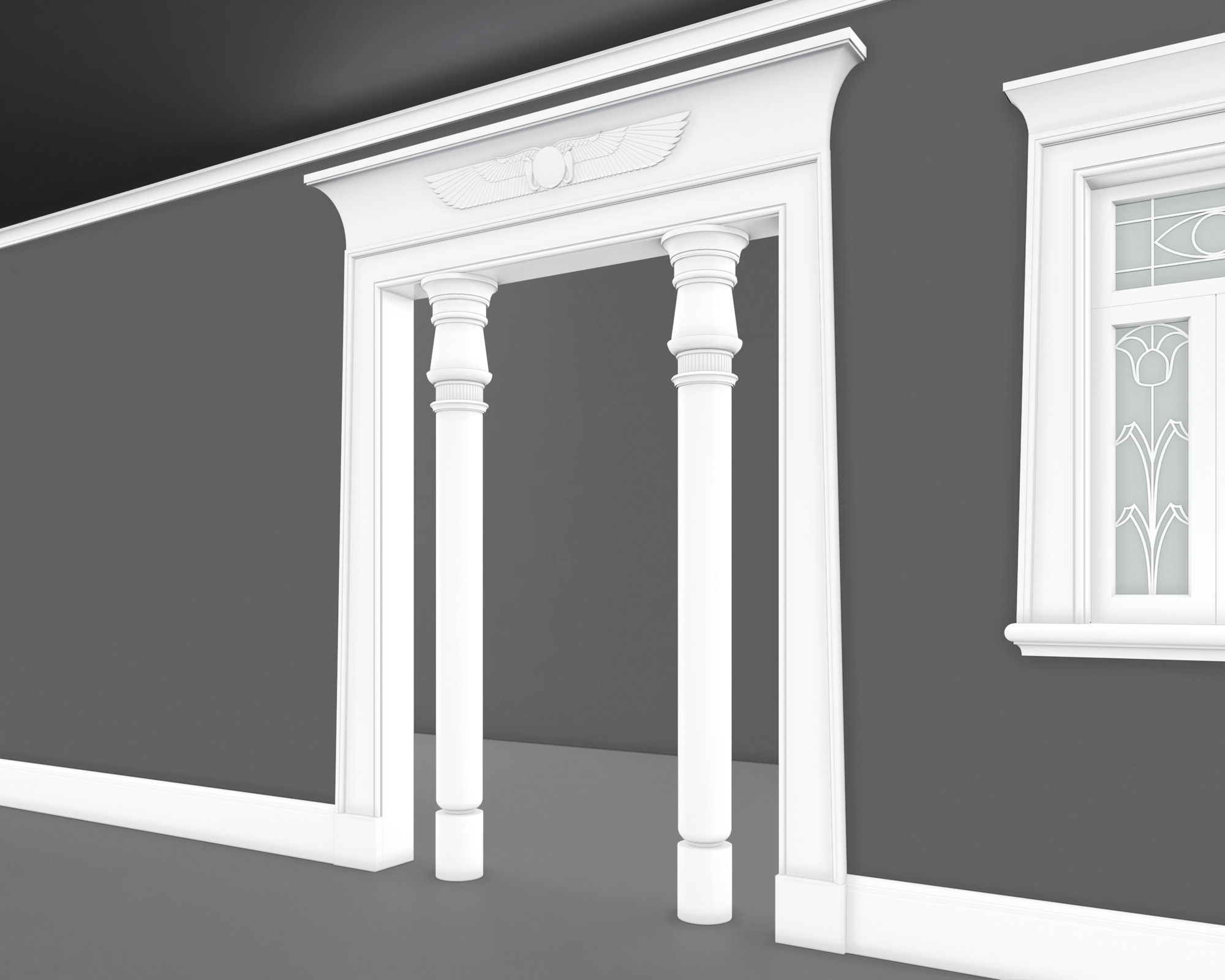
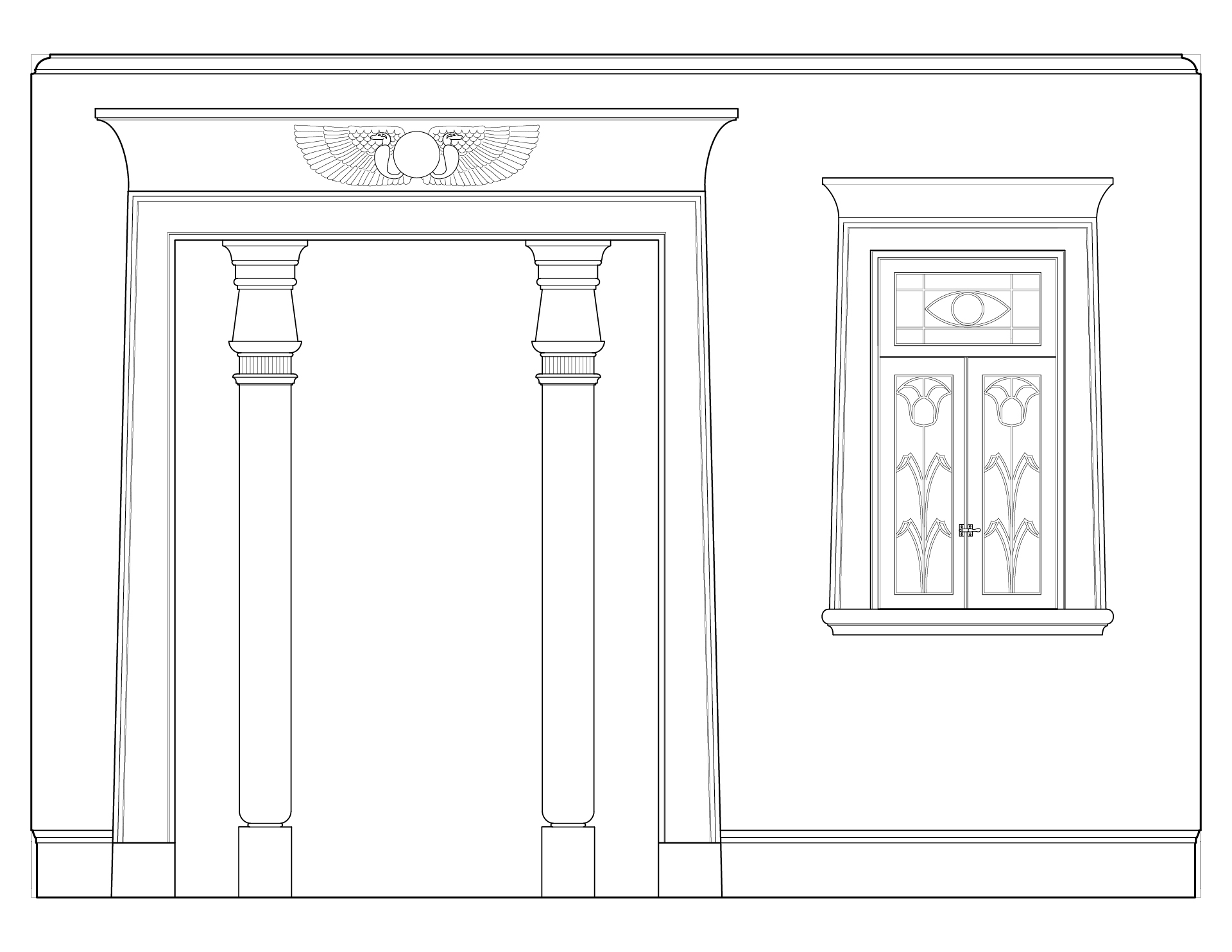
Egyptian Revival architecture combines strong geometric forms with ornament drawn from ancient Egyptian buildings and decorative arts. Broad wall surfaces and substantial entrances create a monumental effect, while curved cornices and plant-inspired capitals soften the composition. Ornament may be carved, modeled, or painted, ranging from simple bands to elaborate symbolic scenes.
- Battered walls and tapered door surrounds
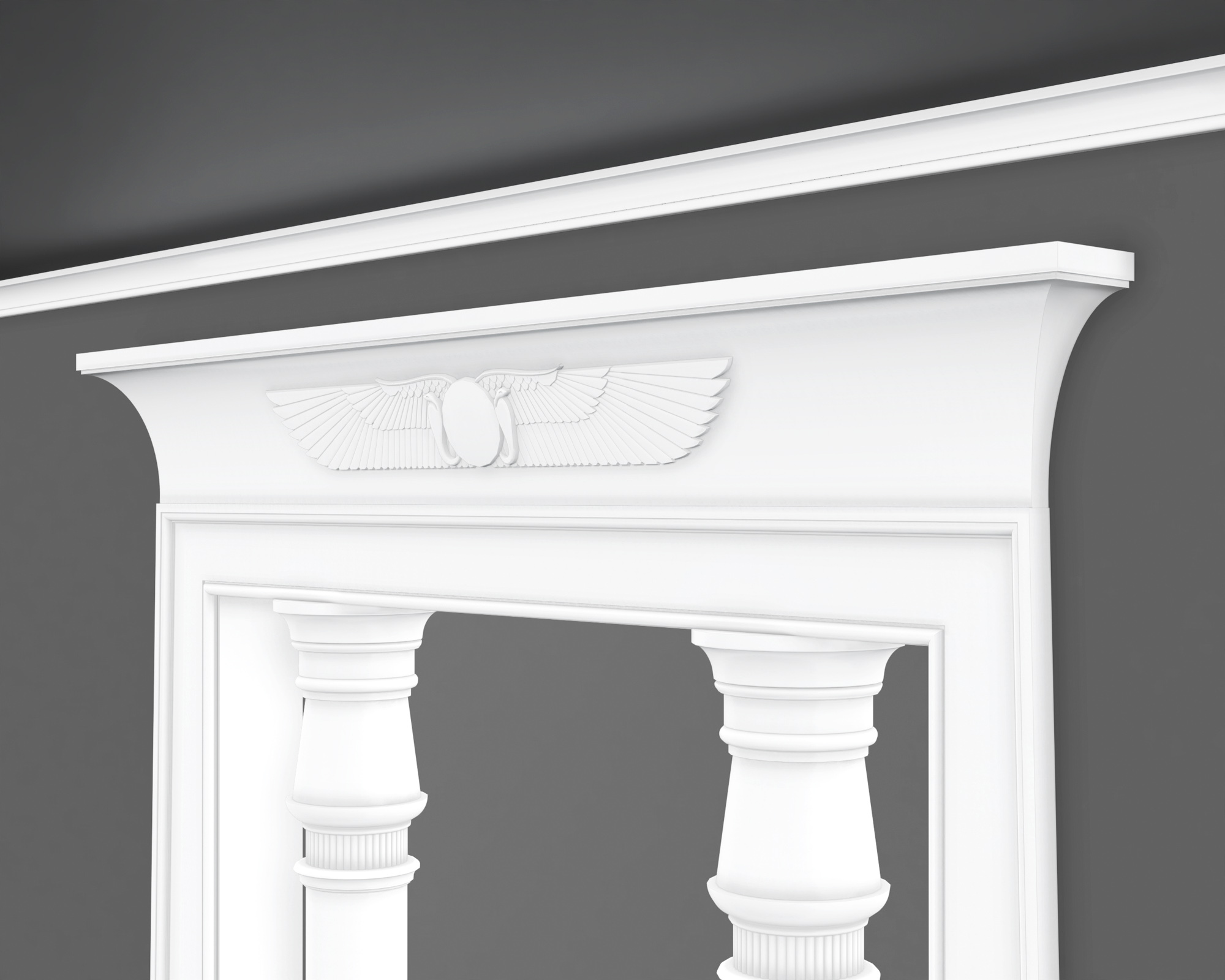
- Pylon-shaped entrances with broad lintels
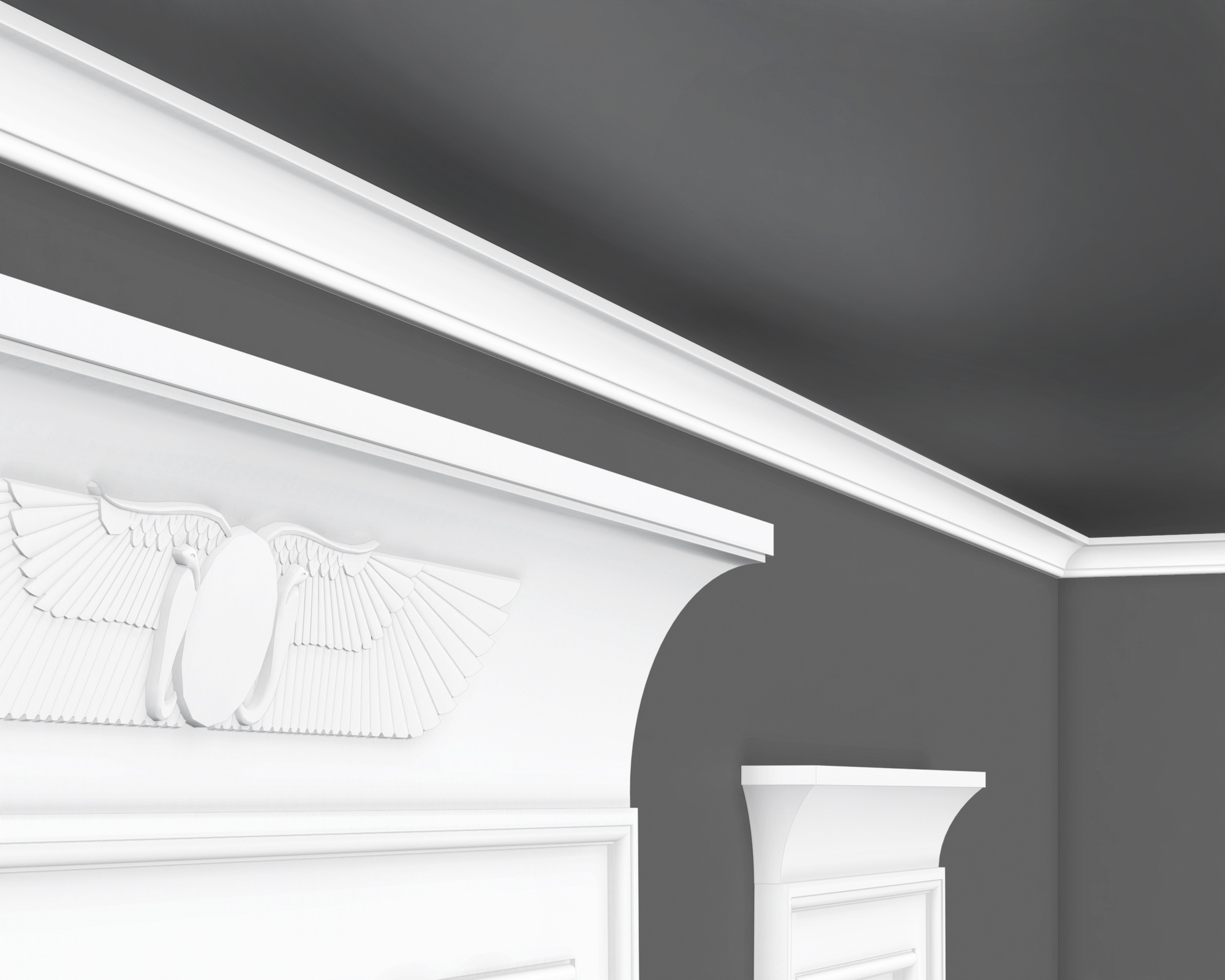
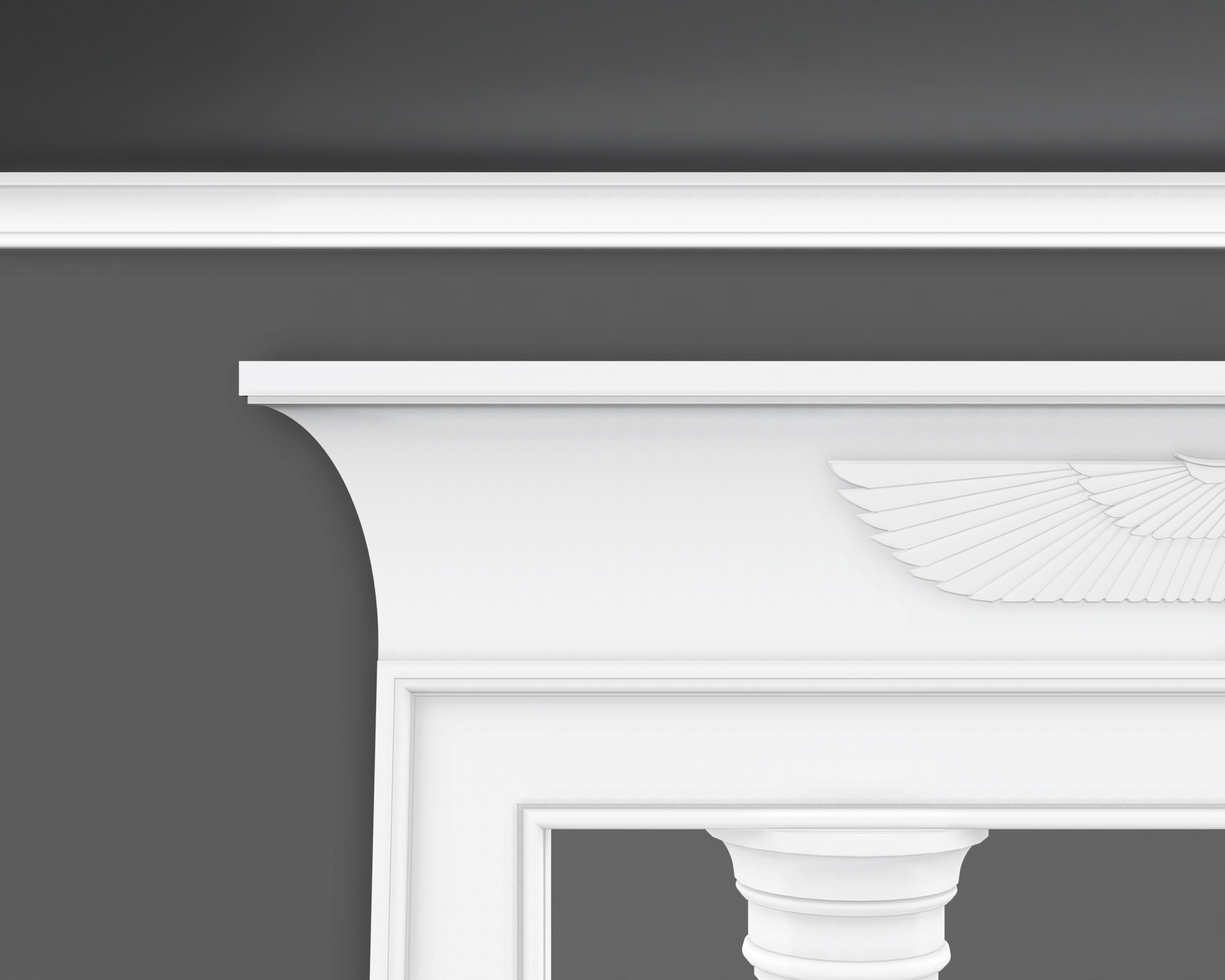
- Flaring cavetto cornices
- Columns with lotus or papyrus capitals
- Winged sun disks, scarabs, and hieroglyphic motifs
- Obelisks, pyramidal forms, and sphinxes
EGYPTIAN REVIVAL MOULDINGS
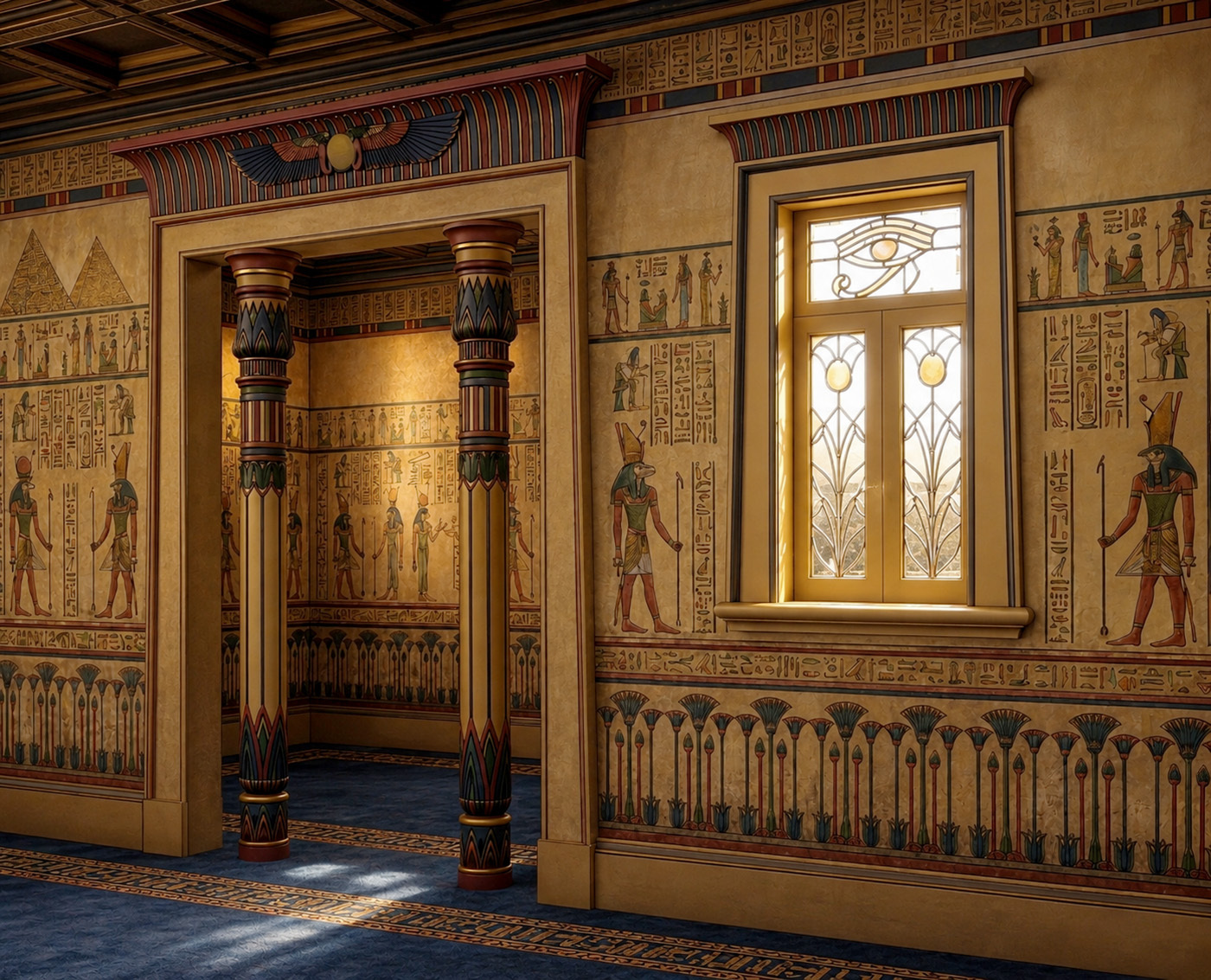
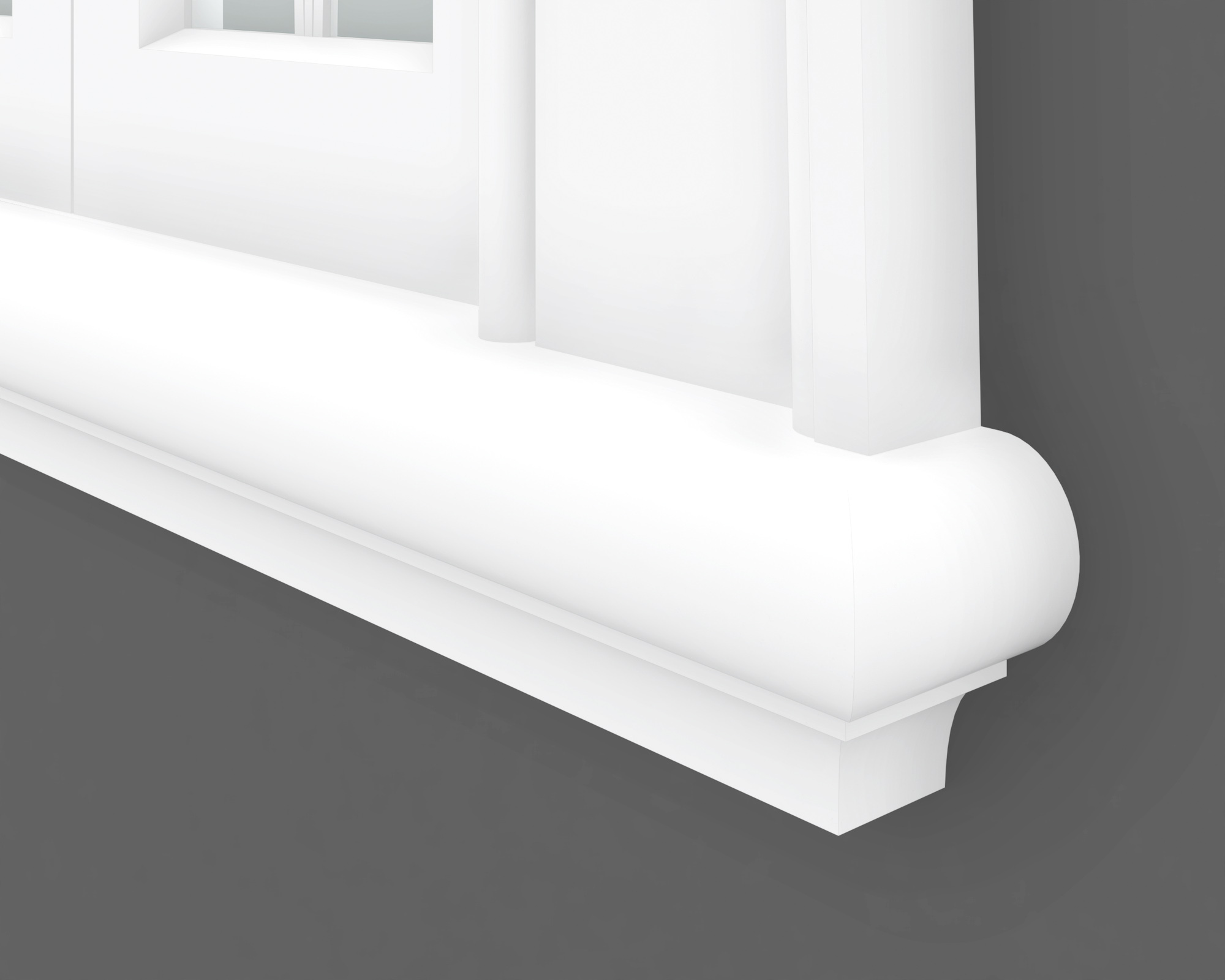
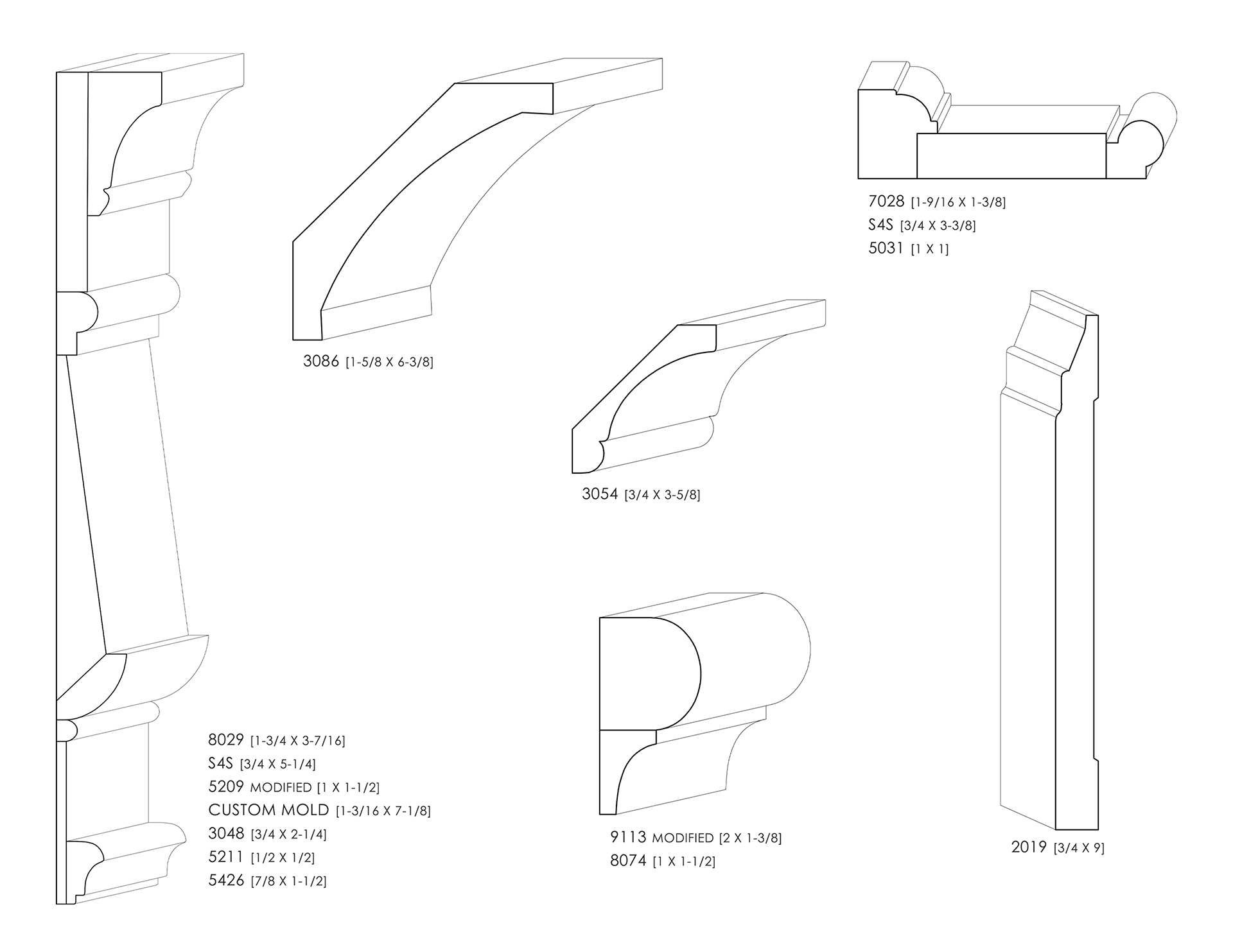
Egyptian Revival mouldings combine broad flat surfaces with pronounced concave and convex profiles. A characteristic feature is the cavetto cornice, a deep concave moulding that flares outward toward its upper edge. Rounded torus mouldings and narrow fillets frame openings and separate surfaces, while substantial lintels and tapered surrounds reinforce the style’s architectural character.
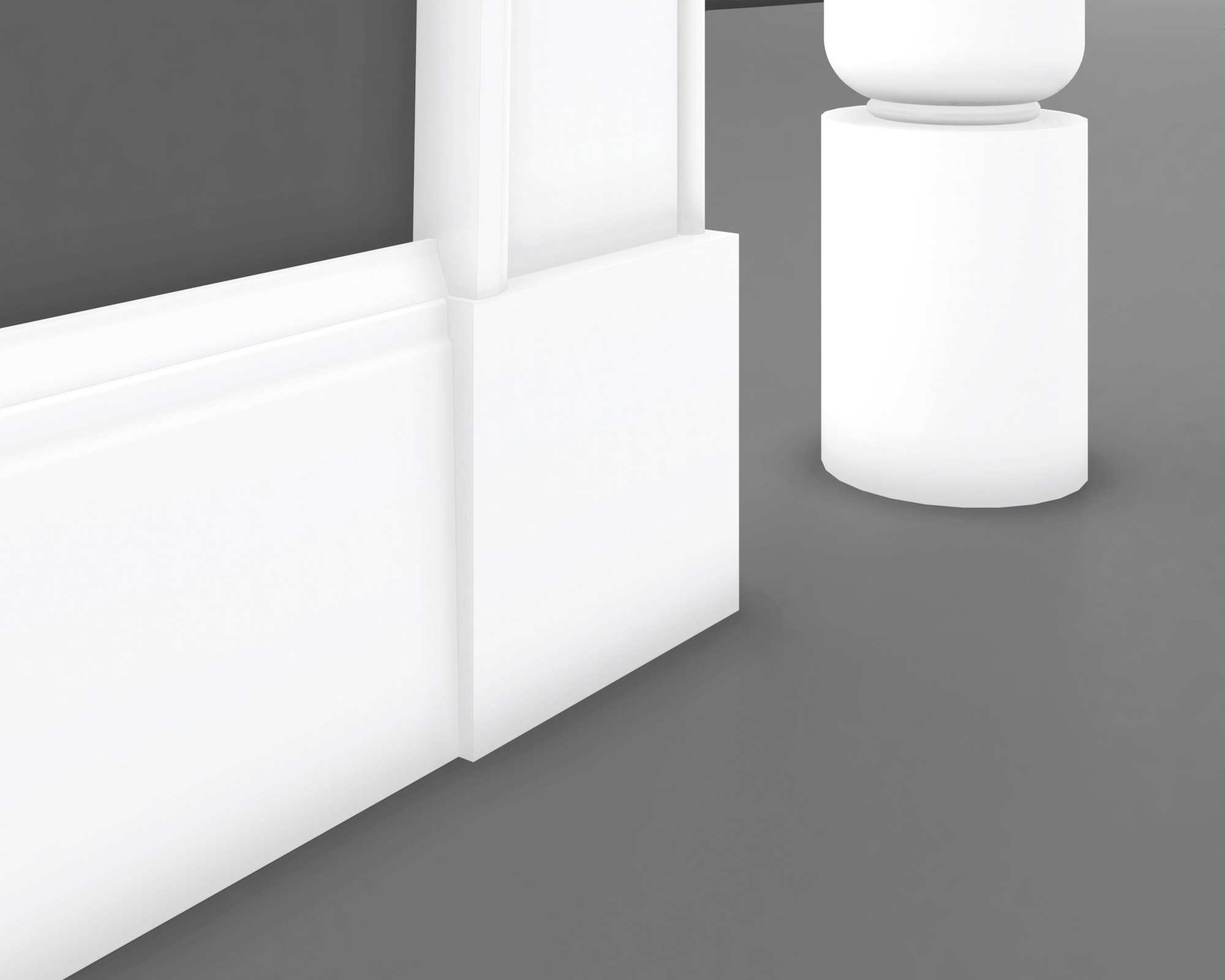
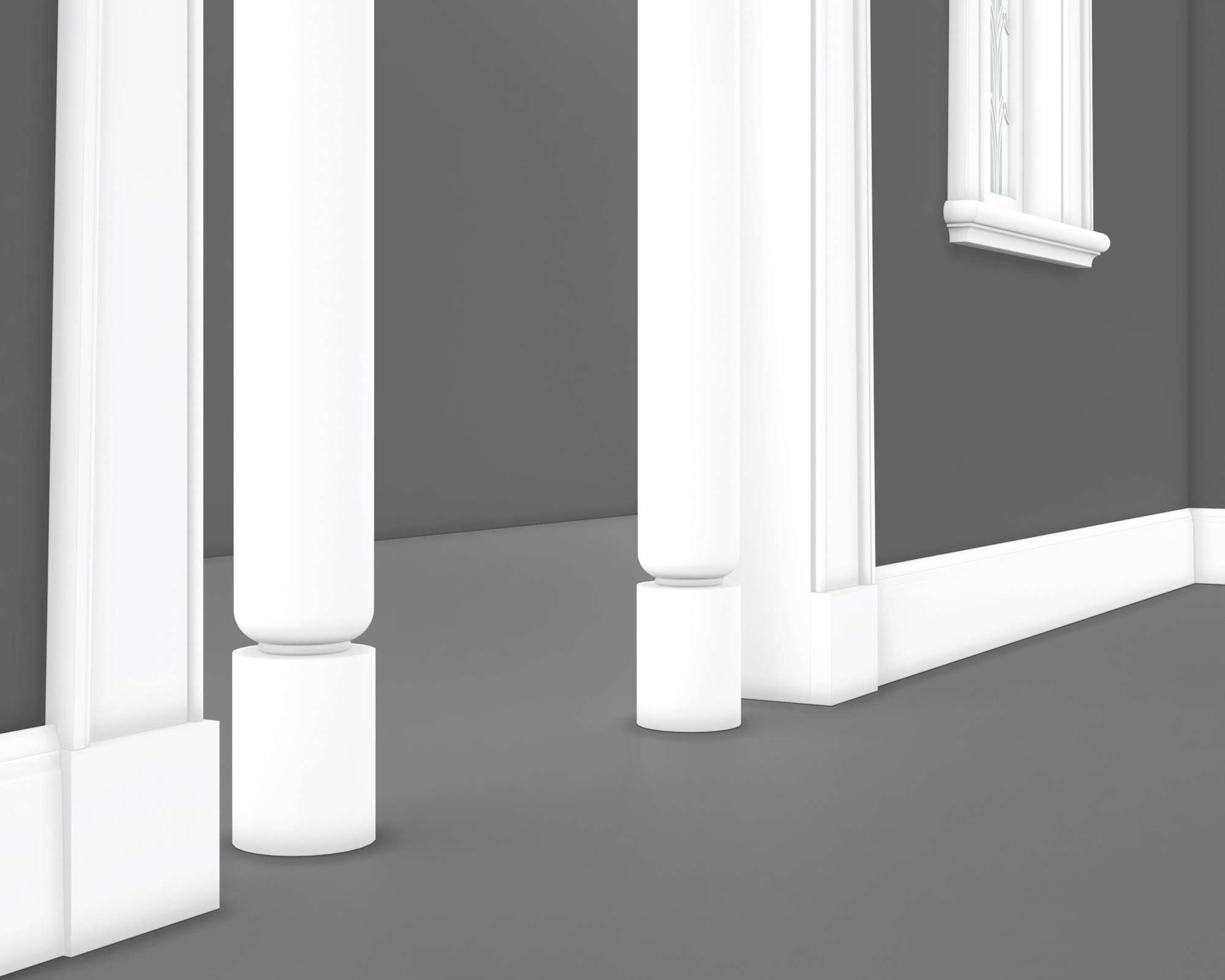
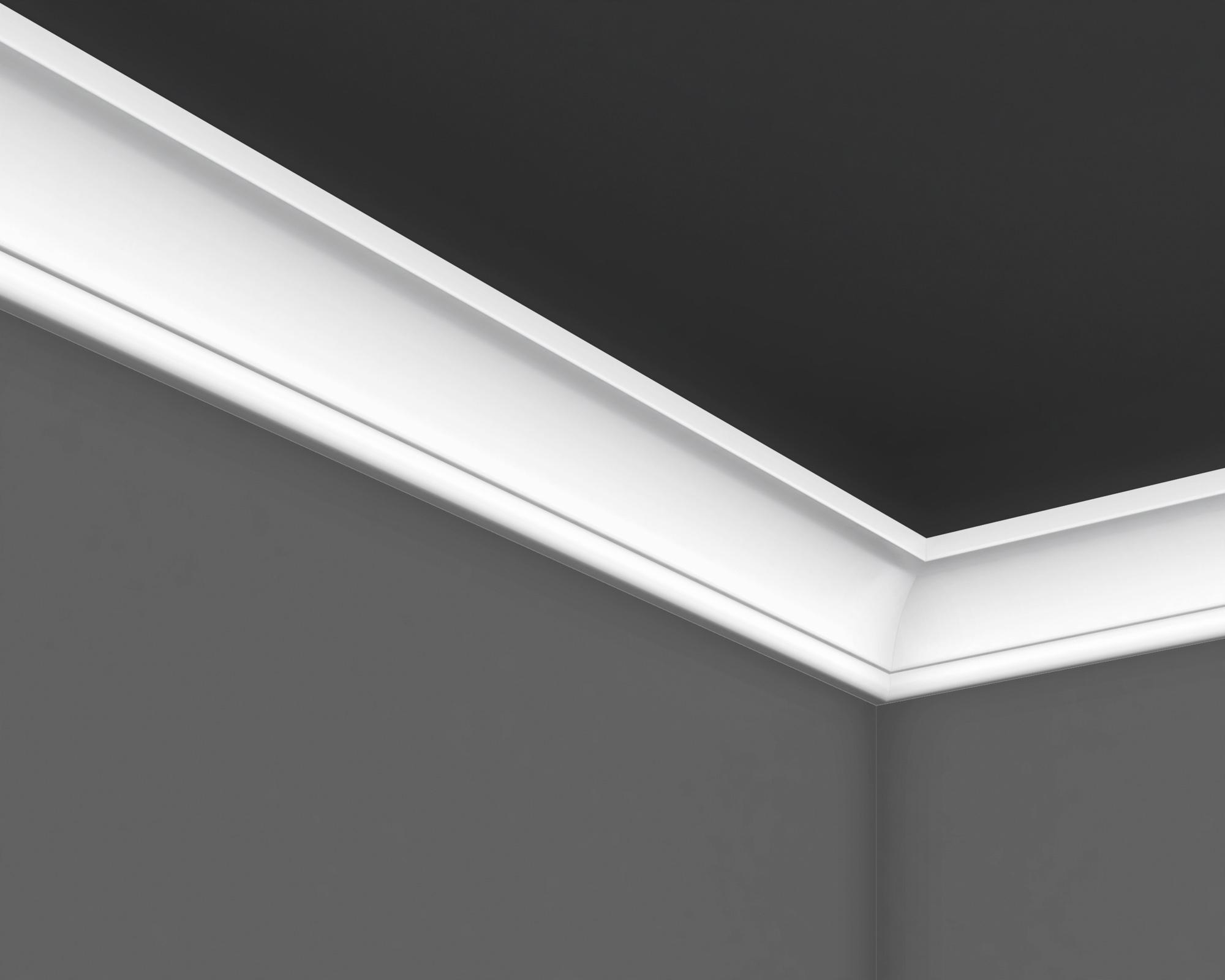
Interior woodwork adapts these forms to door and window casings, cornices, baseboards, and panel details. Plain profiles create depth through their proportions and arrangement, while more decorative compositions incorporate stylized lotus, papyrus, and other Egyptian motifs.
Shop Now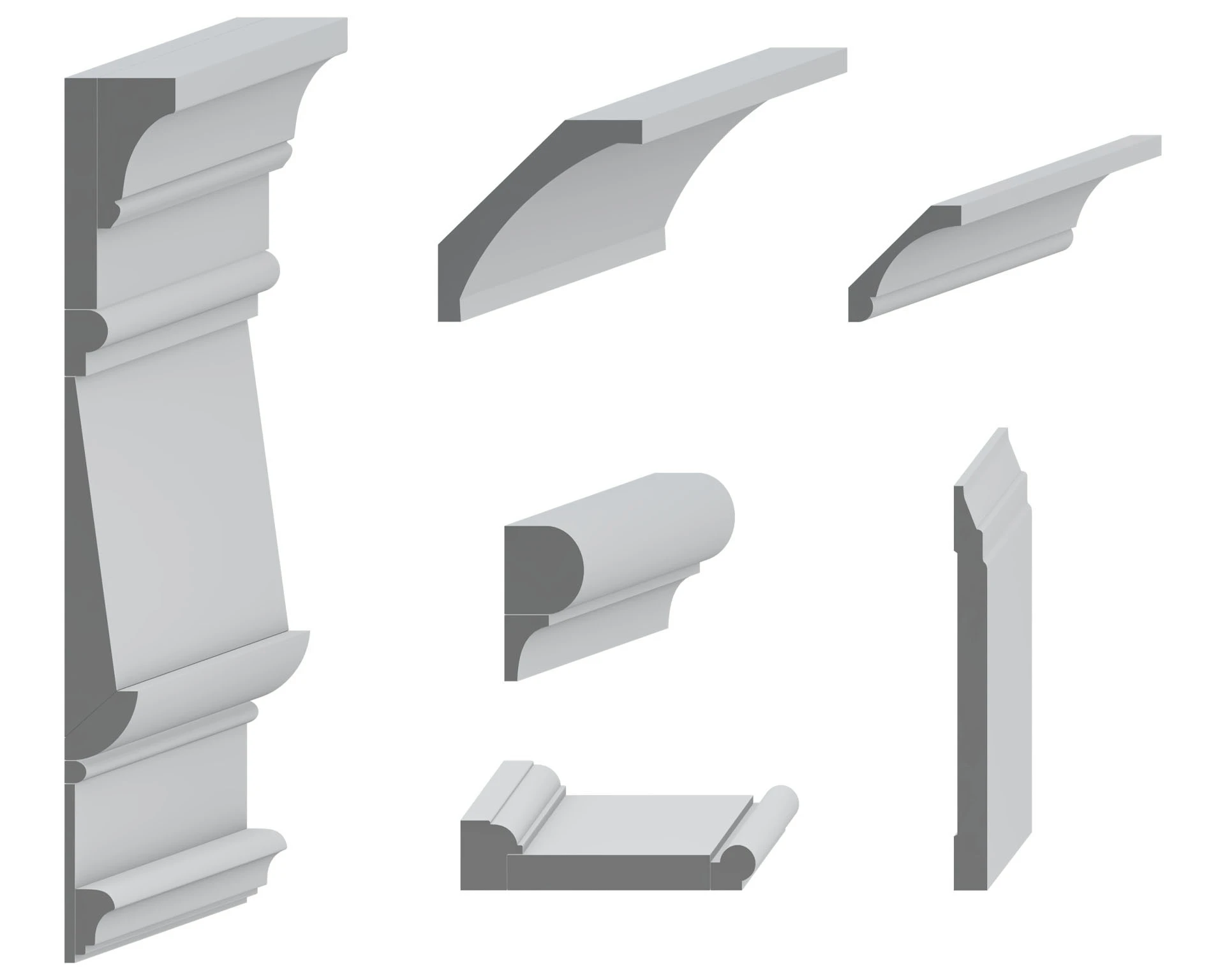
Period Details & Drawings
History of Egyptian Revival
European interest in ancient Egyptian architecture predated the nineteenth century, sustained by classical writings, surviving antiquities, and Egyptian monuments transported to Rome. Napoleon Bonaparte’s Egyptian campaign of 1798–1801 greatly expanded that interest. Accompanying the expedition, the Commission des Sciences et des Arts brought together scholars, artists, architects, engineers, and scientists to document Egypt’s monuments, landscapes, and natural history.
Their work formed the basis of the Description de l’Égypte, first published in 1809 and issued in successive volumes. Detailed illustrations of temples, tombs, pyramids, obelisks, sculpture, and inscriptions gave architects and designers a much larger body of Egyptian material to study. Egyptian forms entered architecture, furniture, and interior decoration, often combined with other fashionable design traditions.
In the United States, early interest included Benjamin Henry Latrobe’s unbuilt 1808 Egyptian-style design for the Library of Congress within the Capitol. During the nineteenth century, the style appeared in cemetery entrances, mausoleums, prisons, and institutional buildings. The Egyptian Building in Richmond, designed by Thomas S. Stewart for a medical school now associated with Virginia Commonwealth University, remains a prominent example. The Washington Monument, originally designed by Robert Mills and completed under Thomas Lincoln Casey, adapted the ancient Egyptian obelisk into a national memorial.
Advances in Egyptology sustained public fascination throughout the nineteenth century. Jean-François Champollion’s breakthrough in deciphering hieroglyphs in 1822 opened new possibilities for understanding ancient inscriptions. Archaeological research, illustrated publications, international travel, and events such as the opening of the Suez Canal in 1869 continued to bring Egypt before European and American audiences.
The discovery of Tutankhamun’s tomb in 1922 by Howard Carter’s team prompted another surge of interest. Egyptian imagery appeared in movie theaters, commercial buildings, jewelry, furnishings, and interiors, often overlapping with Art Deco. These later designs combined ancient motifs with modern materials and geometric ornament, extending the revival’s influence into twentieth-century architecture and decorative arts.