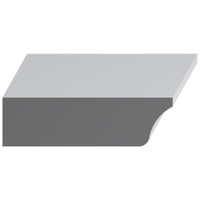


Find wood window sill profiles to match any project and complete your interior trim packages. Whether for replacement work or new construction, Mouldings One provides a full range of wood window sills with the sizes, species, and profiles to suit your needs. Browse our standard profiles or reach out for a quote on custom window sill trim.
Window sill profiles vary by depth, projection, edge detail, and overall visual weight. Comparing those details helps the sill feel intentional with the surrounding casing, apron, and other trim rather than like a separate replacement part.
Comparing window sill profiles to find the right style
With so many wood window sill profiles to choose from, it can seem overwhelming at first. However, you can start by looking at the depth and projection you want. The depth of the sill will determine the amount of ledge you get overall. The projection is how far it extends beyond the casing or wall plane.
From there, you’ll want to consider the visual weight. Thin, slimmer sill profiles are a great match for smaller rooms. They also align well if the rest of the trim package is more modest. Heavier profiles provide a very strong horizontal line. Larger rooms can make good use of thicker sills, as can traditional interior styles.
There are many features and styles available across window sill profiles. The specific character of your window opening will change depending on softened edges, stepped faces, and squared shoulders. Make sure to compare style options carefully and check whether they align with the rest of your trim package.
Choosing replacement sills and full trim packages for your project
Replacement sills for renovations and restorations require careful selection to find the right match. In many cases, stock profiles can offer the right fit. Carefully measure the thickness, depth, visible projection, and return of the current sill. From there, you can likely find a new wood window sill that aligns with these measurements.
In remodels where you’re choosing the entire trim package, you should consider the window sills alongside your casing, apron, and baseboard selection. Coordinating these pieces allows for consistent scale and style across each wall, avoiding mismatches and visual clashes.
However, stock profiles sometimes don’t offer a good match. In these cases, you can consider custom sill profiles. Historic restorations, phased renovations, and unique projects can all benefit from fully customized trim options.
Coordinating window sills with other trim details
Window sill trim must align with the parts around it. The sill provides the lower horizontal line, while the casing frames the sides and head of the opening. The apron is just as important, finishing the transition below.
Coordinating all of these pieces is essential for a consistent style. Balancing projection is one important factor. A small overhang helps provide shadow and definition, but too much will feel heavy. Before making your final order, make sure to compare details like projection, width, and scale of other trim to avoid mismatches.
For projects involving multiple windows, repeating the same sill pattern can help create order. However, larger feature windows can call for a deeper ledge. Coordinated variation helps establish focus without disrupting rhythm.
Planning for the right species and finish
Choosing the right species for your window sill also matters. If you’re going for a painted interior window sill, you want a smooth, stable wood that accepts primer cleanly. Staining focuses more on grain and tone, along with matching existing trim or nearby doors.
There are many wood species available, including mahogany, cherry, oak, maple, pine, fir, birch, and more. You can find the right option to suit your project’s style and finish requirements or get the match you need for existing window sill wood.
Browse profiles or request your quote today
Browse the full selection of wood window sills to compare profiles, projections, species, and other details. If you’re matching existing trim or need a project-specific profile, request a quote for a custom sill profile. The Mouldings One team can review your measurements, drawings, or samples and help confirm the next step.
Frequently Asked Questions
What type of wood is best for a window sill?
The best species for your wood window sill will depend on how you plan to finish it and other factors like room conditions. Softwood species are often better for painted work, while stained sills benefit from the grain and tone of hardwood species.
How do I choose the right window sill depth?
First, you’ll need to measure the wall and casing. From there, you must also choose your desired ledge projection. You want your window sill to feel substantial without being too large and overwhelming nearby trim.
Can wood window sills be used for replacement windows?
Yes, wood window sills are often used in replacement work. With a custom quote, you can find a match for the required thickness, projection, profile shape, and species. Make sure to capture all required measurements from the existing sill.
Should window sill trim match the casing?
Matching the sill trim to the casing helps create a unified trim package that delivers a cohesive look. However, contrasting trim is another option. You can carefully select profiles, scale, finish, and species to achieve a wide range of styles.
Can Mouldings One make a custom window sill profile?
If stock wood window sill profiles aren’t a match, you can reach out to Mouldings One for a quote on a custom window sill profile. Whether you’re going for a unique style or matching existing trim during renovations, we can use measurements, drawings, and samples to produce custom trim.