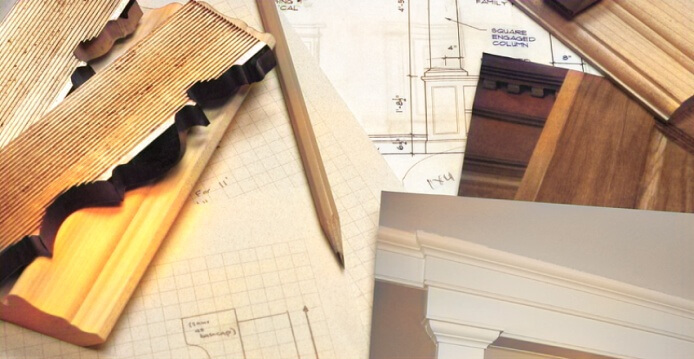


Choose wood stair nosing profiles for stair treads, landing treads, balconies, floor transitions, and replacement work where an existing stair tread or flooring detail needs to be matched. Browse Mouldings One wood stair nosing options by profile shape, dimensions, species, flooring thickness, and finish goal, or request a quote for custom matching.
What stair nosing does for your stairway
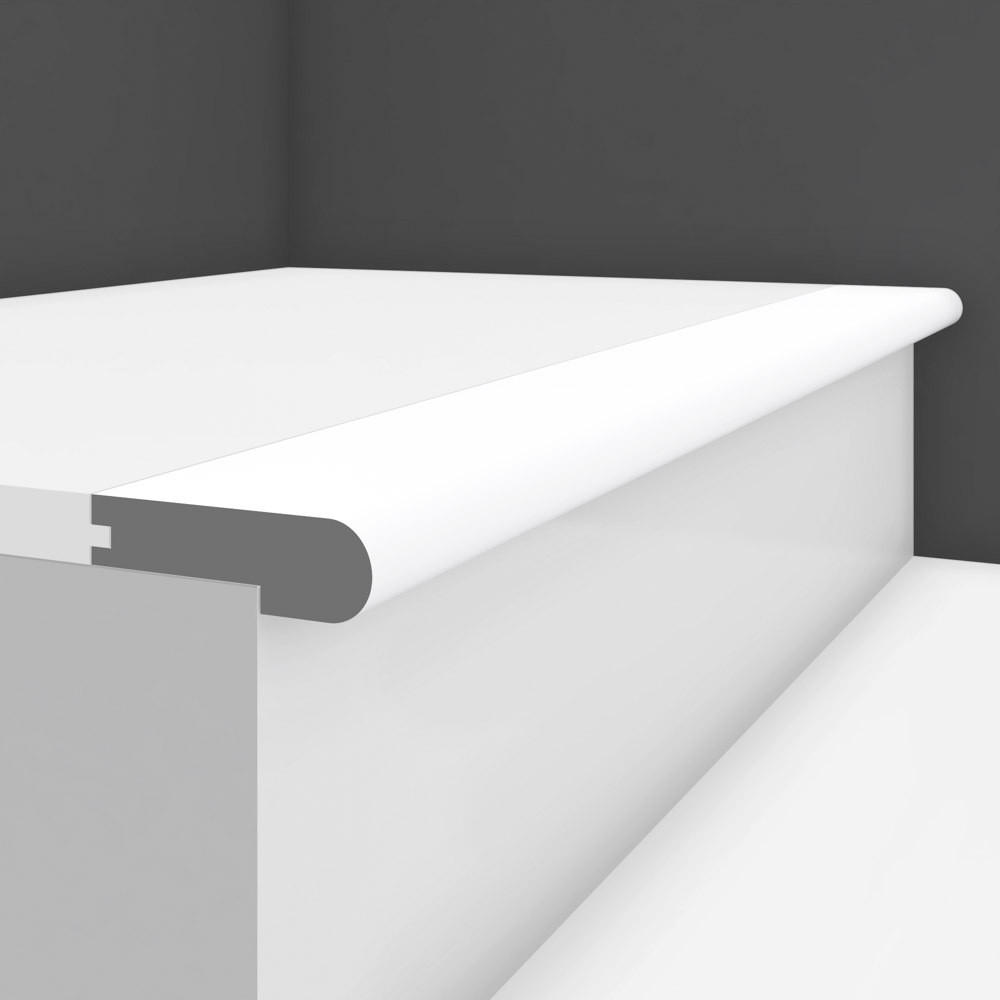
Stair nosing forms the finished leading edge of a stair tread, landing tread, balcony edge, or transition between floor surfaces. It is one of the areas where daily use and foot traffic are most visible, so the right profile needs to support both durability and appearance.
Profile selection is both functional and aesthetic. Rounded edges can soften the feel of a step or landing edge, while cleaner lines may better suit a more modern stair or flooring transition. The right choice depends on the tread thickness, flooring material, surrounding trim, and whether the goal is a new installation or a match to existing work.
Wood stair nosing also affects how the full stair or floor transition reads visually. Profile selection takes details like tread thickness, tread depth, landing conditions, flooring transitions, and nearby moulding into account. This allows for both a practical fit and an intentional style.
Selecting stair nosing for replacement work should be handled with an eye for detail. Existing stair conditions like worn edges, altered treads, older profiles, and non-standard flooring thickness can make finding the right profile and dimensions more difficult. Review profile drawings and size information carefully before placing your order.
Comparing profile shapes before making your choice
You can find stair nosing profiles in a wide range of shapes. Bullnose profiles provide a rounded leading edge. This traditional look also delivers a comfortable transition underfoot and is often used where the tread edge is a prominent design detail.
Eased edge profiles offer something more restrained. They reduce sharpness at the tread edge but are not fully rounded. These profiles can work well when the goal is a cleaner line with a practical, subtle edge for stair treads, landings, balconies, or floor transitions.
Square edge profiles create stronger visual lines. While they soften the edge compared to unfinished corners, they maintain a straighter and cleaner appearance. Modern interiors often use these profiles to create a crisp architectural rhythm when aligned with stair treads, risers, flooring, and surrounding trim.
You can also choose wider stair nose moulding profiles for additional coverage or visual weight. Always confirm the dimensions before ordering. Thickness, width, projection, rabbet conditions, flooring thickness, and stair tread compatibility all need to be considered.
Matching nosing to flooring thickness and existing stair treads
Many wood nosing profiles are used for more than the front edge of a stair tread. They can also be used for landing treads, balcony edges, floor transitions, and situations where the goal is to match an existing stair tread or flooring condition.
For standard 3/4" hardwood flooring applications, Mouldings One profiles 9102 and 9104 are designed to match Sheoga Hardwood Flooring and Hardwood Lumber Company stair treads, as well as most standard 3/4" hardwood flooring. This makes them useful when coordinating new nosing with solid hardwood flooring or compatible stair tread profiles.
For common 1/2" flooring applications, profiles 9118 and 9123 are designed to match many engineered hardwood and thinner flooring products. These profiles can be a better fit when the project involves thinner flooring materials or a transition that does not align with traditional 3/4" solid hardwood.
Because flooring and stair conditions vary, always compare the profile drawing, rabbet, thickness, projection, and existing material before ordering. When the project involves older stairs, unusual flooring thickness, or a profile that needs to match existing work, custom moulding guidance may be the better path.
Choosing species, finish, and matching details
Selecting the right species helps your stair nosing coordinate with the surrounding woodwork. Options like oak, cherry, maple, and walnut are common, but the right choice depends on the existing treads, flooring, handrails, nearby trim, and finish goal.
Hardwood stair nosing is a strong fit for stain-grade stairs and flooring transitions because the species, grain, and finish can coordinate with the treads, flooring, handrails, and nearby trim. Confirm species and finish goals before ordering.
If the stair risers, skirt boards, and surrounding mouldings are painted, the stair nosing may need to be painted as well. Species tone is less visible in paint-grade work, but surface preparation and primer selection still matter for finished edge quality.
Consider the finish carefully before choosing your wood stair nose moulding. Clear coats, stains, and paints can each change how the front edge reads in the finished space. Sheen also matters because it affects how light catches the tread, landing, or transition edge.
Custom options and guidance for your project
Many stock nosing profiles can support common stair tread, landing tread, balcony, and floor transition needs. Some projects, however, do not align with standard sizes, flooring thicknesses, or existing profiles. Custom work can provide stair nosing sized and shaped around existing tread thickness, restoration conditions, landing transitions, and flooring compatibility.
This is particularly important when continuity with older details is needed. Matching existing stair nose moulding, coordinating with replacement treads, or tying into existing flooring requires precise dimensions. You may also need a custom profile to create a closer visual match with handrails, baseboards, casing, and other moulding.
Before requesting a quote, gather the necessary project details. Tread thickness, flooring thickness, profile width, desired projection, rabbet conditions, edge shape, species, and finish goal can all affect the right choice.
Browse the full range of wood stair nosing profiles to compare shapes, dimensions, and flooring applications. For projects that involve 3/4" hardwood flooring, 1/2" engineered or thinner flooring products, existing stair tread matching, or custom restoration work, request a quote from the Mouldings One team.
Frequently Asked Questions
What is stair nosing used for?
Stair nosing finishes the leading edge of a stair tread, landing tread, balcony edge, or floor transition. The right profile can improve the finished look, protect exposed wood, and create a more comfortable edge when properly selected and installed.
How do I choose the right wood stair nosing profile?
Start by matching the profile to the stair tread, landing, flooring thickness, and surrounding trim. You’ll also want to confirm the shape, width, thickness, projection, rabbet, species, and finish goal before ordering.
What is the difference between bullnose and square-edge stair nosing?
Bullnose stair nosing provides a rounded, softer front edge. Square-edge profiles offer cleaner lines while still softening the exposed edge compared to unfinished wood.
Can stair nosing be matched to existing stair treads?
Yes. Some stock nosing profiles are designed to match common stair tread and flooring applications, including standard 3/4" hardwood flooring and many 1/2" engineered or thinner flooring products. Custom work may be needed when the existing tread, flooring thickness, or profile shape is less common.
Is hardwood stair nosing better for stain-grade stairs?
Hardwood stair nosing is a strong fit for stain-grade stairs because the species, grain, and finish can coordinate with the treads, flooring, handrails, and nearby trim. Confirm the species and finish goal before ordering.