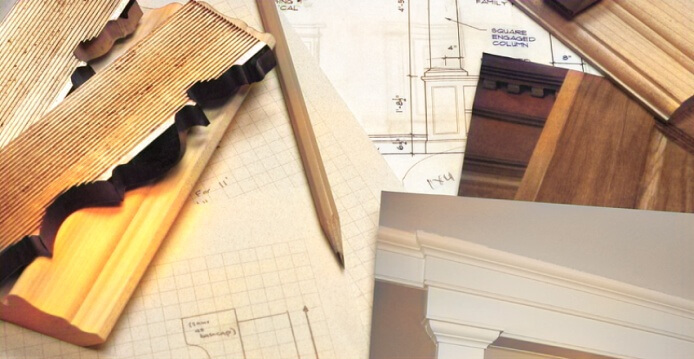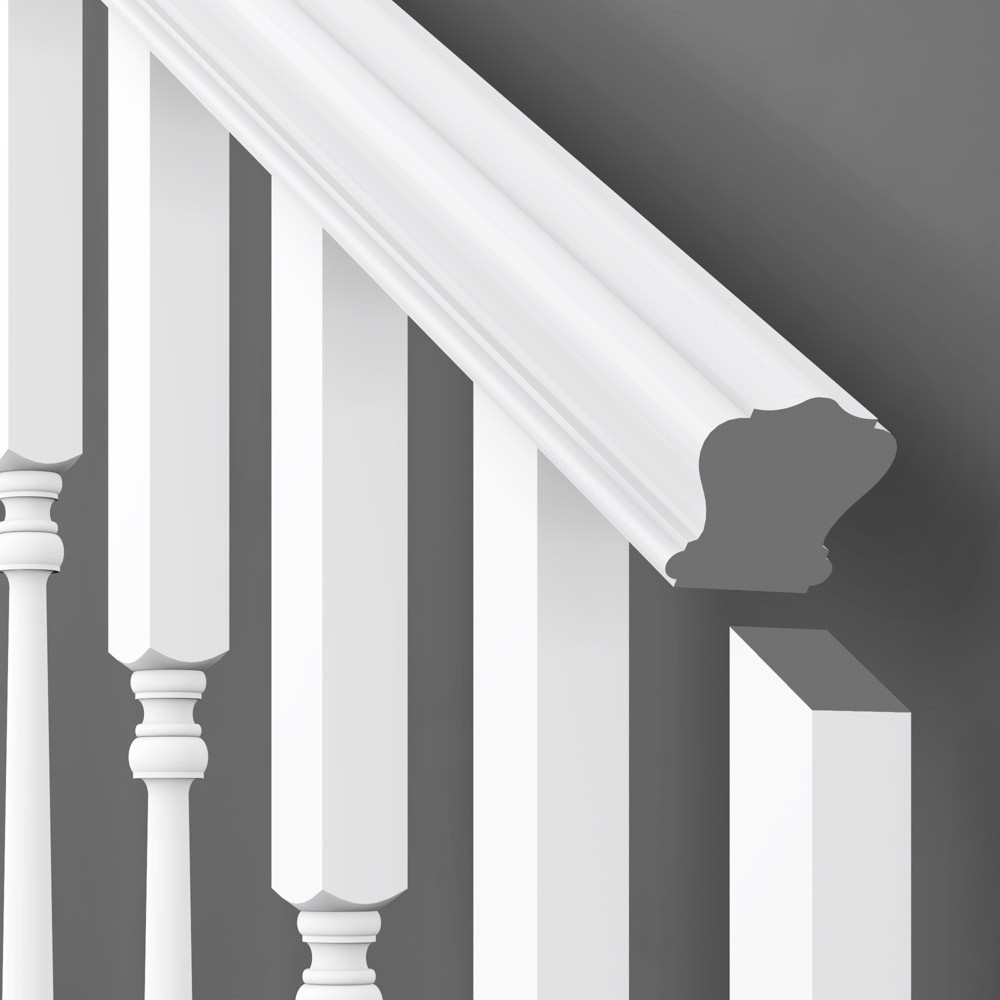



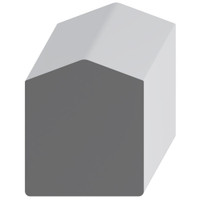


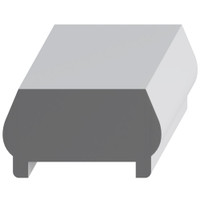

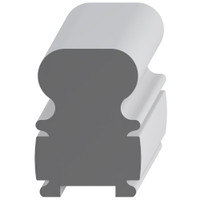
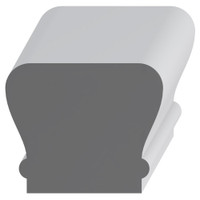

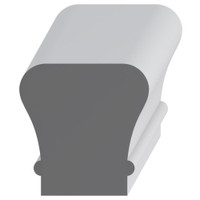
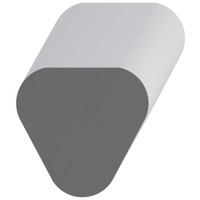

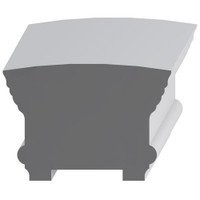
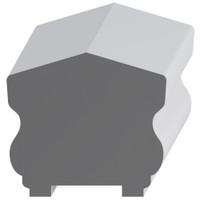

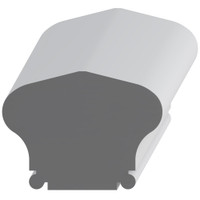





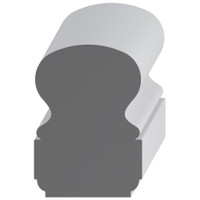

Compare wood handrail profiles by grip, scale, species, and plowed width for stairs, landings, halls, and restoration work. Browse Mouldings One stock profiles, or request a quote when the project needs custom matching, period-accurate reproduction, or a non-standard plowed width.
Choosing the right handrail profile
Choosing the right handrail profile requires carefully evaluating potential options. The shape, width, height, crown, side detail, and underside all matter. They determine not just the style but the physical feel of the rail when used. Wood handrails are both functional millwork and architecture and must be treated as such.
A back stair, hallway run, or simple landing can benefit from a narrow profile. This makes the handrail styling more subtle. On the other hand, a deeper or more sculpted rail is sometimes appropriate. Broad stairs, formal entries, and interiors with larger trim can benefit from the visual weight.
You’ll need to consider the full assembly to ensure your wood stair handrail isn’t just an isolated component. The right profile is necessary to match the newel posts, tread thickness, balusters, and stair nosing. While your rail might seem balanced, you could find that the profile is undersized if you don’t account for this.
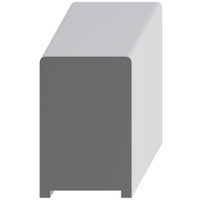
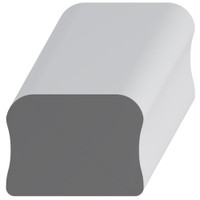
Before you place your order, carefully review the dimensions and profile drawings. Height, width, and projection all play into whether you have a compatible match for the specific application. When looking at drawings, evaluate the edge shapes, flat areas, and underside details to get a complete picture.
Consistency is paramount for wood handrails, as they often connect spaces. Your stair run, landing, and hall may use related profiles, but that isn’t the only factor at play. Scale, visibility, and grip also impact selection. Compare all of your options carefully before finalizing your selected profile.
Coordinating handrail style, species, and finishing
A wood handrail is just one part of a larger finish package. Profile selection must be carefully balanced with stair treads, stair nosing, newel posts, balusters, shoerail, and other pieces. That also includes nearby trim such as casing, baseboard, and moldings. The right scale and detail must be used so that the overall stair feels intentional.
Species is another critical detail to get right. Hardwood choices like oak, maple, cherry, walnut, and poplar all offer unique grain patterns and tones. Keep in mind that the final stain or clear finish should support surrounding stair parts, not compete with them.
There are also plenty of options for paint-grade work. Profile selection is an important decision here. A painted rail can look excellent when the proportions are properly aligned with adjacent trim. Before choosing your finish color, carefully consider how the edges, curves, and flat surfaces suit the room’s trim language.
Rails can bridge vertical and horizontal spaces. They can move from the stairs to the landing and remain visible from the entry or hallway. That’s why you should carefully choose wood handrails that keep this movement connected to the overall architectural rhythm.
Selecting handrails during renovations can be a challenge, but there are many stock options available. For a formal stair, you can choose a rail that offers more presence, especially when dealing with larger newels. More modest hall or secondary stair projects are well-suited for a cleaner, smaller profile to avoid visual crowding.
Custom profiles and restoration
While stock options can cover most projects, custom wood handrails offer solutions for unique requirements. If you’re taking on historic restorations, additions, or selective repairs, going custom is often the best choice. You can find a rail that aligns with the existing shape, species, proportion, and edge detail.
Custom work also allows for profile matching. Even small changes in crown shape, shoulder depth, underside detail, and scale can stand out. You can install a new rail beside existing newels, balusters, or shoerail to align with the original visual style.
Wood handrails for stairs may require non-standard dimensions and custom plowed widths. For these unusual requirements, requesting a quote on custom work is the best route forward. You can get a matching rail based on your measurements, photos, samples, and project context.
Find the perfect wood handrails for your project
Before placing your order, make sure to compare the drawing, dimensions, species, finish goal, and plowed width for each run. Mouldings One has a wide range of options to let you choose the right rail to match stair location, surrounding millwork, and practical requirements for the full assembly.
You can take advantage of our stock profiles for projects involving new stairs, landings, and hallways. For renovations and historical architecture, we can provide a quote on custom work. We can match a profile to existing work, accommodate a non-standard plow, and coordinate with unique parts and finish goals.
Browse the wood handrail profiles, compare drawings and dimensions, or request a quote for custom matching, period-accurate reproduction, or a non-standard plowed width.
Frequently Asked Questions
What should I consider when choosing a wood handrail profile?
Choosing the right wood handrail profile requires looking at stair location, surrounding trim, and other details to get the right height and width. From there, grip and visual design can be customized.
Can wood handrails be matched to existing stair parts or trim?
Yes. Start by comparing stock handrail profiles against the existing stair parts and surrounding trim. If the shape, scale, species, or plowed width needs to match existing work more closely, Mouldings One can quote a custom handrail based on the project details.
What does it mean for a handrail to be plowed?
A plowed handrail has a channel to accommodate baluster layouts. It’s important to confirm the width before ordering so that these parts can align correctly.
Are custom wood handrails available for historic renovations?
Yes. Custom wood handrails are often the right path for historic renovations, additions, and partial replacements where the existing profile, species, scale, or plowed width needs to be preserved.
Which wood species work best for stair handrails?
Handrails are available in a wide range of wood species. The specifics for your project will depend on whether you’re staining or painting, along with the surrounding stair parts and trim.