Chair Rail Molding Guide: Uses, Height & Profile Selection
19th May 2021
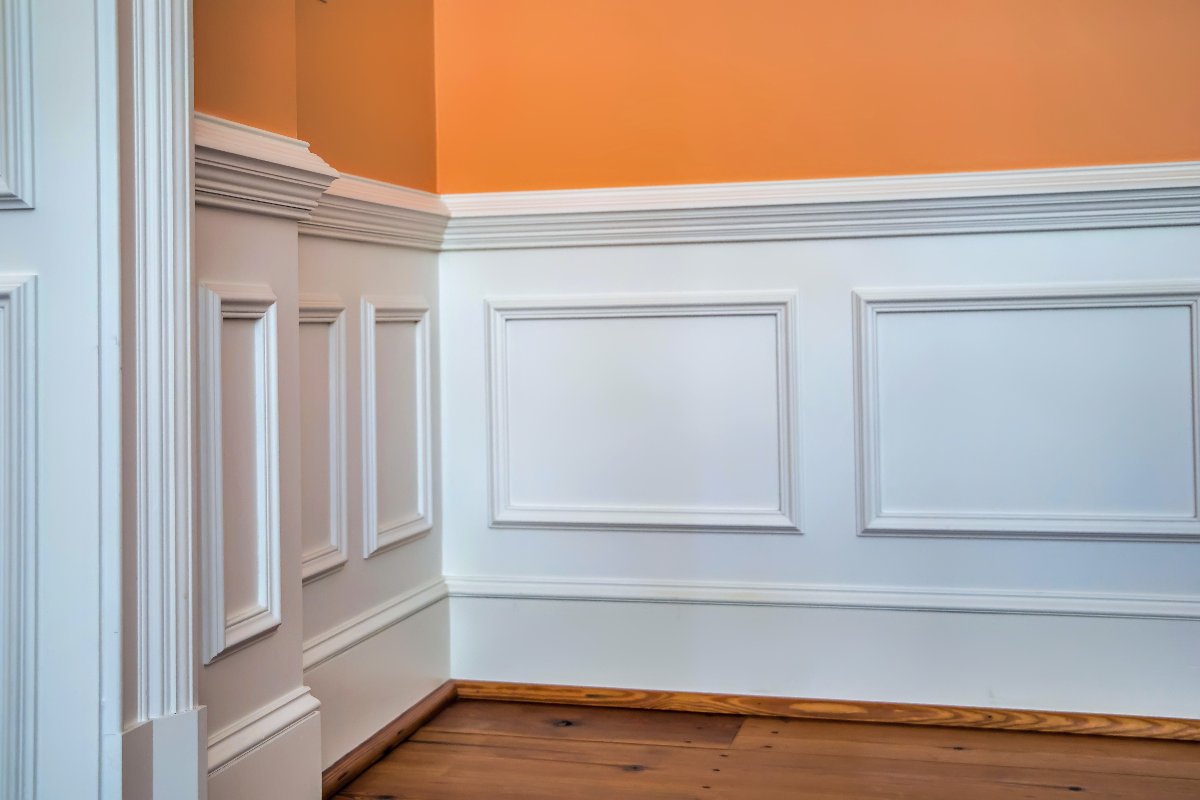
Chair rail molding is a type of horizontal wall trim often used to protect walls from impacts, such as from chairs. It’s also used to divide finishes, organize panel layouts, and cap wainscotting. Choosing the right chair rail profile, width, projection, and placement helps establish proportion and coordinate the rail with surrounding millwork.
The practical and aesthetic uses of chair rail molding
Chair rail has traditionally been used as both a practical method for protecting walls and as a visual divider. In dining rooms, offices, and other frequently used rooms, it helps prevent damage when chairs or other furniture are moved. The horizontal division it creates also helps organize walls into neatly balanced zones.
Chair rail can divide wallpaper and paint, cap wainscotting, organize panel layouts, and add a horizontal detail in dining rooms, living rooms, offices, corridors, and stairwells.
How chair rail molding fits into a room
Chair rail height should be treated as proportional guidance rather than a fixed rule. Many layouts begin near the lower third of the wall, but ceiling height, window sills, furnishings, wainscotting, and panel spacing can justify a different position. For more detailed placement examples, review our chair rail ideas and layout guide.
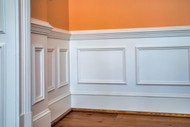
Chair rail can also create a finished upper edge when capping wainscotting. This creates a clean transition to the wall above. However, it’s essential to align the chair rail with the panel thickness, stiles, and any raised components. Compare the chair rail with the planned panel moulding to avoid gaps, weak transitions, or mismatched shadow lines.
Decorative panel layouts can rely on chair rail molding to establish horizontal lines. The placement of the chair rail will affect the overall frame height, spacing, and visual weight. If you have large panels and a taller interior, a chair rail with a deeper profile can be appropriate. Restrained options are better for more compact rooms.
Coordinate chair rail with baseboards, casing, crown molding, and the larger moulding assembly. Compatible scale, depth, and ornamentation create continuity around openings and transitions while allowing each component to remain distinct.
How to choose the right chair rail profile
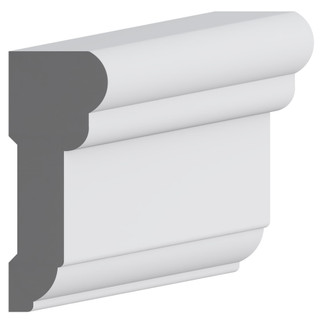
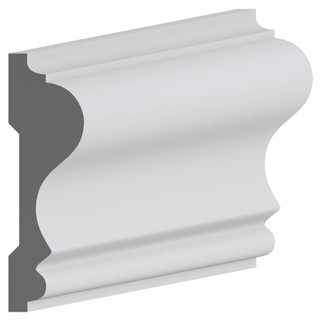
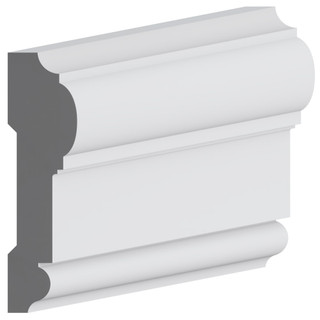
Width and projection are two key details when choosing a chair rail profile, defining the wall area the profile occupies and how far it extends from the surface. Together, these dimensions determine the shadow, visual weight, and intersection with other trim. Both face dimensions and side profiles must be carefully evaluated.
The profile detail should match both the overall architecture and the adjacent millwork. Ogee, bead, cove, and stepped forms often suit traditional interiors. For more restrained styles, flatter shapes are often ideal. Chair rail molding should read clearly without overwhelming trim or other room features.
Wood chair rail molding can be finished with paint or stain, and that decision affects the wood species and profile selection. Clean geometry and smooth surfaces are ideal for painted trim. Stained chair molding emphasizes grain, color, and the species selected.
Chair rail molding becomes a physical boundary between paint colors, wallpaper, and panel treatments when used for two-tone walls. A deeper profile allows for stronger separation and a stark shadow, while a shallower profile is more subtle. The scale should align with the desired finish contrast.
Profile selection can be particularly challenging in historic restorations and renovations. Missing or damaged material can be difficult to replace with an exact match. When stock profiles do not preserve the required shape or proportion, drawings and samples can be reviewed for custom millwork.
Planning chair rail trim also requires considering edge conditions. The termination of the horizontal trim at the casing, corners, stairs, or other features requires special treatment. Back relief, projection, and buildup all impact how transitions resolve.
These edge conditions require even more care during renovations, where adjoining materials may not be uniform.
Choosing between stock options and custom millwork
You can often find stock chair rail molding options to suit many projects, even restorations and renovations. There are many different profiles with varying silhouettes, projections, widths, and details available. Find profiles that match the overall style you need, then refine to get the proper scale, visual weight, and finish.
Profile drawings and cross-sections are an invaluable resource when planning projects. They let you precisely compare product dimensions to match existing or overall trim packages. Mouldings One provides CAD files for molding profiles so you can compare dimensions, transitions, and clearance before specifying or ordering.
If stock options don’t provide a match, custom millwork may be your best option. The team at Mouldings One can provide custom quotes based on your project requirements and any drawings, dimensions, and samples.
Finding chair rail molding for your next project
Compare chair rail profiles by width, projection, detail, and finish. For help matching existing trim, planning a complete wall assembly, or ordering a custom run, request a quote and provide the available dimensions, drawings, or sample.
FAQs
What is chair rail moulding used for today?
Chair rail moulding is used in many modern applications. It serves the practical purpose of protecting walls, while also being used to divide finishes, organize panel layouts, and cap wainscotting.
What height should chair rail moulding be installed?
Many chair rail layouts begin near the lower third of the wall, but the final position should account for ceiling height, window sills, furnishings, wainscotting, and panel spacing.
Can chair rail be used with wainscotting or panel moulding?
Yes. Chair rail can cap wainscotting and help define panel layouts when the rail projection, panel thickness, and spacing are coordinated.
How do I choose a chair rail profile?
Carefully evaluate the profile width, projection, and finish against existing trim or the planned trim package. You want your chair rail profile to align with the rest of the room.