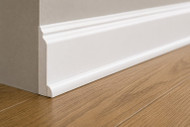
Shoe molding vs. quarter round: how to choose the right baseboard finish
22nd Jun 2026
When finishing transitions where flooring meets baseboard, both shoe molding and quarter round are options. They provide different visual results, so it’s not always clear which is the best choice for your project. The right choice usually comes down to profile shape, projection, gap coverage, baseboard style, and the finish you want at the floor line.
The difference between shoe molding and quarter round
Shoe molding and quarter round serve similar purposes but have some important differences. The profile shape is among the most important, but you should also consider the projection and visual weight. These details will affect the balance of your lower wall assembly, so make sure to evaluate them fully.
Comparing profile shapes
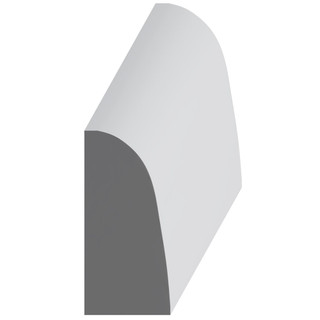
Quarter round takes its name from its profile shape. The exposed face forms a quarter of a circle, with the back and bottom flat to sit against surfaces squarely. The height and projection are typically the same, as the trim is a section of a circle.
Shoe molding is typically narrower than quarter round. It can be found in a wide range of profiles, typically offering taller options in comparison. This provides a slimmer appearance while still covering the seam, helping reduce visual weight.
Projection and visual weight
Projection is a defining factor for any type of trim, but it is particularly important for shoe molding. It’s how far the trim extends from the wall, which also determines how large a gap it can cover. Quarter round usually has more projection than most shoe molding profiles. Shoe molding is available in many styles, many of which are thinner, taller, and more reserved.
However, the width of quarter round also means that it carries a very strong visual weight. Shoe molding is often used to achieve a more subtle look while still covering gaps. How much visual weight you want depends on the specific room and the scale of other nearby trim.
Common trim applications
You’ll often find the term base shoe moulding used, as shoe profiles can be placed at the base of a larger baseboard assembly. The smaller profile and thinner projection are ideal for this use because you don’t want to add too much visual weight to the existing trim feature.
Quarter round is perfectly at home in casual spaces and traditional interiors. It’s also often used in painted projects. The rounded face catches light differently from the surrounding flooring and trim, which can help draw attention and make the trim look more intentional when painted.
Shoe molding styles vary widely in their height, proportions, and detail. In general, they provide a reserved option for a lighter transition. With many profile options available, you can find a match for just about any existing trim and cover gaps without overwhelming adjacent pieces.






How to choose the right option for your project
When choosing profiles, you should first look at the conditions around your baseboard. There are many details to take into account, from flooring thickness to finish expectations. Consider all of these factors before choosing molding for your project.
Baseboard and flooring applications
Your selection should be closely tied to the baseboard and flooring. If you have a taller baseboard or a layered wall assembly, the heavier appearance of large quarter round can be a good match. Slimmer profiles can benefit from shoe molding to support the baseboard instead of competing with it.
Different types of flooring, including hardwood and tile, often leave a visible edge at the wall. Covering the transition is important, but you also want to consider how the finish of your molding matches the style of your flooring.
Matching gap size and room style
Always check the gap size before choosing your trim profile. Floor-to-baseboard gaps can often be covered effectively by shoe molding. However, a larger gap requires additional projection. Quarter round is more forgiving in these cases, with its larger size providing more coverage.
Consider your room style as well. Utility spaces can tolerate a heavier rounded profile without drawing attention. If you have a more tailored or detailed interior for a given room, shoe molding can deliver a more finished-looking edge while still covering gaps.
Finish and profile dimensions
The finish you choose for your molding also affects the overall appearance. Painted molding is commonly used to visually blend into the baseboard. Stained molding lets you coordinate with flooring, cabinetry, and adjacent millwork. You’ll have to carefully consider the species, grain, color, and sheen of your finish.
When choosing profiles, you want to look at more than just the style. There are many types of shoe molding, and each has varying height, projection, curve depth, and shadow lines. Even minor dimensional changes affect how trim aligns with baseboard, flooring, nearby thresholds, and casings.
If you’re planning a complete trim package, it’s often best to look at baseboard molding profiles first. This can help you nail down the overall design you want for your lower trim detail and broader wall assembly. From there, you want a shoe profile that looks intentional with your baseboard trim, not like an afterthought.
Shoe molding is preferred for many interiors, thanks to the balance it can provide. When dealing with a broad range of baseboard styles and finish plans, the many profiles available for shoe molding let you find the best possible match for your project.
Considering material and profile options
Choosing the right trim is a careful balance of profile, material, and finish. There are many potential options available, each with its own impact on style, durability, and cost. Here are some details to keep in mind when making your choice.
Wood, MDF, and flexible alternatives
You can find trim in a variety of materials, including MDF and various wood species. This is particularly important for shoe molding, as it must stand up to cleaning and physical contact.
Wood shoe base molding is a great choice for stain-grade work, providing a variety of natural grain options and sharp edge definition. There are many species available, each with its own grain patterns, hardness, tone, and finish absorption to suit your project.
MDF is another practical choice. It’s well-suited for paint-grade applications and is often the most cost-effective option. You’ll also find trim available in flexible alternative materials when needed for curved walls or other unusual conditions.
Comparing profile styles
You’ll find a variety of profile options across the different types of shoe molding. Many feature subtle coves for refined detail. Others have more rounded faces that can help match the rest of your trim. Taller vertical surfaces are common as well, helping achieve the desired shadow line for your overall baseboard assembly.
It’s important to check all relevant details when comparing shoe molding profiles. Along with the overall style, there are also variations in curve, height, projection, and detail. Take your time when reviewing options to find the most suitable match possible.
Matching features to your baseboard design is typically the most straightforward way to go. You can cover gaps while maintaining a cohesive appearance. Make sure to double-check your shoe profile against the baseboard and other trim before placing your order.
Taking the next steps for your project
Before ordering moulding, review the profile size, projection, species, and finish options. Browse Mouldings One shoe molding profiles to compare base shoe options, or review baseboard moulding if you are planning the full lower-wall assembly. For stain-grade work, compare available wood species before finalizing the trim package.
FAQs
Is shoe molding better than quarter round?
It’s not a simple matter of one type of trim being better than the other. Instead, each has its own uses. Shoe molding is typically slimmer, while quarter round offers a fuller curve. Depending on the gap size and desired style, either can provide a match.
Can shoe molding cover flooring gaps?
Shoe molding is available in sizes to cover most typical flooring gaps. To make sure, measure the gap size before making your selection so that you can choose a profile with the required projection to cover it fully.
Should shoe molding match the baseboard or the floor?
Matching the baseboard allows shoe molding to provide a seamless lower-wall detail. If you’re going for a stained interior, coordinating molding with flooring and other millwork can be an appropriate choice.
What are the main types of shoe molding?
Shoe molding is available in many profile styles, including simple curved profiles, cove-influenced shapes, ogee details, and more complex base shoe options. Quarter round is a related base trim option, but it is typically fuller and more rounded than shoe molding. Compare height, projection, curve, and edge detail to choose a style that fits your overall trim package.