
Round mouldings add curved transitions and edge detailing to finish work. These profiles are commonly used where flooring, cabinetry, handrails, and other trim elements need a cleaner change in direction or a softer edge. Available in quarter round, half round, and full round profiles, they can support both subtle finishing details and more visible radius elements.
Where round mouldings are used in finish work
Round molding is commonly used for transitions and is often employed to hide gaps, as between flooring and existing baseboard moulding. Depending on the style and size you select, it could cover gaps between walls and flooring or differing flooring surfaces. You can use it to finish edges and corners of cabinets, built-ins, and furniture items, creating a custom look or support handrail profiles and other radius work throughout a structure.
Strips of round trim may be used alone or to embellish existing molding applications. When flooring is upgraded as part of a remodeling or renovation project, reusing existing baseboards can save money. However, leaving baseboards in place can lead to unsightly gaps between the wall and new floorboards. Round molding can conceal these gaps while creating a more intentional transition that reads cleanly with adjacent trim.
Aside from hiding gaps, round trim can serve the practical purpose of protecting more costly mouldings from damage and wear. It may be used for decorative wall detailing, similar to a chair rail, or it could provide a workable solution for handrail profiles, hanging bars, and diverse forms of radius work throughout a structure.
Choosing between quarter round, half round, and full round
The type of molding you choose will depend on where you plan to place it, the function it will serve, and how it works with existing design elements. Round mouldings are manufactured in three basic shapes, quarter, half, and full round.
Quarter round baseboard profiles feature a 90-degree angle on the back and bottom and a uniformly curved quarter radius on the outward-facing surface. It is frequently placed along the edge of baseboards to hide transitions or gaps between the baseboard and hard flooring surfaces. It softens the transition with gentle, consistent curvature. You may consider it as an alternative to shoe moulding, which serves the same purpose but is taller than it is wide and curved at the top, creating a slimmer profile appearance and reducing visual weight.
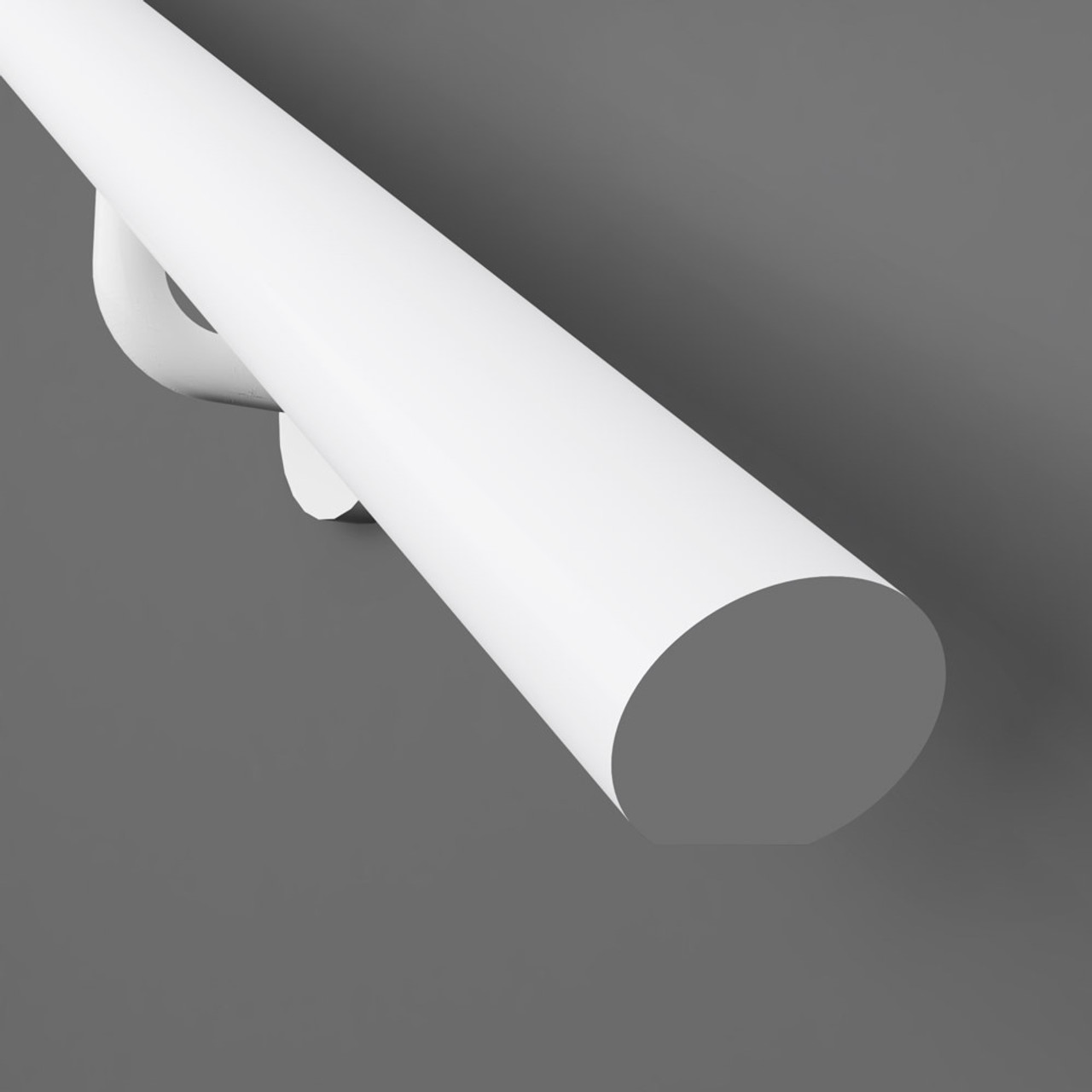
Half round shapes are ideal for flat transitions because they feature a 180-degree angle on one side and a uniformly curved half-circle radius on the outward-facing surface. This means you could apply half-round strips to flooring transitions, place them on a wall to separate upper and lower sections for added visual interest, or even craft picture frame wall molding. Full rounds in different sizes could work for railings, curtain rods, closet hanging rods, and, in some cases, even trim.
Browse round mouldings above, compare quarter round and half round options, or request a quote for a larger trim package.
Frequently Asked Questions
What is the difference between quarter round, half round, and full round?
Quarter round, half round, and full round moulding products are exactly what you might imagine. A quarter round trim has a 90-degree angle back with an exposed quarter round radius, while half round has a 180-degree (flat) back and a half round exposed radius. Full round moulding is a fully cylindrical rod.
When should I choose round vs. shoe moulding?
Both shoe and quarter round mouldings feature a flat back and bottom and curved edge, but round trim has a uniformly rounded outer edge while shoe moulding is curved at the top with a flat waterfall edge extending to the floor (taller than it is wide). Quarter round is better suited to cover wider gaps between the flooring and baseboards. Shoe molding has a lower profile and slightly less visual weight.
How do I select size and radius for edge detailing and transitions?
The size and radius of round mouldings you choose will first depend on practical considerations like the size of any gaps you wish to cover and the stature of adjacent elements, such as baseboards or cabinets. You should also consider the visual impact of any trim you add and how well it complements the style of existing trim work.
What wood options are commonly used for paint vs. stain intent?
Whether a design plan calls for painting or staining, you want to choose wood round mouldings that are suited to the preferred finish. For stain-grade work, choose species that take stain consistently and fit the surrounding trim package. For paint-grade applications, poplar and other smooth, paint-friendly species are common choices.
Can round profiles be used in built-up trim assemblies?
Yes! Round mouldings can be a beautiful addition to existing trim. They are often added for practical purposes, but different shapes, sizes, and styles could also add extra dimension and detail to a variety of applications, from flooring and wall transitions to furniture and cabinetry adornment.