

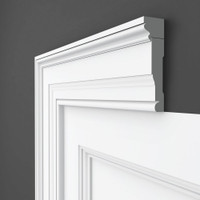


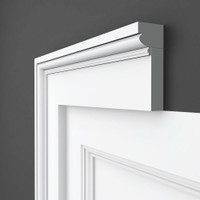


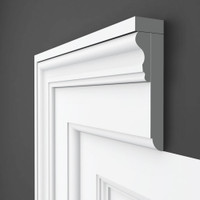


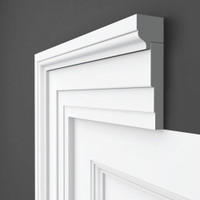

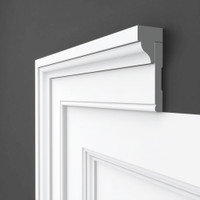


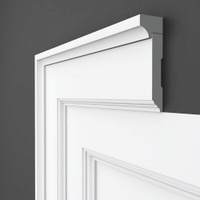


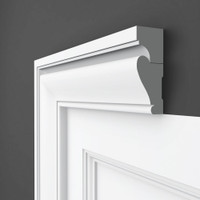

Combining casing with a backband enhances door and window trim with added depth and character. By layering profiles, this assembly creates a wider, more refined look that complements both traditional and modern architectural styles.
What Is a Casing With Backband?
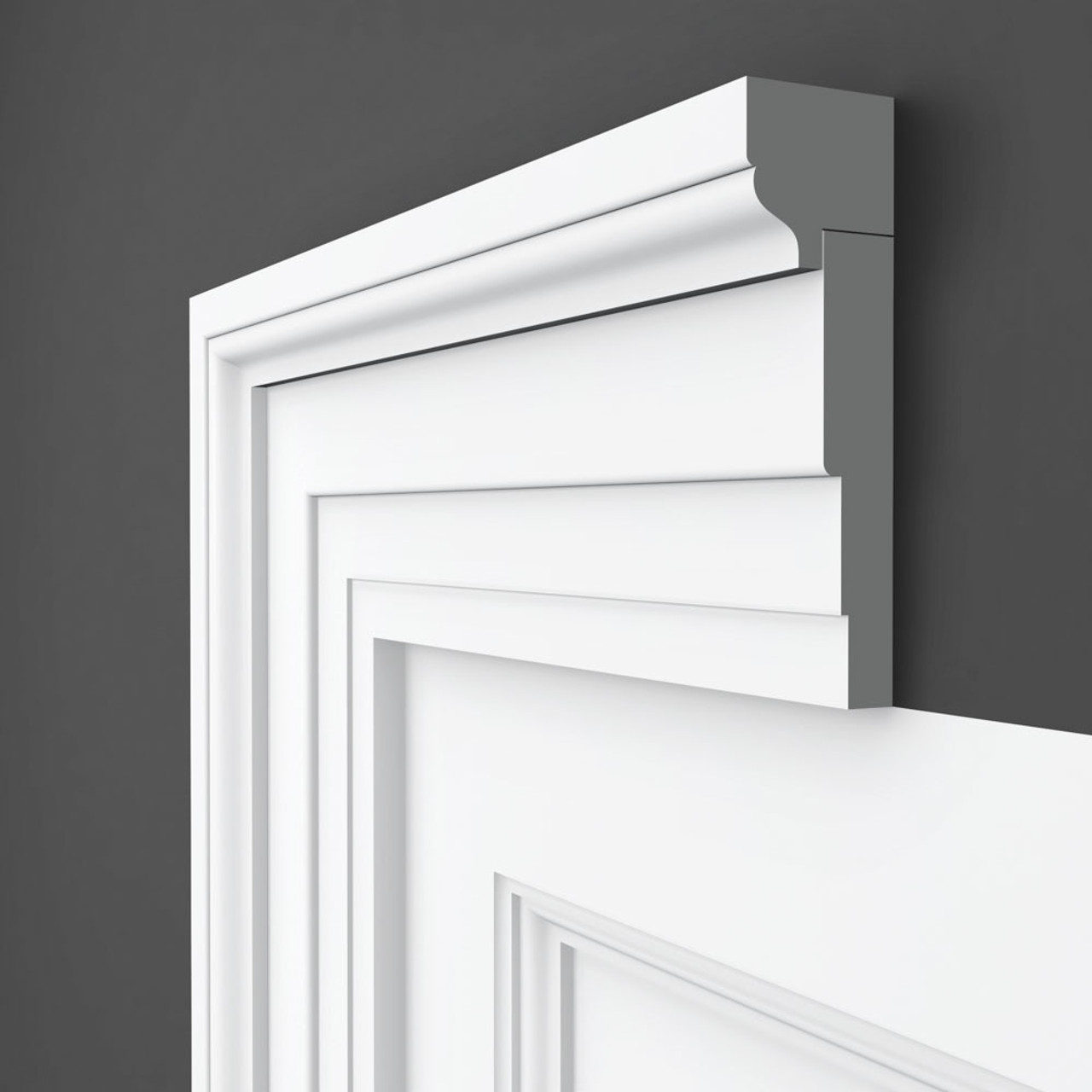
A casing with backband is created by pairing a standard door or window casing with an additional moulding that wraps around its outer edge. This added profile increases the overall width and projection of the trim, creating a more substantial and architectural frame around doors and windows.
Why Use a Backband?
Adding a backband is one of the simplest ways to enhance the depth and character of a room’s trim. It can transform basic casing into something more refined without replacing the entire profile.
A backband can also be a cost-effective alternative to purchasing a larger, custom-width casing. Instead of milling or buying one oversized profile, you can combine a standard casing with a smaller moulding to achieve the same visual impact at a lower material cost.
Backbands are especially useful when transitioning to thicker baseboards or crown, as the increased projection helps the trim package feel cohesive and intentional.
Design Advantages
• Creates a wider, more substantial casing profile without custom tooling.
• Reinforces traditional or classical trim packages with layered detail.
• Adds depth and shadow lines for a richer architectural finish.
• Helps older or uneven walls look clean by bridging gaps around openings.
Choosing the Right Combination
When designing a casing with a backband, consider the style of your baseboards, crown, and existing mouldings. A simple backband works well in modern spaces, while more decorative profiles shine in historic or traditional interiors. You can also mix curved and stepped shapes to create a custom look that suits your project.
How Casing With Backband Is Supplied
Casing and backband components are supplied as separate moulding profiles in running lengths, not as a single combined or pre-assembled piece. The backband is applied during installation to wrap the outer edge of the casing.
Final sizing, miters, and alignment are completed on site to accommodate opening dimensions, wall conditions, and existing trim details.
Browse Casing & Backband Examples
Explore our casing-with-backband assemblies for ideas on width, projection, and layering. If you need guidance or want a backband designed around your existing casing, request a custom quote and our team will be happy to help.