54 QUEEN STREET HOUSE, CHARLESTON, CHARLESTON COUNTY, SOUTH CAROLINA
Behind the modest scale of 54 Queen Street survives one of the most legible records of Charleston craftsmanship from before the Revolution. Built around 1760 by the London-born cabinetmaker Thomas Elfe for his own residence and workshop, the house preserves the world of a craftsman whose furniture would come to define sophistication in colonial Charleston. Elfe was among the most accomplished furniture makers in eighteenth-century America, producing work for the city's wealthy merchants and planters while drawing extensively from the English designs of Thomas Chippendale. Yet unlike the grand townhouses surrounding it, the Elfe House is notably modest in scale, allowing its virtuosity to speak through discipline rather than magnitude.
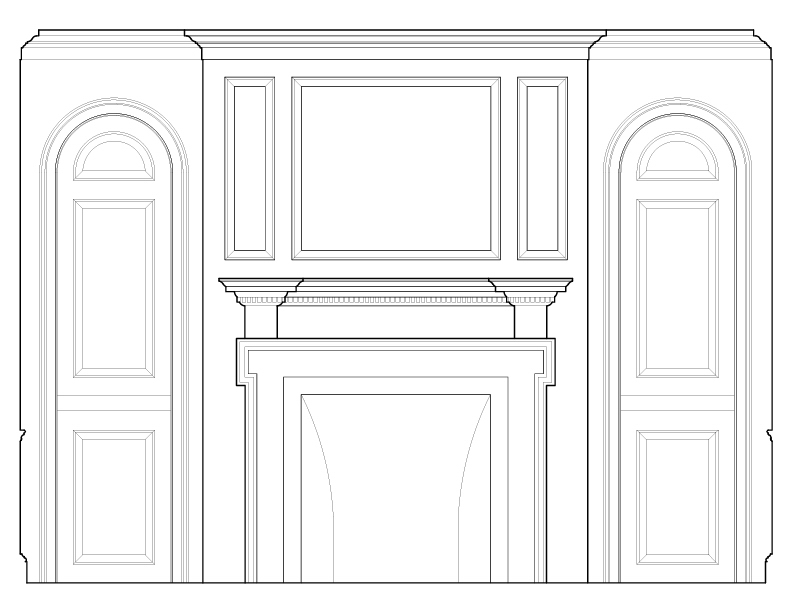
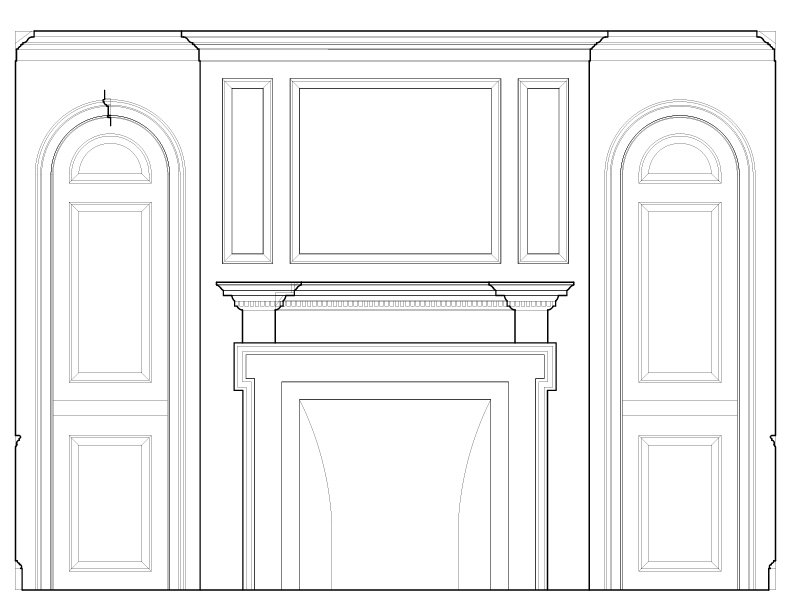
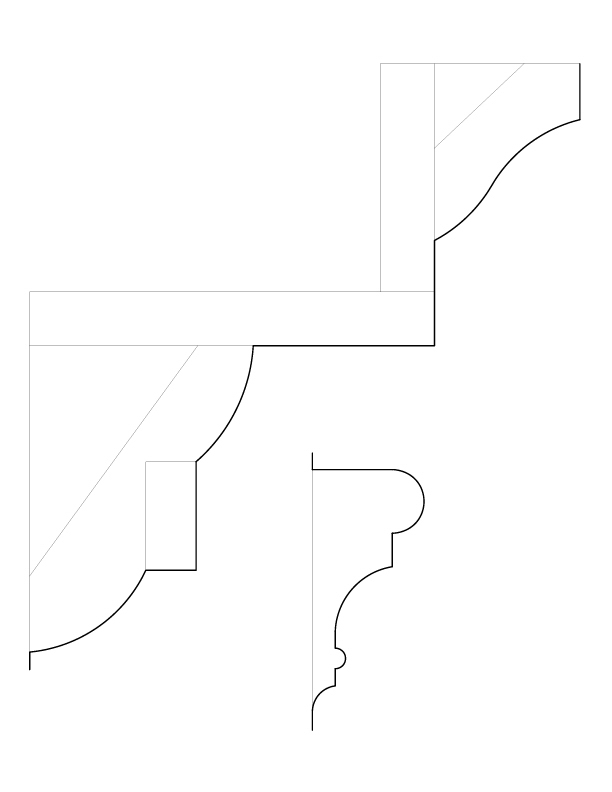
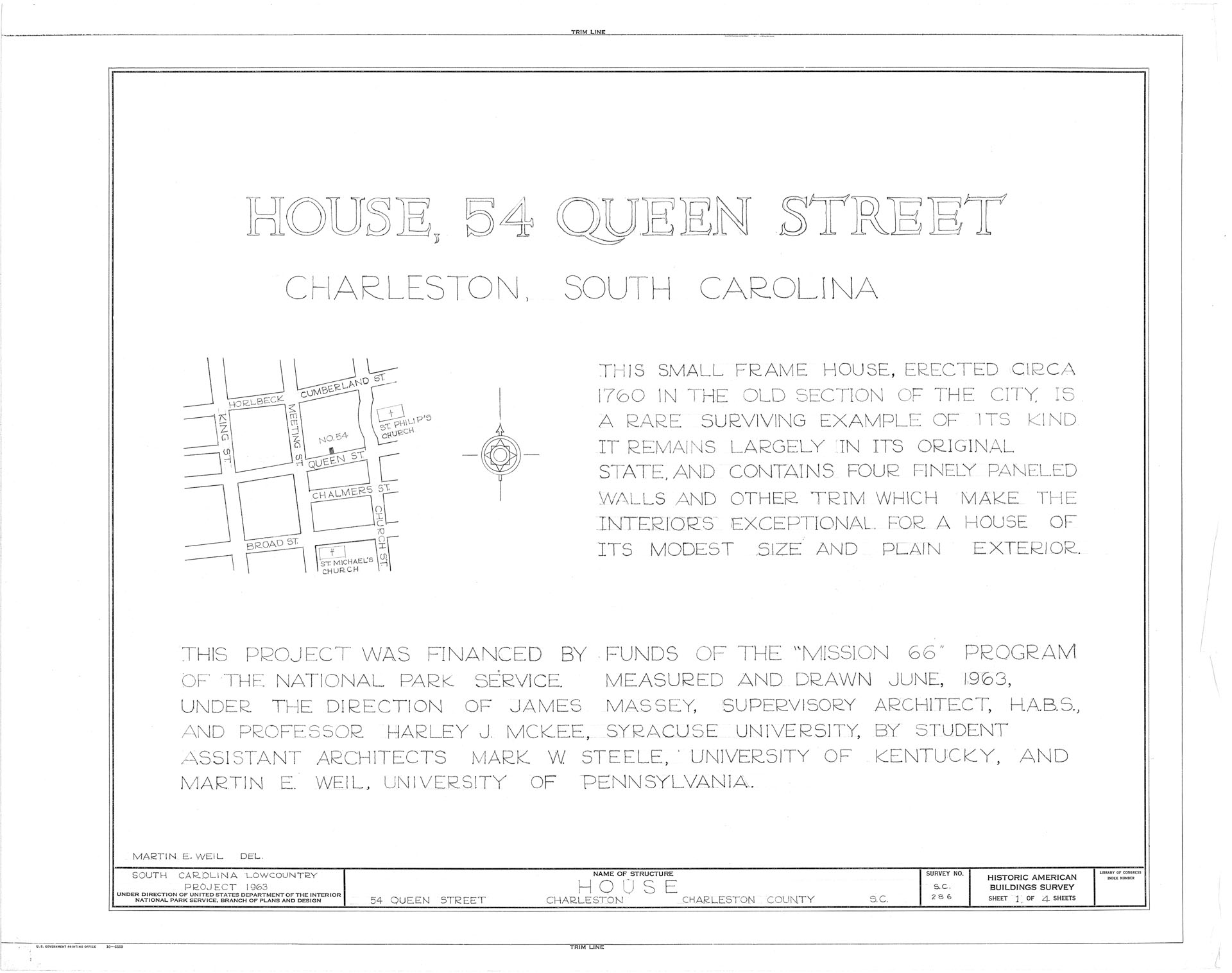
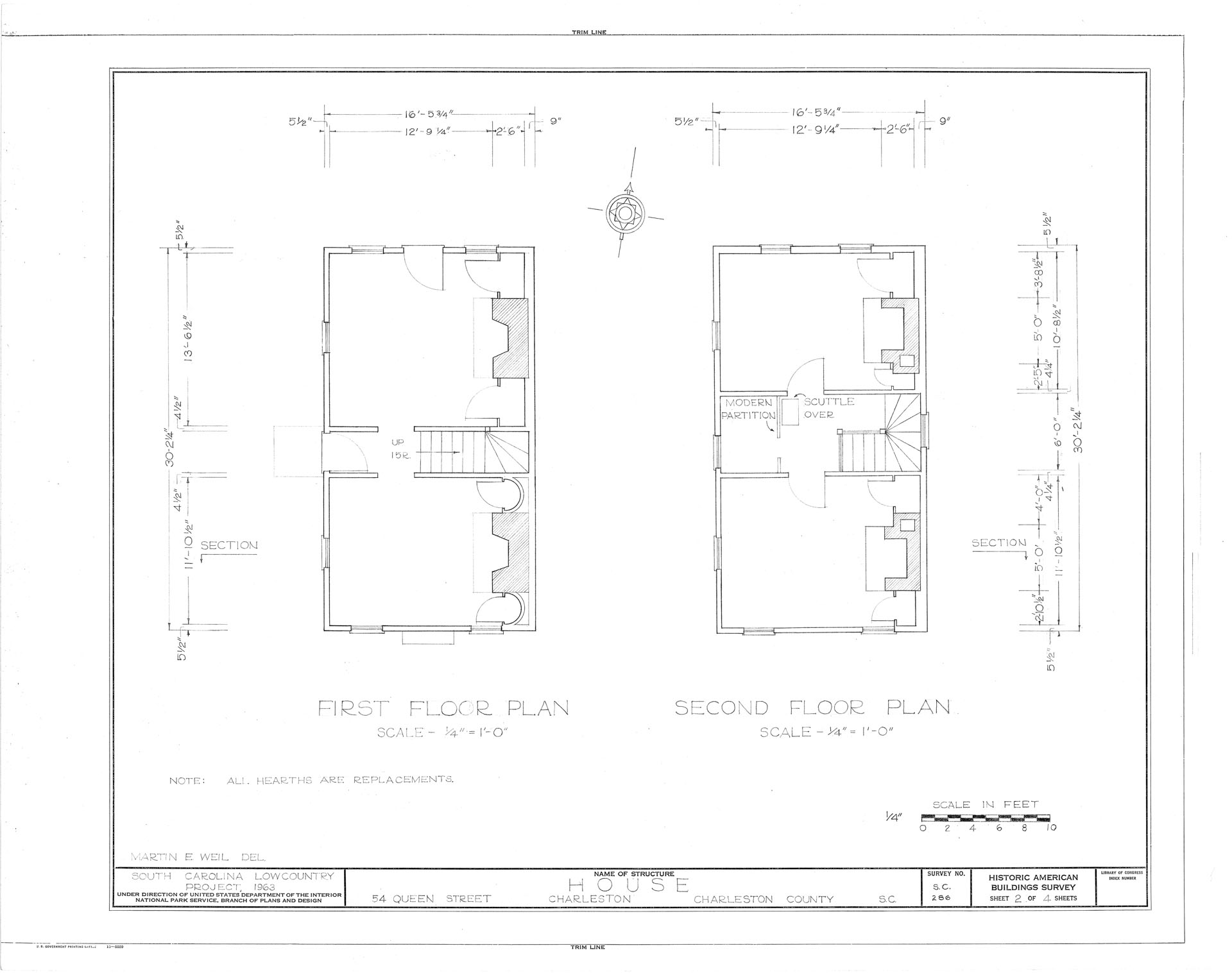
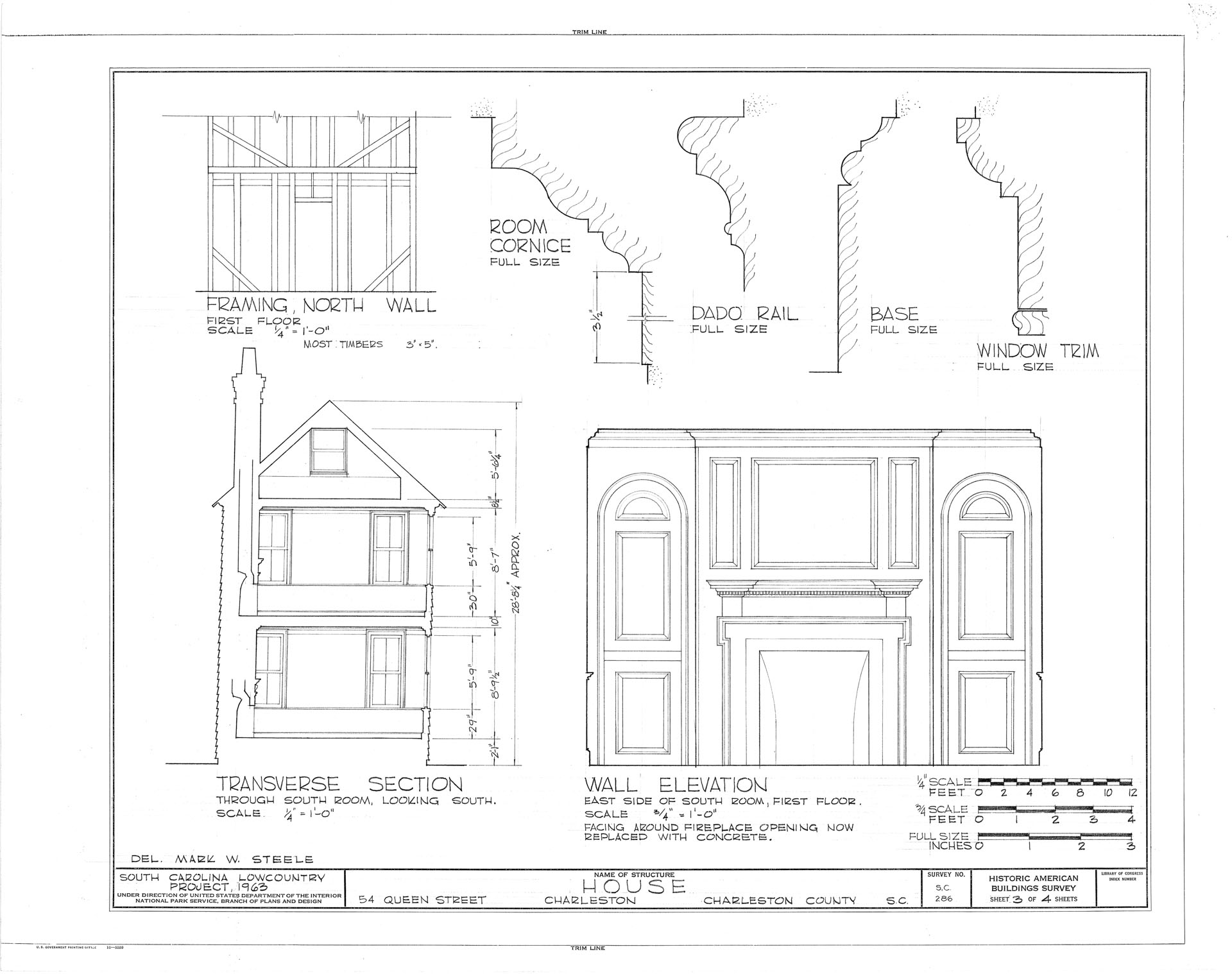
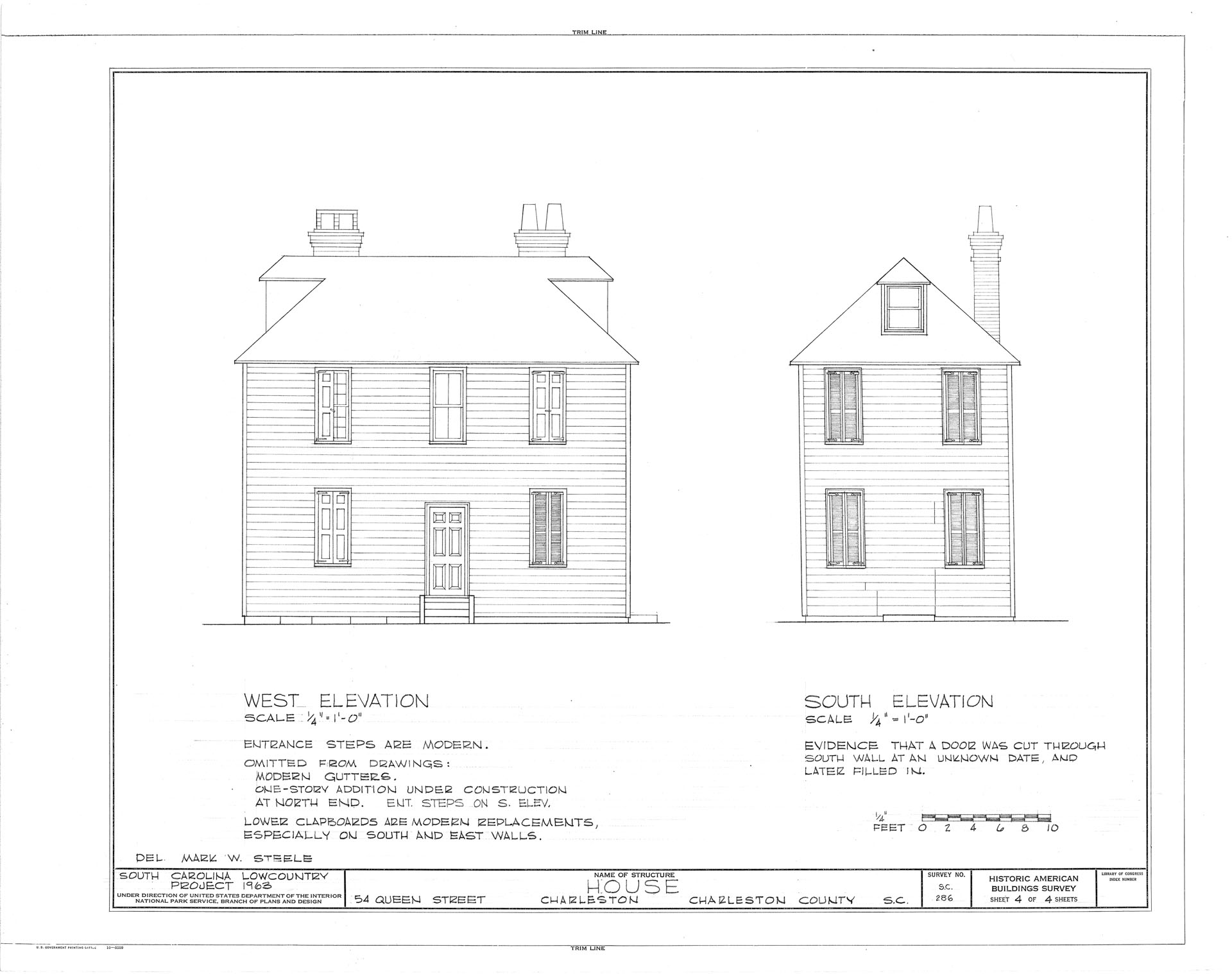
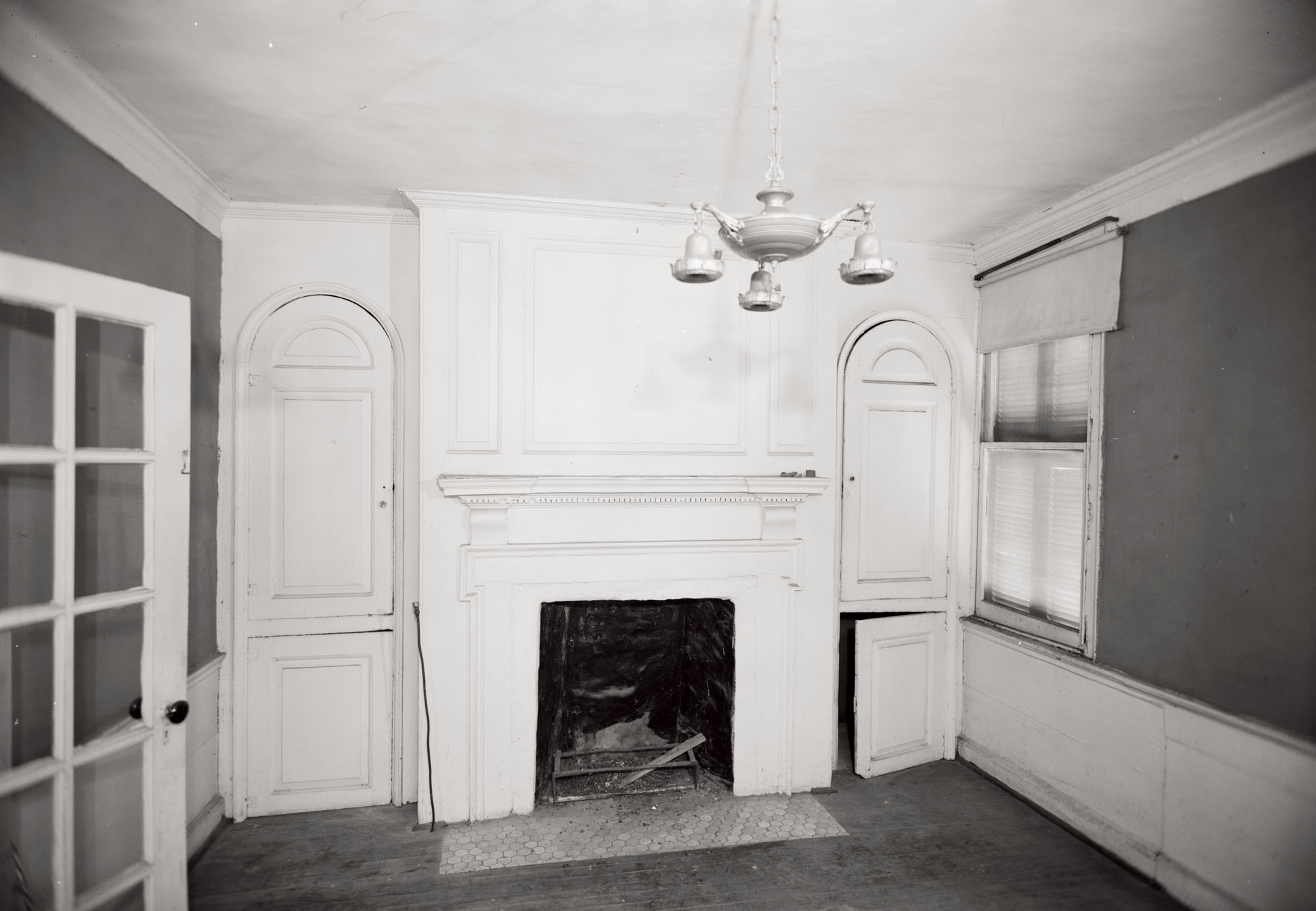
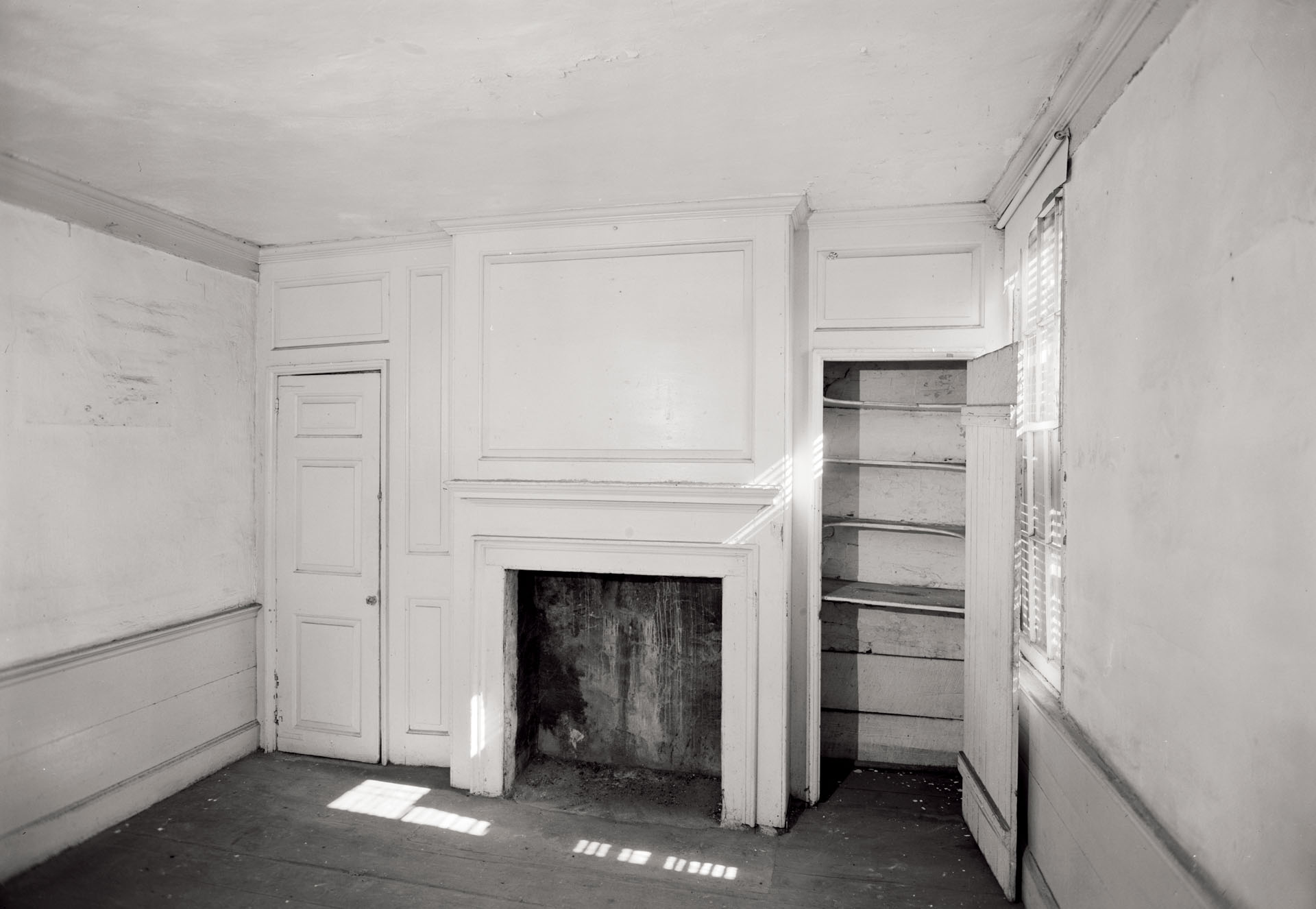
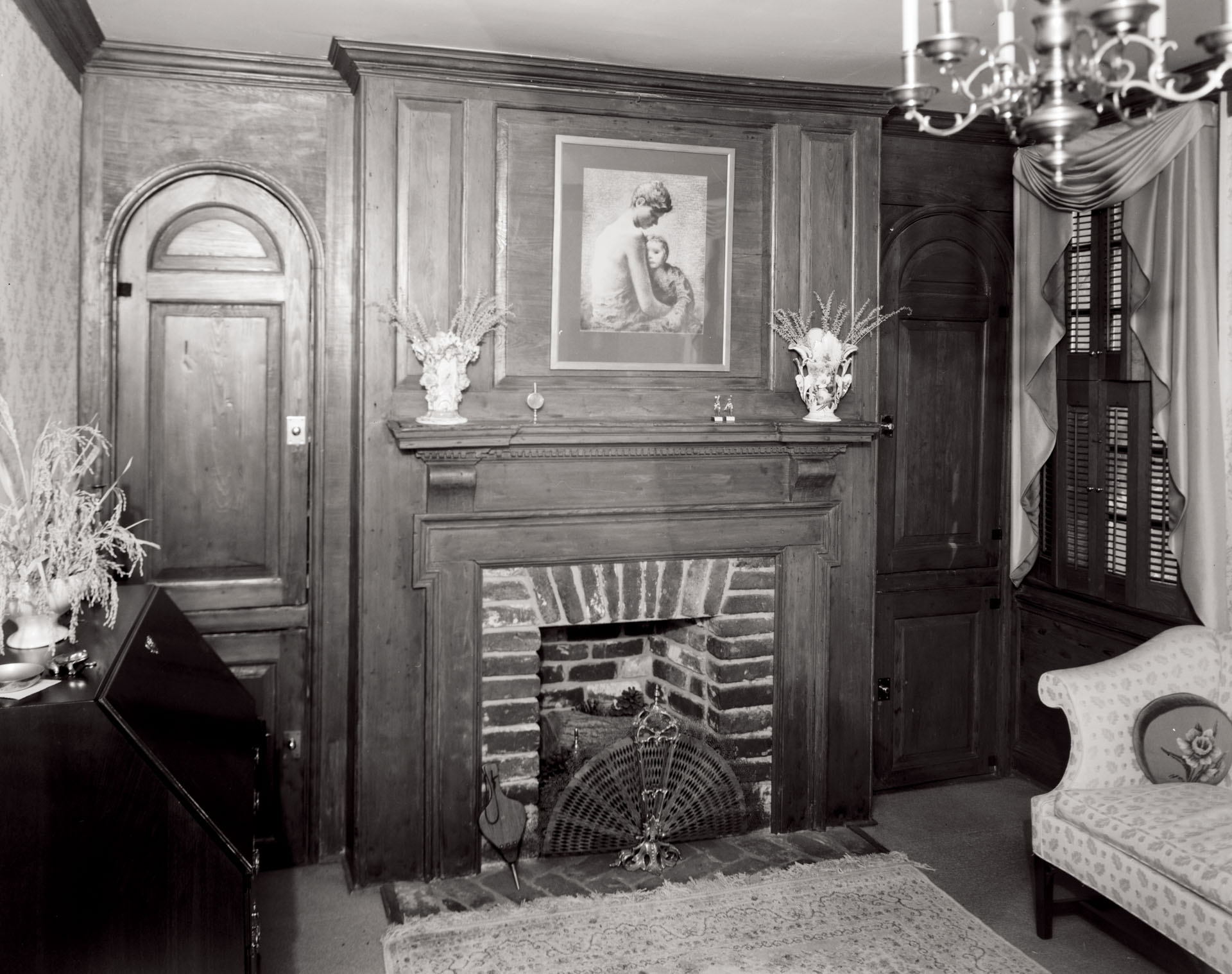
The interiors reveal that discipline with immediacy. Four finely paneled rooms persist within the original structure, their walls articulated through carefully calibrated raised panels, moulded surrounds, and deeply worked joinery that retains exceptional sharpness to this day. The measured drawings documented through the Historic American Buildings Survey record stair details, framing systems, fireplace surrounds, and wall elevations with extraordinary definition, demonstrating how even a comparatively modest Georgian residence could be executed with uncommon deliberation. Cypress cabinetry, paneled chimney walls, and delicate sash proportions reinforce the conviction that the house functioned not merely as shelter, but as a direct and considered expression of the builder's trade.
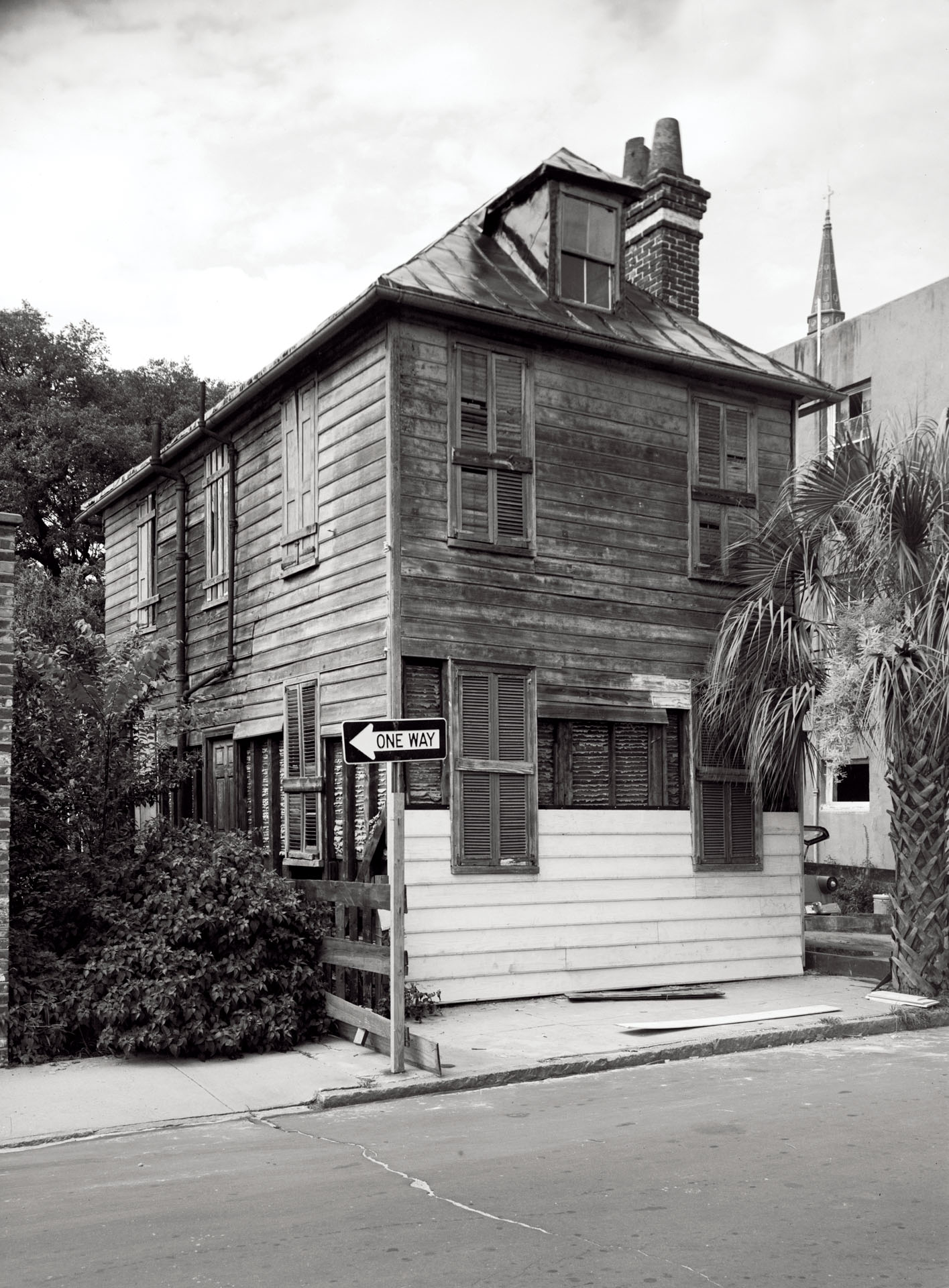
The survival of the Thomas Elfe House is particularly remarkable given Charleston's successive cycles of fire, earthquake, storm, and redevelopment. By the twentieth century, the house had deteriorated severely and was subsequently relocated farther back from Queen Street to safeguard it from demolition. That endeavor preserved more than a colonial residence. It secured the domestic work of a craftsman whose influence permeated early Charleston interiors and whose surviving furniture now resides in distinguished museum collections across the United States. At 54 Queen Street, architecture and craftsmanship remain inseparable, allowing the hand of the cabinetmaker to endure more than two and a half centuries after its construction.