
Chair Rail Ideas: Heights, Layouts, and Pairing with Other Moulding
26th Mar 2026
Quick answers for chair rail layouts
- Consider placement, such as a wall break, panel detail, or wainscotting cap, before selecting a suitable chair rail profile.
- When pairing chair rail molding with panel molding, coordinate the style (curvature) with the size (projection) to ensure a cohesive finish and avoid eyesores, such as mismatched shadow lines on the wall.
- Don’t neglect details like termination points (corners, openings, and stairs) during planning and ordering.
- If you’re undertaking a large project in phases, consider matching existing trim instead of trying to force something that seems close enough.
What a chair rail does in a trim package
Chair rails began as a practical way to protect plaster walls from chair backs and everyday wear, especially in formal rooms and passageways where walls took more abuse. Over time, they became part of the visual language of interior trim, adding a horizontal break that could feel simple and understated or more decorative when paired with wainscotting and panels.
Today, chair rails are used as much for layout, proportion, and finishing detail as they are for protection. When coordinated with baseboards, crown molding, and panel moulding, chair rail molding profiles help a room feel more intentional, balanced, and complete.
Today, chair rails are primarily cosmetic, although they still offer practical benefits. When coordinated with baseboards, crown molding, and panel moulding, chair rail molding profiles can reinforce the proportions of a room and help the overall trim package read more intentionally.
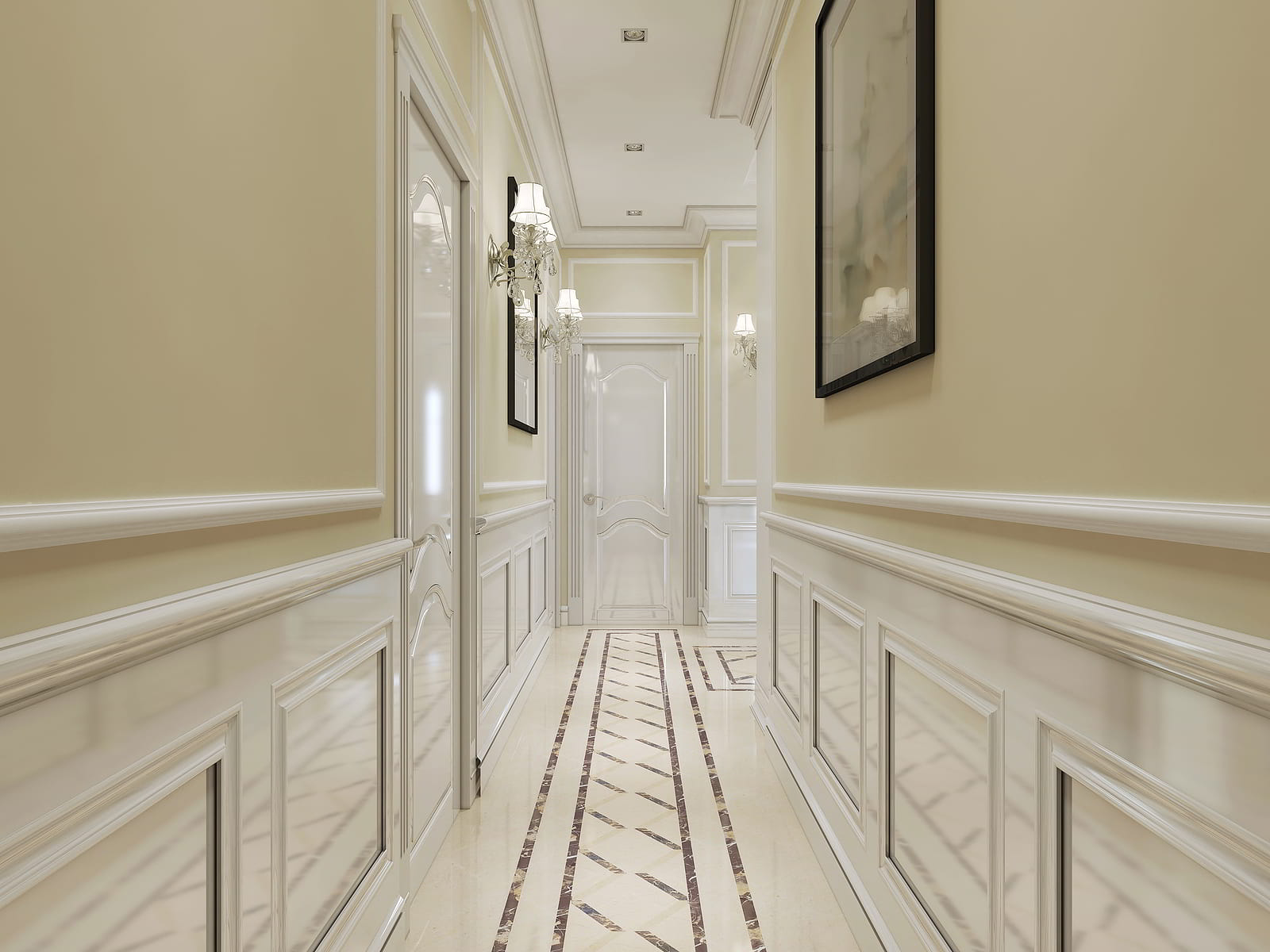
Common chair rail height approaches
Before you start looking at sizes and styles, you’ll want to decide on the placement of chair rail molding, as this can impact other decisions. If you have existing panels or wainscotting, you might be locked into a specific height, but if you’re starting from scratch, you need to understand why certain heights are standard and what advantages are associated with shifting the height of the rail up or down.
Understanding the typical range
There is no single preferred height for chair rail placement. However, the typical range falls between 28” and 36”, with 32” being the average. It was originally based on factors like the height of people, the height of the room, and the height of chair backs.
Comfort in design is about more than building a space that people physically fit in. It’s also about visual perception. Furnishings should fit the room, windows should be set at a suitable height to create balance between the floor and the ceiling, and elements like wainscotting and chair rails should create a visual balance that feels proportionate to the room height and the average size of the people who will inhabit it.
Placement that suits the stature of a space
Tinkering with the placement of chair rail moulding depends on what you hope to accomplish. Often, the height and size of the room are the deciding factors these days, rather than the height of your chairs. The placement may also be determined by the size of wainscotting or wall panels.
The proportions of the room should be the deciding factor because you want the placement to look and feel right. A taller, more spacious room could naturally support higher chair rail placement, but you don’t want to go too high, or you risk shortening the visual height and making the room feel confining. Lower rails are better for preserving balanced proportions in a smaller room, but they can also work well in taller rooms.
Layouts that pair well with panel moulding
Chair rails can provide a lovely wall break between baseboards and crown molding, but they are often paired with other decorative design elements like wainscotting and panel moulding, adding a finishing touch to these aesthetic additions. When installing multiple elevation features, it’s wise to plan the layout in advance to ensure it addresses both functional concerns and visual expectations.
There is more to achieving this than simply putting a cap on wainscotting or setting the height somewhere between upper and lower picture frame molding panels, for example. Placement should be thoughtful, intentional, and geared toward balance and visual appeal.
Simple wainscot frames
Whether you opt for classic flat panel, beadboard, or board and batten wainscotting, the chair rail molding you select should complement the existing elevation detail. This means the height of your wainscotting will determine where you set your chair rail, and the style and projection of wainscotting will inform the chair rail design you choose.
Multi-panel grids and spacing notes
Installing chair rails with multi-panel grids can be a bit trickier than simply capping wainscotting. Whether you have chair panels below the rail or panels above and below, placement should align with other elevation details. Starting from scratch gives you the opportunity to plan a sensible layout, but if the wall has existing grids, their placement will determine the height of the chair rail and how you install it for balance and visual appeal.
Choosing profiles by style and proportion
As a finishing piece, chair rails should project beyond wainscotting, rather than being flush or recessed. How much they project and how decorative they are will depend on the style of wainscotting, the style of architecture, and personal style sensibilities. If you want wainscotting details to stand out, a simple cap is best, whereas sleeker wainscotting could benefit from greater embellishment in the chair rail.
As for raised panel designs like board and batten or picture frame panels, there are two things to consider with chair rail molding styles. First, do you want it to blend with other trim details or stand out? Second, you should think about the shadow it will cast, as that could make it appear to be more prominent. A more decorative or prominent design could make your chair rail a lot more visible when overhead light hits it.
Common mistakes to avoid on elevations and openings
If you were choosing trim in a vacuum, you could select whatever projection and profile details appeal to you. However, when chair rails are part of larger moulding assemblies, projection, terminations, and surrounding profiles all have to work together. Avoiding common mistakes helps preserve a cohesive appearance.
Don’t go too low or too high
The standard height range for chair rail molding exists for a reason. Placement in this range makes the most sense for both practical and aesthetic purposes. Whether you’re updating a living room or dining room, chances are good that the back of your seating will fall at or slightly above this range. If chair rails are meant to be functional, furniture should not hit the wall below them.
From a visual standpoint, it’s best to follow years of tradition when it comes to creating a classically proportioned room. Where you place design elements like chair rails influences the ambiance of the room and how people relate to the space. When chair rails are set too high, they diminish the visual scale of the room, making it feel smaller, even with high ceilings. It can also feel imposing or claustrophobic to people in the room.
Plan the stop points first
Transitions to openings like windows and doors can be challenging when installing chair rails, whether you’re starting from scratch or working around existing elements. However, there are a few guidelines that can help you create a sensible and cohesive look. First, it’s best to let window and door frames take precedence. For the sake of consistency throughout a structure, complete casings before adding wall elevation details. Interrupting casings with decorative trim never looks as good as you hope it will.
From there, you can determine how best to terminate chair rails when they reach a frame. While you could back-cut the chair rail for convenience, this isn’t the most attractive or polished finishing look. You’ll achieve the most professional appearance by butt-cutting the rail, notching it over the casing before the final cut, if necessary (depending on the elevation and profile of each element).
When matching existing profiles is the right move
Creating a custom chair rail to match existing trim is preferable in a couple of instances. First, you should explore this option if you want to preserve the original design of the interior. Even a close match could be noticeably different. A phased project can also benefit from matching profiles that ensure a cohesive look at the end.
Compare chair rail molding profiles, review panel moulding options, and request a quote if you need help coordinating an existing or phased project.