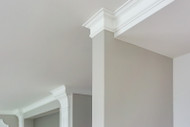
Built-up crown assemblies using stock components
28th Apr 2026
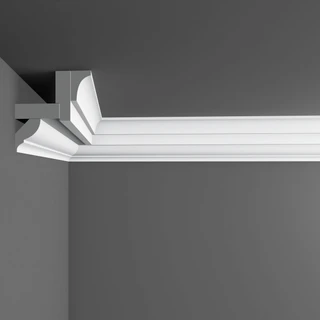
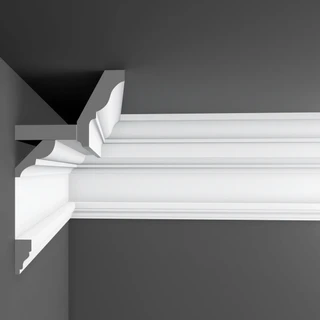
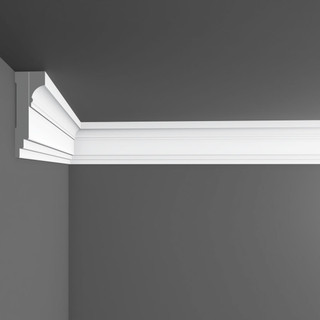
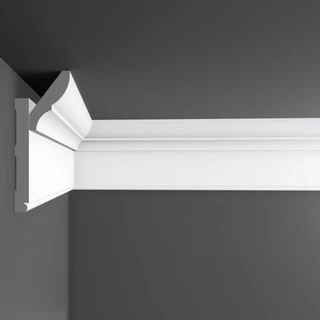
Creating a stronger presence at the ceiling line doesn’t always mean going with an oversized profile that relies on new tooling. Instead, you can build a taller crown package from separate stock components assembled on site. A combination of flat stock and smaller trims can be used to deliver the scale, definition, and flexibility you need from your crown molding.
What a built-up crown assembly is
A built-up crown assembly is made up of multiple profiles that are layered and installed together. This layered ceiling treatment can achieve the depth of a larger composition without needing custom tooling. Packages often combine a primary crown, flat stock, and accent trims to get the right visual weight and dimensions.
You’ll find this approach used for taller rooms, formal interiors, and remodels where a standard profile isn’t a suitable option. With a built-up crown assembly, you can achieve a profile that suits a wide range of wall heights and casing scales. Projects also leverage built-up assemblies for more substantial transitions.
The main difference between built-up assemblies and single profiles is the composition. A single profile will have a defined silhouette. However, a built-up assembly can feature a wide range of options to implement reveals, stacked edges, and fascia surfaces. The layered structure can help the ceiling look better integrated with the surrounding trim.
A built-up assembly will still rely significantly on a main profile. This primary profile is selected from your available wood crown molding options and establishes the dominant shape and spring line. Additional pieces control the height and style of the assembly. Choosing the right combination determines how the overall assembly will look once installed.
This is important to keep in mind during the design phase. A large one-piece profile can sometimes work, but doesn’t automatically outrank an assembly. Many interiors can take advantage of separate stock components to create refined and clean styles. With each layer adjusted individually, it can be easier to adapt to scale and other factors.
Builders and designers shouldn’t think of assemblies as a workaround but, instead, as another potential method. It provides flexibility in creating height, shadow lines, and other features using stock parts that are easier to source, compare, and revise if needed.
When stock components make more sense than a custom knife
Stock combinations are often the more practical choice. This is particularly true if you need to meet a tight schedule. Developing a package from standard profiles allows for simple procurement. Instead of requiring a dedicated milling run, you can move through the project more quickly and adapt to any necessary field changes.
Budget is another reason many builders choose built-up assemblies. Stock components are readily available at lower costs. You can avoid the higher prices that come with custom crown molding. When navigating remodels and projects that call for elevated detail, the overall difference can be significant.
Built-up assemblies are often the more flexible option when you need to adjust projection, fascia height, or supporting details without redrawing the whole profile. When specifying your project, you can adjust parameters like projection, fascia height, and more without redesigning the whole profile from scratch. The modular nature of assemblies also comes in handy when trying to match existing casing and conditions.
It’s common for renovation work to involve existing trim that poses challenges, especially when dealing with historic profiles. Custom work is one solution, but combining stock parts is often more practical. A primary crown can achieve the profile you need and can be combined with supporting pieces to control size and weight.
There are scenarios where a custom solution makes more sense. Very specific historic replication may be better suited for custom work, especially if you have a large production run that could justify the tooling. Certain constraints, such as unusual projection limits, can also make a custom run the better option.
Planning carefully is vital to getting it right. Evaluate the scope, lead time, and intent of your project before making your decision. Stock crown molding components are often capable of delivering the results you need when combined in a built-up assembly.
Common components in a taller crown package
Built-up assemblies are made up of a variety of components. The primary crown is the piece that serves as the visual anchor. It can feature any number of potential profiles and defines the main sweep between the wall and ceiling. Finding the right primary crown piece is key to defining a restrained, traditional, or formal style.
Flat stock lets you change the scale of the assembly. S4S lumber lets you change the scale of the assembly and can serve as a fascia, backer, or extension. You can build up one or more pieces to create additional drop or give it a wider face. You’ll be able to use flat stock to make the assembly feel taller without making the main profile too heavy.
Accent trims are useful to refine the transition between components. Adding a cap, panel mold, or other pieces softens the shift from the flat stock to the main profile. You can also use this technique to introduce a reveal or add lines where the assembly needs shadow and separation, adding visual depth.
Base cap moulding is another practical component for refining fascia edges and tightening transitions into the main crown. You can use it to finish the edge of a fascia board or tighten transitions into the main crown. Adding a smaller detail line using base cap moulding can link the ceiling treatment to paneling, casings, and other trim as well.
When considering how these components will come together, you should evaluate the projection and drop together. If the projection is too shallow, you can end up with trim that has ample height but has low visual weight. Conversely, a deep projection will feel top-heavy if the drop doesn’t match. Layered assemblies must be carefully balanced.
Choosing components also requires coordination across the trim package in general. You don’t want to compete with baseboards, casing, and other details but, instead, work with them. The specific look of your assembly should integrate with the architecture and room character, and the right combination of components can make that a reality.
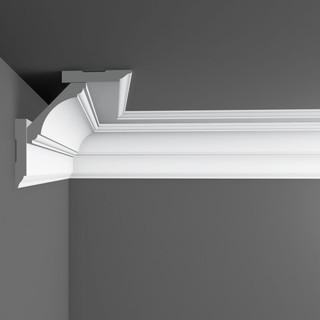
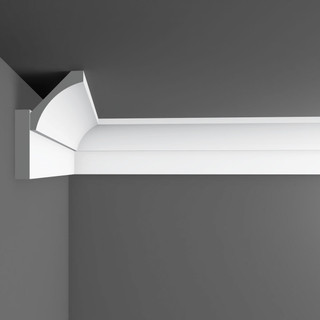
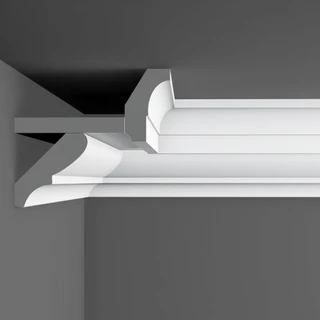
Planning considerations before ordering or installing
The first thing to consider when planning is the ceiling height, as it will determine the general range of assembly heights you can work with. However, the overall room scale is also important. A modest room with tall ceilings can still make use of a more restrained assembly, so consider the full trim context, not just height.
Corners require special consideration when planning built-up assemblies. They can greatly multiply alignment challenges. Inside and outside corners, spring transitions, and irregularities must all be evaluated to understand how your final composition will look. Certain combinations simply aren’t practical depending on room features.
Many properties also have wall and ceiling complications that can make actually installing built-up assemblies difficult. While layers can help mask some irregularities, uneven surfaces can become even more notable with the bulkier profile.
How the assembly meets adjacent conditions is also critical. Any cabinet runs, built-ins, beams, or stair transitions can disrupt the trim in unexpected ways. Don’t wait until the day of installation to think about how to resolve these issues.
The finish approach also has a role to play in planning. If you’re going with stained work, the joint quality, grain consistency, and component alignment will be much more visible. Painted work often provides more leeway for assemblies made up of varied stock components.
Carefully plan the sequencing of your project, too. If you’re installing flat stock, accent trim, and the main profile as separate parts, you’ll be assembling them on site. Plan ordering, staging, fastening, and finishing accordingly.
Choose the right components for a built-up crown assembly
A taller ceiling treatment doesn’t have to require custom tooling to achieve the results you’re looking for. You can rely on a built-up crown molding assembly to build a taller crown profile that suits your project perfectly at Mouldings One. Browse crown, S4S, and base cap components, or request a quote if you need help building a taller crown package.