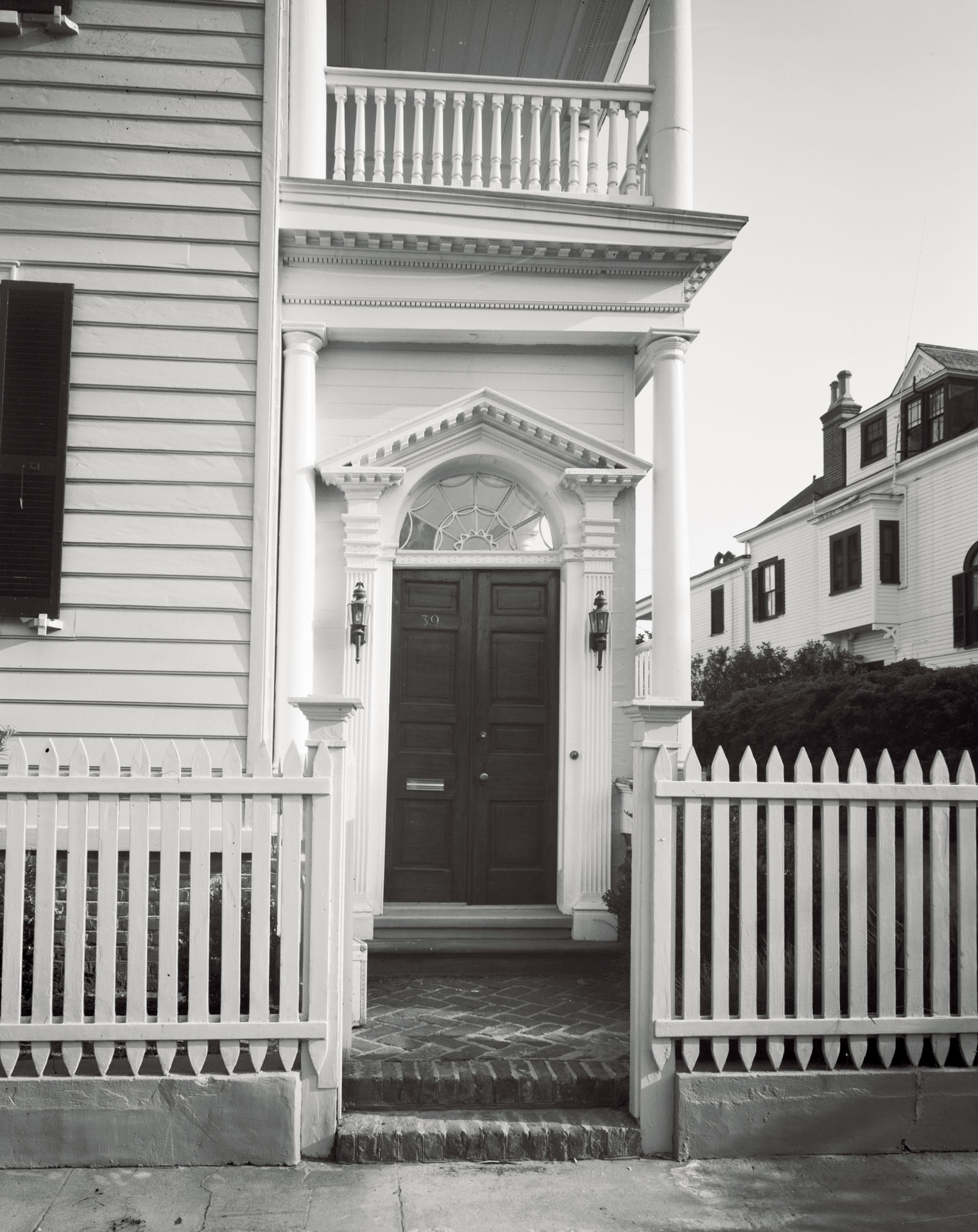
39 SOUTH BATTERY, CHARLESTON, CHARLESTON COUNTY, SOUTH CAROLINA.
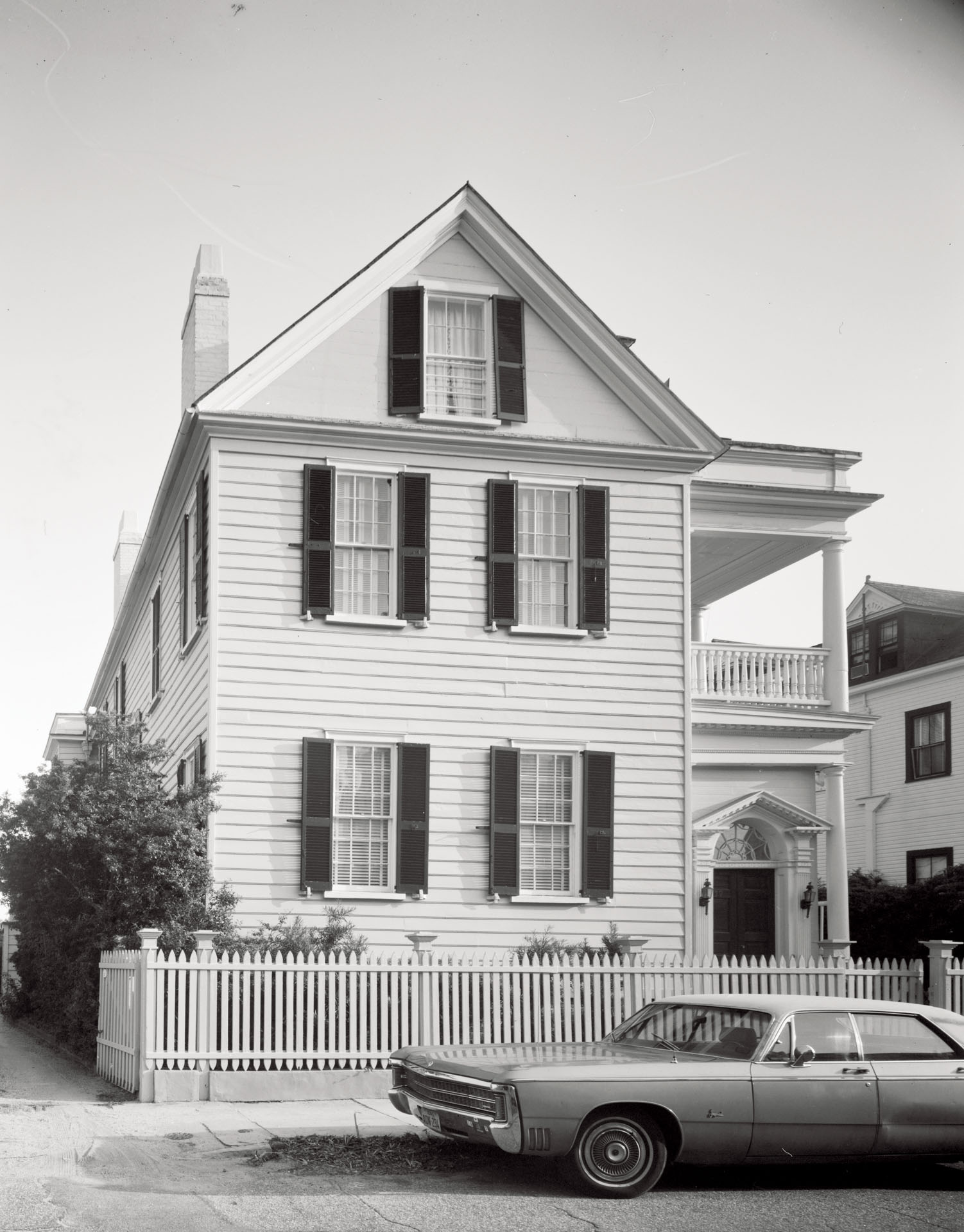
In 1825, at a moment when Charleston’s waterfront was being shaped by a new generation of residents, Samuel Magwood commissioned a house for his daughter Susan and her husband Andrew Moreland along what is now South Battery. Positioned just behind the line of the seawall, the property occupies a site that maintains both visual and spatial connection to the harbor, reflecting an early phase in the development of this now celebrated frontage.
The structure takes the form of a Charleston single house, one room in width and extending deep along the lot, a configuration that allowed for ventilation and spatial efficiency within the urban setting. Built upon a foundation of interlaced palmetto logs set into the ground, the house embodies a remarkable structural solution unique to the region. This construction method allowed the building to absorb movement during seismic and coastal events, a quality credited with its survival through the earthquake of 1886 and subsequent storms. Its elevated mass and ordered arrangement of openings contribute to a composed exterior, while the two-story piazza and deep lot orientation reinforce its relationship to Charleston’s established domestic form.
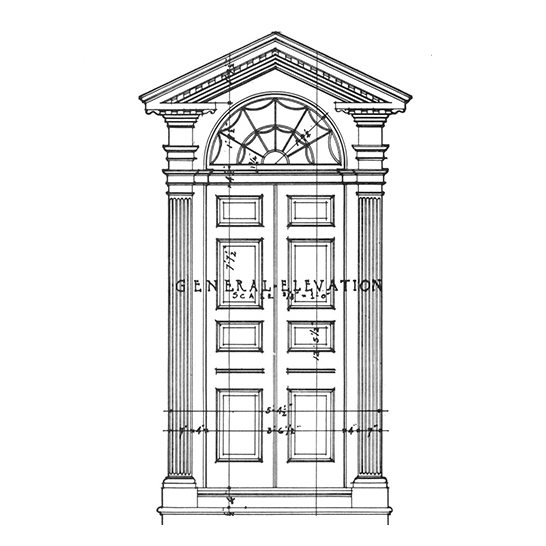
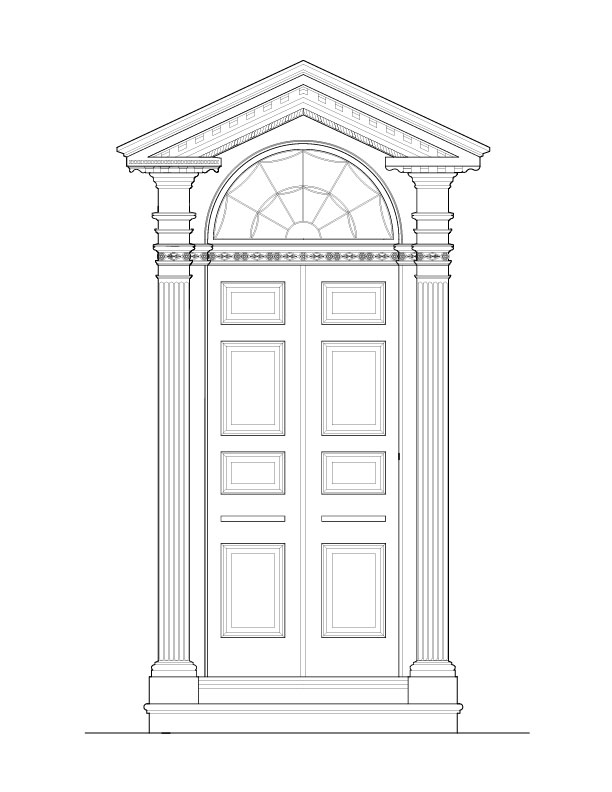
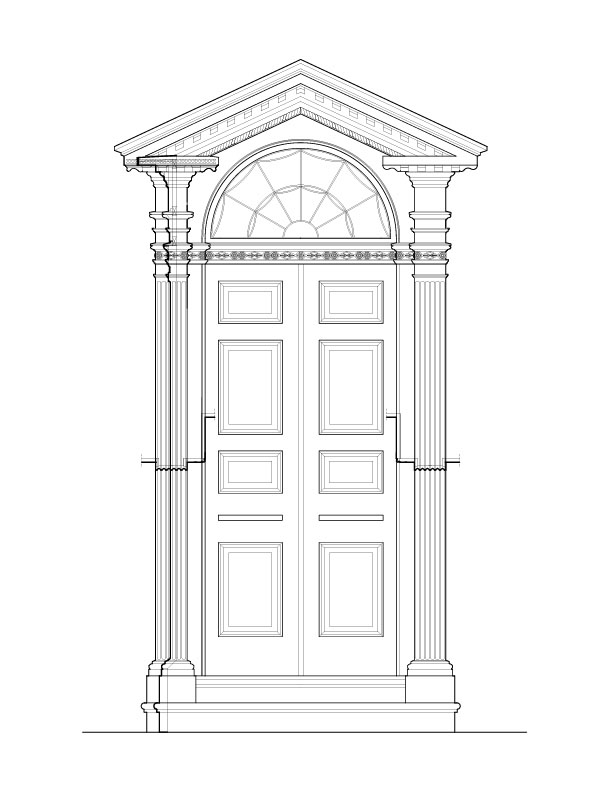
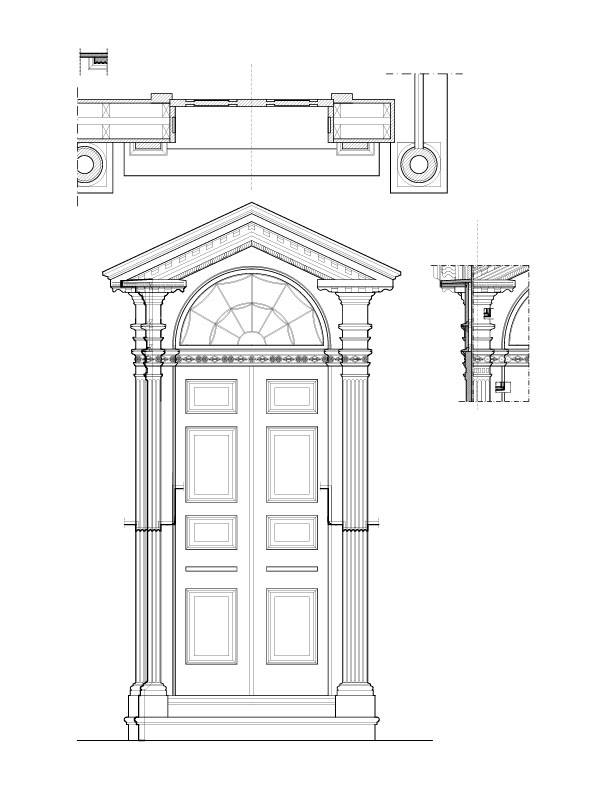
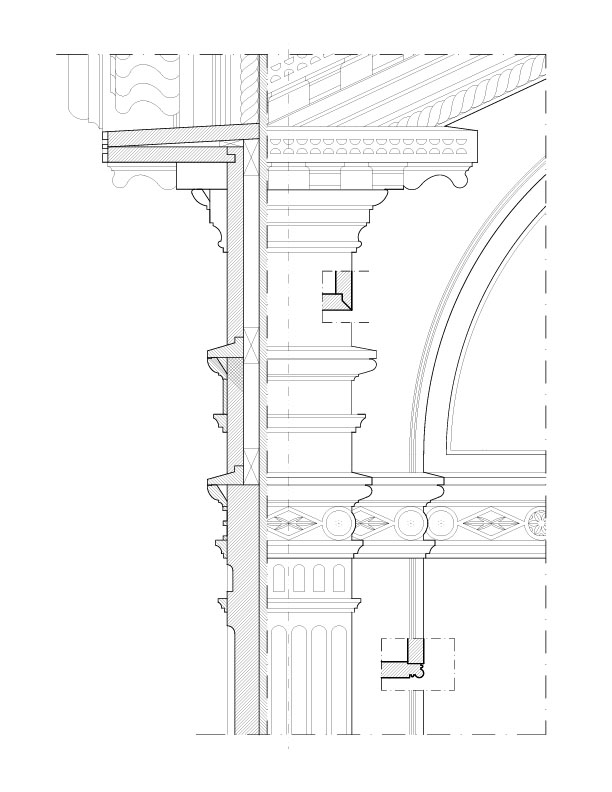
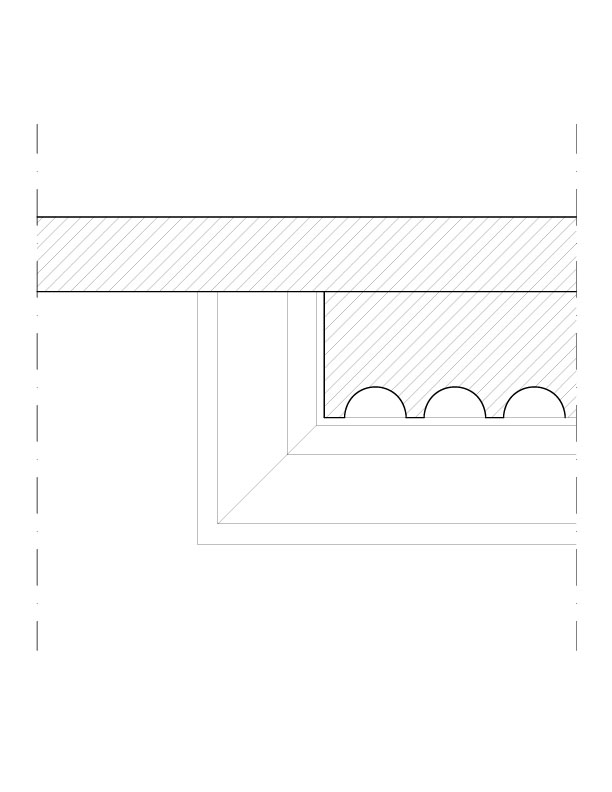
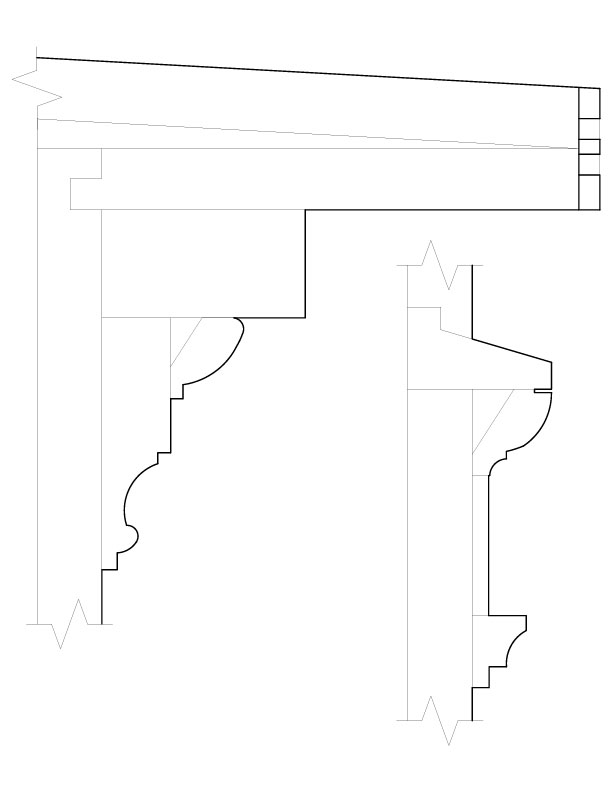
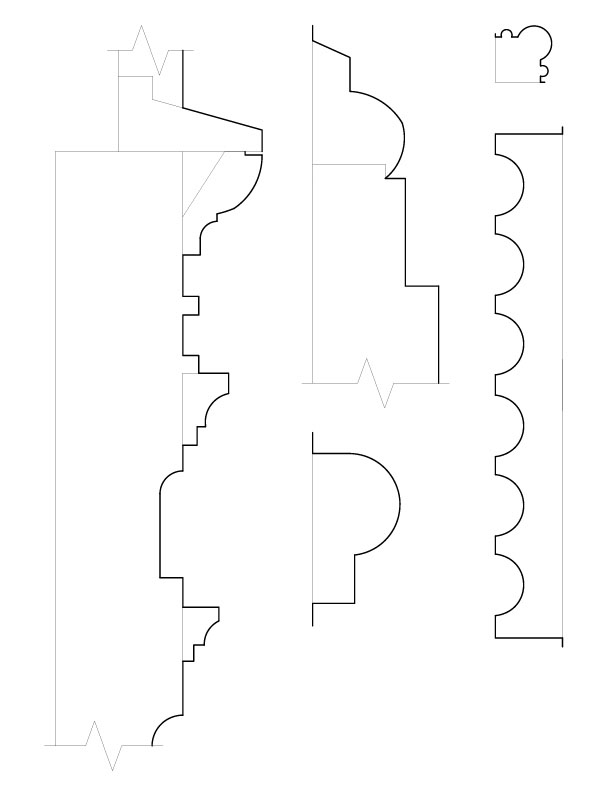
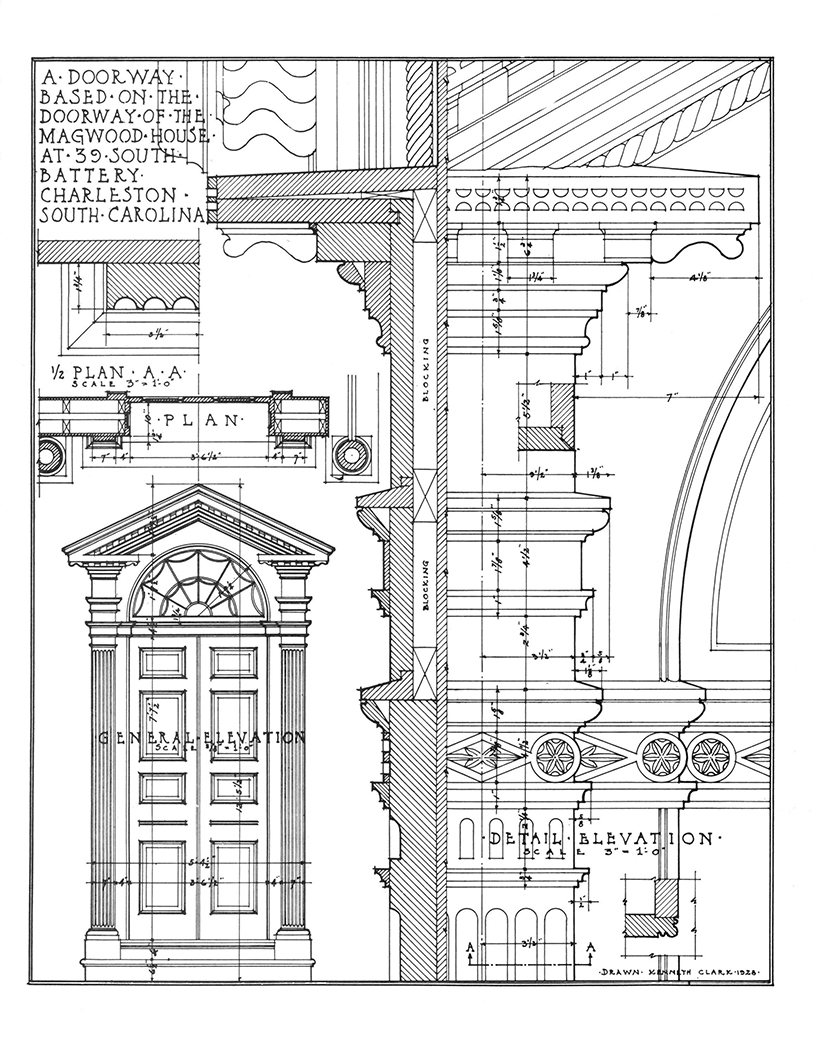
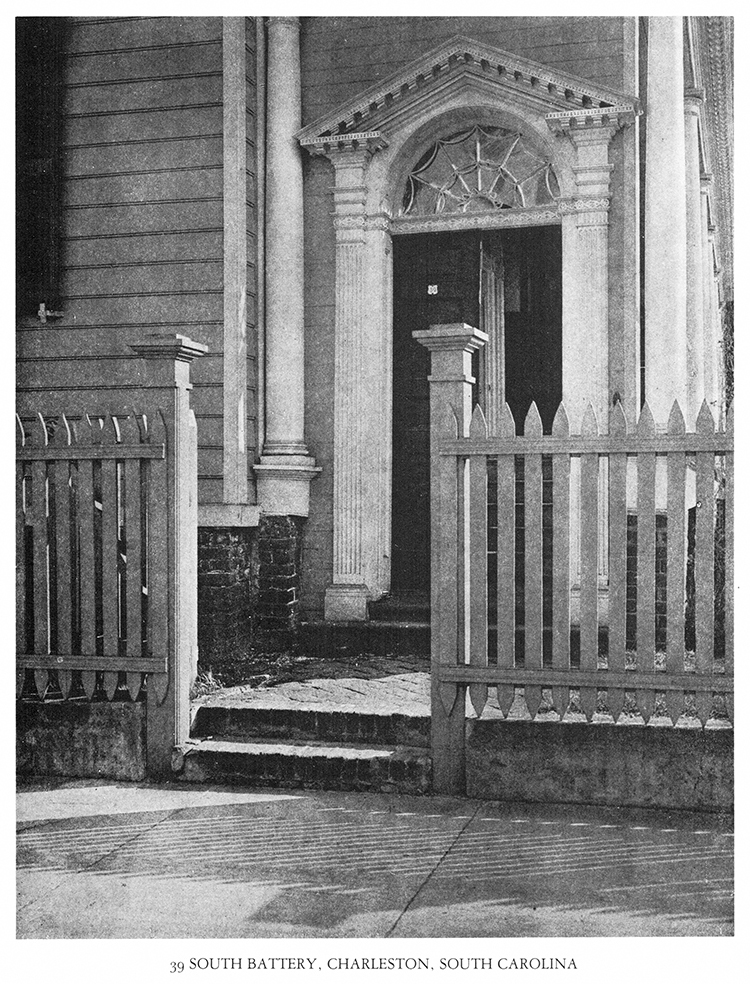
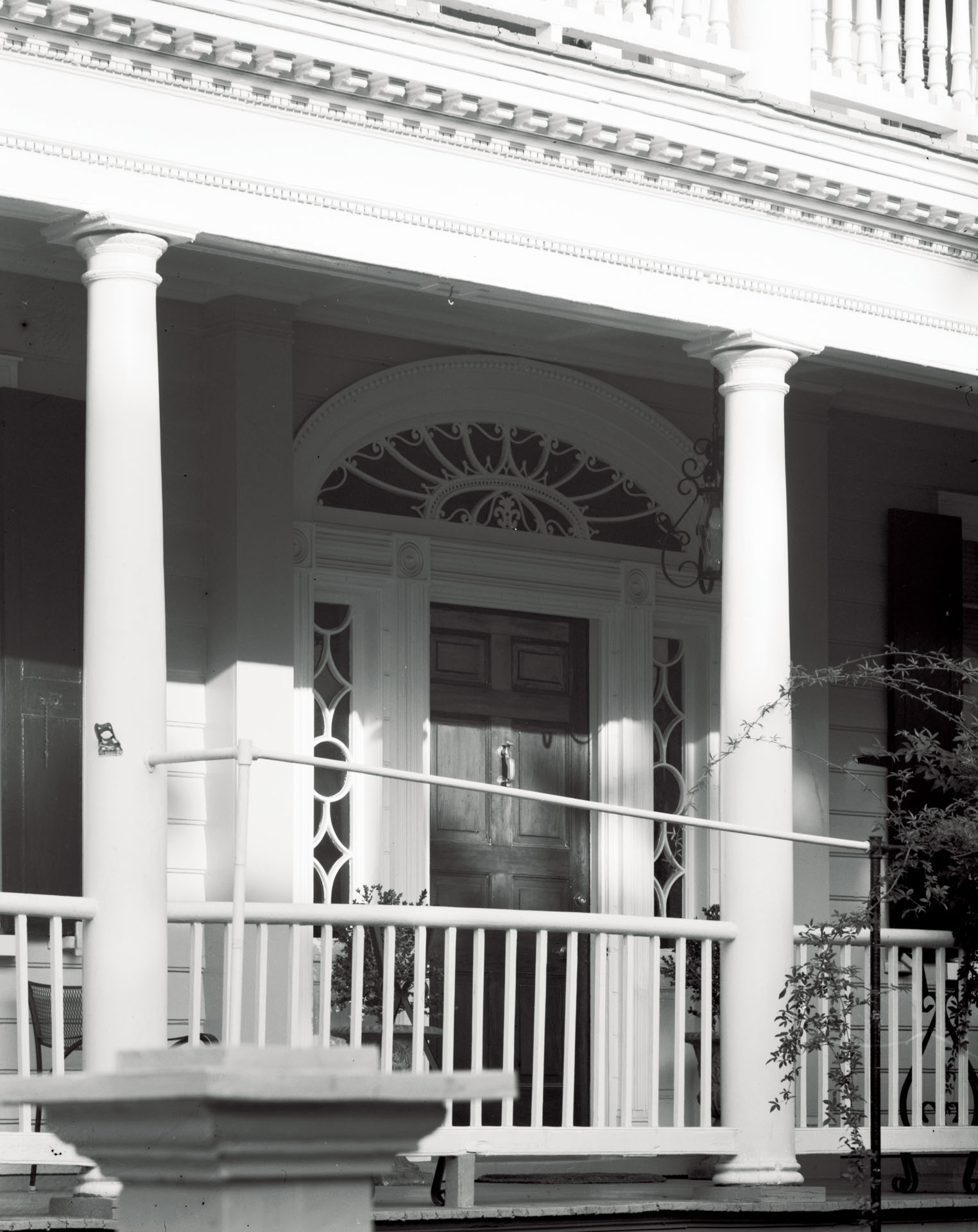
Within, the interior reveals a level of refinement consistent with its setting. Surviving details and measured drawings illustrate doorway compositions of particular distinction, where mouldings, paneling, and carved elements are assembled with clarity and intention. The woodwork, including heart pine flooring and extensive interior trim, reflects both durability and finish, while transitions between spaces unfold through a sequence of controlled and deliberate spatial shifts.
The Magwood Moreland House remains a significant early example along South Battery, predating many of the grander antebellum residences that would later define the promenade. Its continued presence offers insight into a formative moment in Charleston’s architectural development, when the relationship between house, harbor, and city was still being established through individual acts of building rather than unified design.