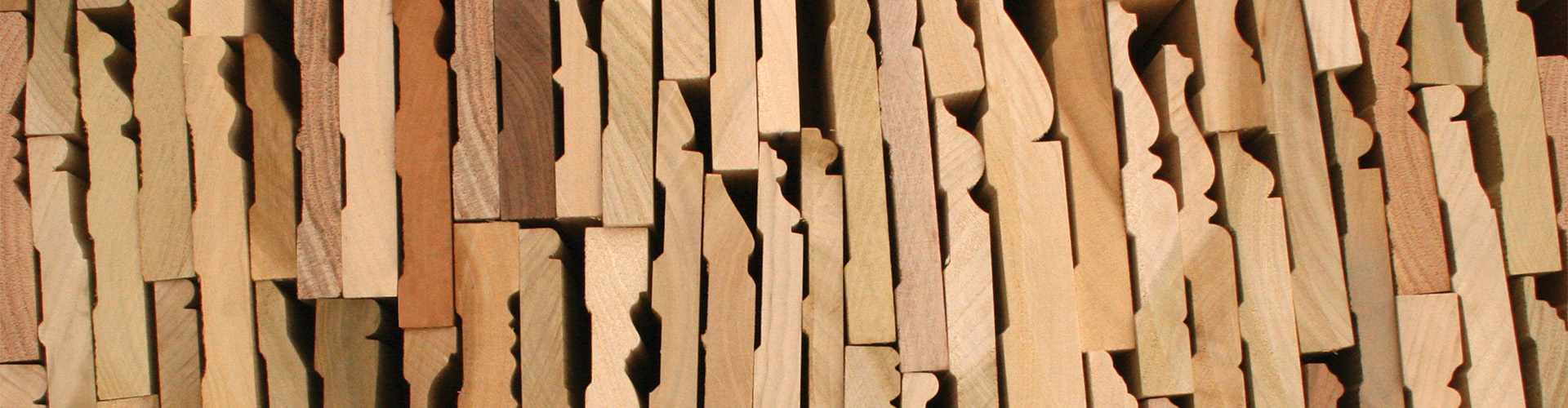
Some projects call for custom moulding and millwork to deliver more precise results and a better match than off-the-shelf profiles. Trim tailored to the design and conditions of existing moldings allows for smooth renovations, additions, and other projects. Whether you need historic profile matching or a specific profile at scale, custom options are available. Here’s how the process works for custom trim packages.
When custom matching or custom runs make sense
The first decision to make is whether to go with custom matching or stock trim. Standard profiles may not match the proportions needed for the project. Additions, phased renovations, and partial updates are all scenarios that often call for new trim that matches existing details. Custom moulding and millwork provide such options.
For projects that require visual continuity, custom trim is often a practical choice. Existing interior trim can have casing widths, reveal lines, and base heights that can’t be easily matched with off-the-shelf options. Even a close match can dramatically impact overall appeal, especially at transitions and around openings.
Custom runs are also an efficient way to keep trim consistent across larger projects. Coordinate window and door casing with base and custom crown molding profiles, even in non-standard widths and thicknesses. Custom transitions address changing ceiling heights and other irregular conditions while maintaining a cohesive trim style.
Projects with arched doorways, windows, radius heads, or other curved openings may also require matching radius components. Learn more about our Custom Arches and Radius Mouldings service, including radius casing, backbands, jambs, and flexible moulding options.
While standard moldings are available in a wide range of sizes and proportions, projects can call for specific designs outside of those options. Custom runs allow for tailored trim to address taller base profiles, wider casing faces, and alignment with jamb depths and backbands. This leads to better results than improvising with mismatched trim.
Custom matching is a potential option to deal with repairs and extensions. Even minor differences can stand out once installed. Detailed layouts using panel moulding and other detailed styles are difficult to match with stock trim and can call for custom work for a cohesive result.
Finding matches for older trim often calls for custom work. Many subtle details may have been in style at the time but aren’t found in modern stock. These uncommon profile depths may not be available in stock options, but custom moldings can often recreate historic details closely enough to maintain visual continuity. When the original design context matters, the Museum of Historical Millwork can help you reference period-appropriate assemblies and details before submitting a match request.
What to provide for a reliable match
Achieving a reliable match for your project requires details on the existing molding. The best starting point is a clean physical sample that can capture depth, profile, and edge detail directly. If you already have a Mouldings One profile number, reference the profile index so the team can pull the correct drawing quickly. When samples can’t be removed from the existing molding, clear photos from multiple angles and thorough measurements may be suitable.
The quality of the inputs has a direct impact on the accuracy of the trim design produced. Without accurate details, it may not be possible to provide a match for a project. When it comes to photos, including both straight-on and angled views with a ruler in frame allows for more precise assessment and design for custom moldings.
Certain key measurements are critical to achieve a reliable match. Width, thickness, and detail points, such as bead locations or step depths, provide a detailed overview beyond overall dimensions. Specifying the area where the trim will be installed, whether openings, ceilings, or wall panels, will determine tolerances as well.
The context of the trim is a critical detail as it affects how each piece interfaces with others. Specify whether the profile returns into itself, meets a corner block, intersects another profile, or ends at cabinetry. These notes emphasize where precision is needed in the custom moldings, allowing for smooth installation and lasting appeal.
Specifying the material and finish intent at the same time is also important. Detail whether surfaces will be painted or stained so that the appropriate wood species can be selected to deliver matching results. Species and grade are just as essential as profiles when it comes to custom mouldings and millwork.
How the process typically works
Once reference materials are received, they are carefully evaluated to determine whether custom moulding and millwork can provide a match. Profile complexity, material considerations, and tooling requirements all impact feasibility. Identifying which details are critical helps guide the decision-making process to create a match.
From there, a proposed profile can be prepared for approval. A plan for production is created, including an estimated schedule based on species, run length, and finishing. Timing can vary based on the accuracy of the sample, number of profiles, and overall volume, along with other factors like material availability.
Defining the full scope from the beginning enables better production planning. Even phased renovations should have a detailed overview of all trim required to allow for accurate quotes, scheduling, and production. If you have drawings, takeoffs, or a scope summary, request a trim package estimate to confirm profile counts, run lengths, and finish intent early. Coordinating across crown, casing, base, and panel details as a package is vital to maintain proportions throughout the project. For built-up crowns, multi-piece casings, headers, and wainscot details, review moulding assemblies to align proportions before you finalize quantities.
The Mouldings One Difference
What makes us different goes beyond our tools and materials. It is the way we work with you. Every custom moulding is a collaboration. We take the time to listen, offer guidance, and ensure the final result meets your expectations. When you work with us, you are not just placing an order—you are partnering with a team that is committed to getting it right.
Have a sketch, a sample, or just an idea? Contact our team to get started. Contact our office for any questions or further information.