

S4S lumber, or “surfaced four sides,” is an ideal option when you need boards that are smooth and straight. They are ready to use without extra milling or planing. S4S boards have square edges and a clean finish that can save time in your shop or on the jobsite. It’s a dependable choice for builders, millwork shops, finish carpenters, and woodworkers who value consistency.
When to use S4S boards on the jobsite or in the shop
Investing in S4S lumber will result in a simpler planning process and cut down on prep time. It arrives with uniform dimensions, making it easier to measure, align your materials, and achieve a precise installation. This consistency is especially valuable for projects where tight joints and clean edges are your top priorities. You can avoid the hassles of heavy sanding and focus your effort on achieving a precise installation.
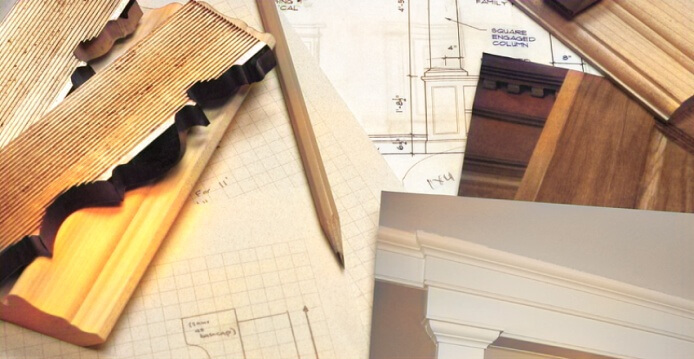
Using S4S lumber also helps eliminate variability that could slow you down when laying out your materials or assembling products. They’re also frequently used as flat stock in built-up moulding assemblies and architectural details, where consistent dimensions and square edges matter. It’s commonly used with base cap moulding and baseboard moulding to create larger built-up profiles.
S4S lumber is a strong fit for both shop and jobsite work when consistent dimensions and a clean finish matter. With S4S boards, prep time is typically reduced to light sanding before finishing, depending on the final appearance requirements.
While professionals have the skill and equipment to finish boards on site, they may opt for S4S lumber when they are working on tight timelines. Since the boards are dimensionally consistent, installation moves faster, and material waste is reduced. This added efficiency is very appealing for professionals working on large-scale or complex projects, such as installing cabinetry in multiple homes in a new construction community.
S4S boards also provide a cleaner starting point for staining, painting, or sealing. The smooth faces only require light sanding before finishing, and the material typically accepts the finish more evenly. This means you can prep your boards for installation with fewer passes and less time, helping you achieve a refined appearance.
When deciding between rough cuts and S4S lumber, consider both your budget and time constraints. Spending a little more money for boards that are surfaced on all four sides can result in major time savings, especially when labor time is a key constraint. If you’re balancing labor time against material cost, surfaced boards can simplify prep and speed up execution.
What to Know Before Ordering S4S Boards
Before ordering S4S lumber, ensure you have accurate measurements and confirm the final dimensions required. Surfaced boards are milled to standard thicknesses and widths.
You will also need to consider which wood species are appropriate for your project. Color, grain pattern, and hardness vary by species. When in doubt, contact our professional team for assistance with wood selection.
Think about how you are going to use and finish the materials. If you want to stain the boards, make sure you order a species that fits that use case.
Finally, review order quantities carefully before finalizing your purchase. While you don’t want to be wasteful, you need to order enough materials to account for minor cut errors or on-the-job adjustments you may have to make.
Frequently Asked Questions
What does S4S mean in lumber?
S4S means the board is surfaced on all four sides to create smooth faces and squared edges with consistent thickness. This creates uniform material that’s easier to measure, cut, and install than rough stock.
When should I choose surfaced lumber instead of rough stock?
Choose S4S when you want uniform, ready-to-finish boards and you’re prioritizing speed and consistency. It’s commonly used when reducing milling time helps keep shop work and installation moving efficiently.
What are common uses for this type of board?
S4S boards are commonly used for cabinetry, shelving, furniture components, trim, and general woodworking where straight, consistent material supports clean lines and tight joints. They’re also frequently used as flat stock in built-up moulding assemblies and architectural details, where consistent dimensions and square edges are important.
Do I need to sand boards that are already surfaced?
Sometimes. S4S boards are smooth, but light sanding may be beneficial depending on finish requirements and any handling marks from transport. If the boards will be stained or clear-finished, surface prep is especially important for a consistent result.
How should I store surfaced boards before using them?
Store boards flat in a dry indoor area and keep them supported to reduce bowing. Allow material to acclimate to the install environment before cutting and installation to help reduce movement.
What do nominal sizes mean for S4S boards?
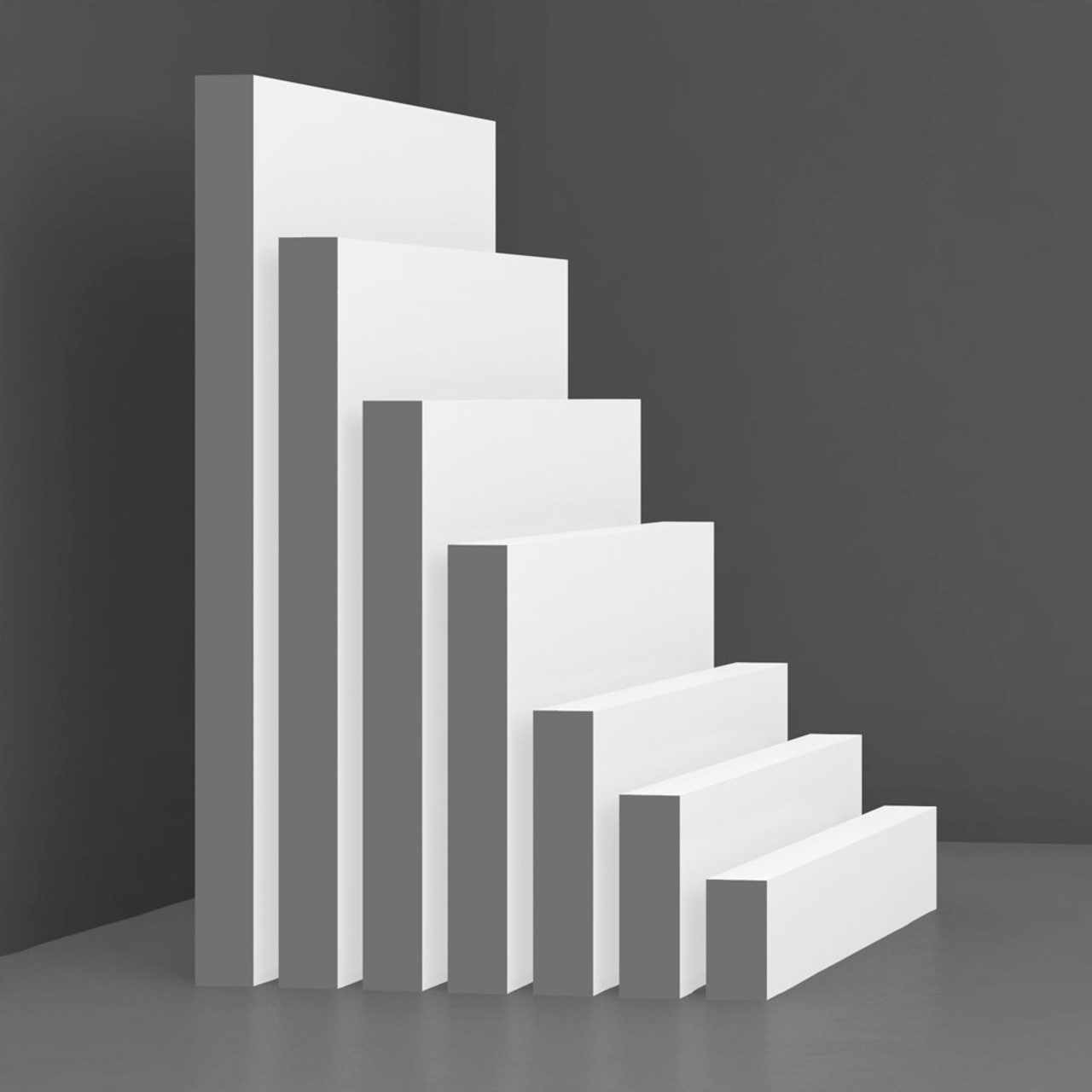
S4S boards are sold using nominal sizes like 1x2, 1x3, or 1x4. Nominal size refers to the board size before it’s surfaced. After milling on all four sides, the finished dimensions are slightly smaller. For example, a 1x4 typically finishes at about ¾″ thick by 3½″ wide once surfaced. Always confirm the finished size before ordering so your measurements and assemblies stay accurate.