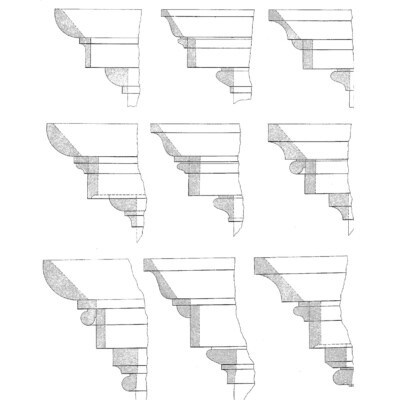
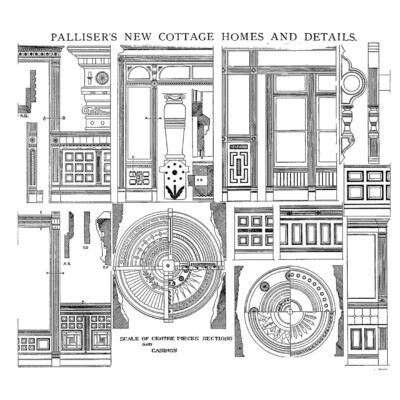
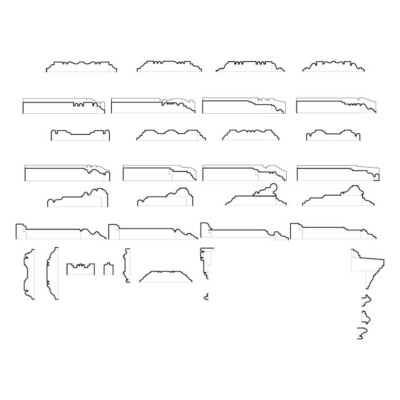
The Victorian period occurred between 1837 and 1901 during the reign of Queen Victoria of the United Kingdom of England and Ireland, and Empress of India. Encompassing nearly the entire nineteenth century, Victorian architecture does not describe a single style, but rather an assemblage of revival styles influenced by earlier historical periods. Profound changes in industrial machinery, construction techniques, and material availability transformed architecture during this time. Combined with the rise of a growing middle class, these advances gave architects and builders opportunities never before available. Generally speaking, architecture built between 1860 and 1900 can be considered Victorian in character. Victorian architecture is defined by variety, complexity, and ornament. Advances in mechanized production allowed mouldings to be milled in greater quantity and complexity than hand tools permitted. This freed designers from the constraints of earlier hand-planed profiles found in Greek and Gothic architecture, enabling deeper relief, compound profiles, and richly layered assemblies. Machine-made decorative elements became central to the Victorian aesthetic. Cornices, window and door casings, ceiling medallions, and baseboards were often highly articulated, celebrating craftsmanship through abundance rather than restraint. In the United States, Victorian architecture became widespread, with entire neighborhoods and towns defined by the style. Cities such as San Francisco, communities on Martha’s Vineyard, Louisville, Kentucky, and the Garden District of New Orleans are noted for their extensive collections of Victorian homes. Victorian interiors were often richly decorated, featuring ornate mouldings, patterned wallpapers, textiles, and furniture. Polychromatic finishes and layered trim assemblies created visually complex interiors that showcased both material abundance and mechanical precision. Much of the Victorian architectural vocabulary was disseminated through pattern books and catalogues, which provided builders with ready access to detailed moulding profiles, assemblies, and decorative elements. These publications helped standardize Victorian design while encouraging regional interpretation and variation. Influential authors and publishers such as A.J. Bicknell, Cummings and Miller, George E. Woodward, Palliser, Palliser & Company, and William T. Comstock documented Victorian mouldings and architectural details, shaping how the style was built and reproduced throughout North America. Victorian-era mouldings remain an important reference for historic preservation and traditional design. Their expressive profiles, layered assemblies, and decorative richness reflect a period when architecture embraced technological progress while celebrating ornament and craftsmanship. When accurately proportioned and thoughtfully applied, Victorian mouldings continue to bring depth, character, and historical authenticity to interiors and exteriors alike.The Victorian Era
Victorian Architecture and Industrial Influence
Victorian Homes and Interiors in America
Pattern Books and Victorian Mouldings
Victorian Era Mouldings Today