French architectural style emerged in the middle of the fifteenth century as ideas from the Italian Renaissance began to influence design across continental Europe. In France, these ideas merged with the legacy of Gothic cathedral building, the increasing centralization of political power, and the refinement of court life. Together, these forces produced a level of artistic patronage previously unknown, elevating architecture and interior design to a comprehensive cultural expression.
French Design and the Unity of the Interior
French design was not limited to quoting classical motifs, but instead pursued a more complete and holistic vision of architecture and interior decoration. Mastery of stone carving, boiserie (architectural woodwork), and furniture making, known as ébénisterie, allowed designers to create unified interiors in which walls, ceilings, mouldings, and furnishings were conceived as parts of a single composition.
This emphasis on total design distinguished French interiors from those of other traditions. Mouldings were not treated as isolated trim elements, but as integral components that shaped proportion, rhythm, and spatial hierarchy throughout a room.
French Period Mouldings
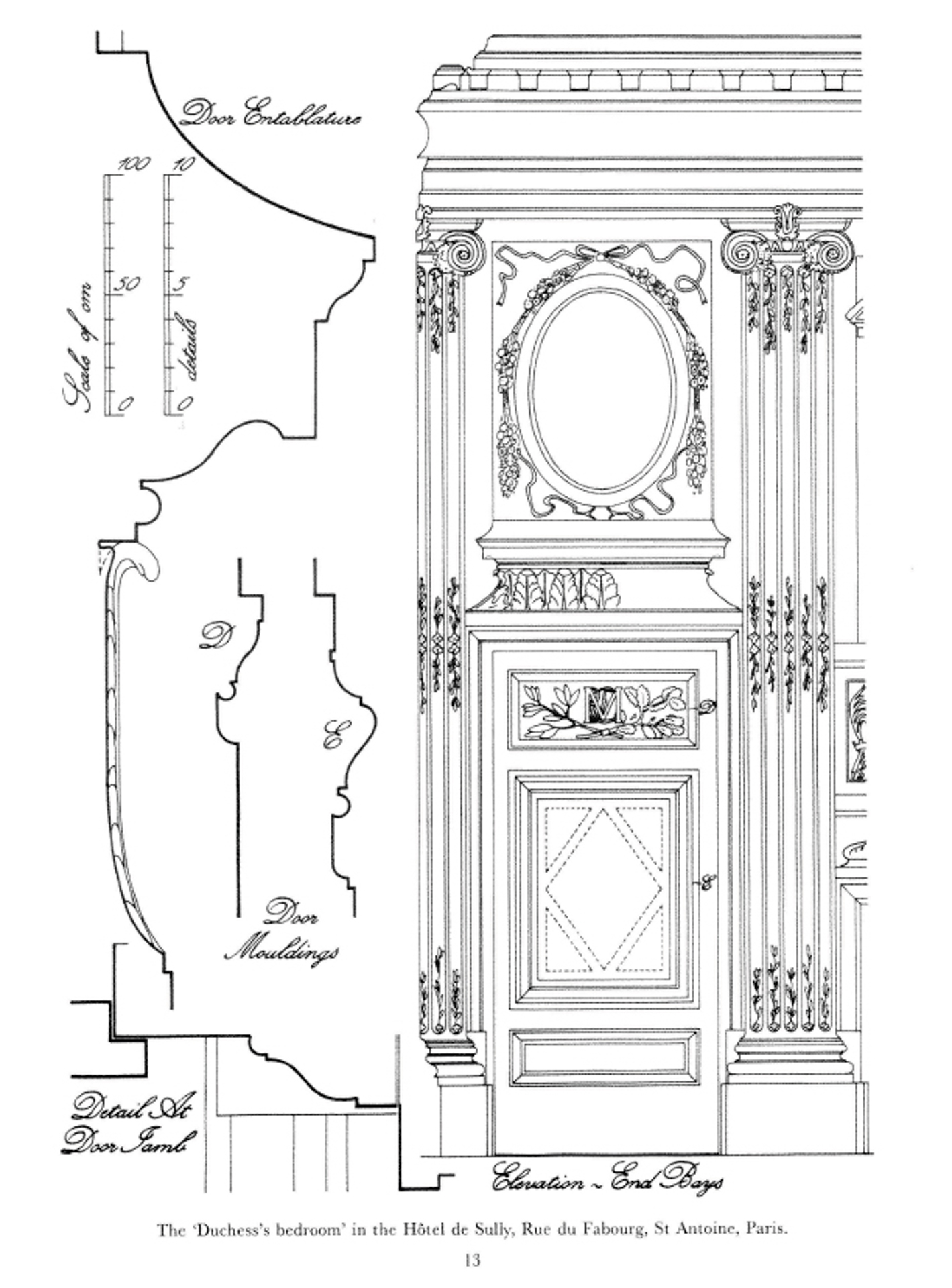
The following images include drawings of stone masonry and woodwork from French buildings that capture the character of ornate and lavish design. French mouldings frequently feature layered and back-cut profiles that create deep shadows and floating surfaces, contributing to the richness and visual depth for which French interiors are renowned.
Eighteenth-century French period mouldings developed during a time of profound political and social change. New ideas about individualism, reason, and natural rights influenced artistic expression, and the elaborate treatment of mouldings reflected an increased emphasis on beauty, refinement, and personal taste. These interiors balanced classical inspiration with freedom of expression, resulting in designs that are elegant, expressive, and highly sophisticated.
For further study of French period architecture and detailing, Mouldings One recommends Ronald Lambell’s 1992 book French Period Houses and Their Details.